Category: Opinion

Expanding KanCare would strengthen rural health care, rural communities

This commentary by Health Fund President David Jordan on strengthening rural health care through KanCare expansion originally appeared in the Wichita Eagle on March 9, 2022.

Kansas is a rural state with nearly one-third of the population living in rural communities. As Kansans we take pride in self-reliance and taking care of our own.

Yet Kansans living in rural and frontier areas are more likely to be uninsured than those in more populated communities. Kansans living in frontier communities have the highest uninsured rate in the state (12.9%). When it comes to health care and sustaining rural health systems and communities, we need more than self-reliance. We need health insurance.

Many of our uninsured neighbors are hardworking Kansans who earn too much to qualify for KanCare, the state’s Medicaid program, and too little to qualify for health insurance through the Affordable Care Act. In fact, a single parent of two kids earning more than $4.00 an hour earns too much to qualify for KanCare.

These hardworking Kansans are our neighbors. Kansans like Jim, an uninsured farmer who enjoys working with crops and large machinery. He lost his health insurance after a seasonal job ended. Getting insurance now is beyond his means.

He’s dealing with diabetes and an injured foot. The bones were broken, but Jim hasn’t been able to get it addressed. He calls it a “Catch-22.” He was hurt and needs money to get well, but he can’t work to make money because of the injury.

Without health insurance, Jim is scraping by and going without regular care.

Emergency room care is often the only option for uninsured Kansans like Jim. But hospital bottom lines and viability are threatened if uninsured patients can’t pay bills. Currently, 70 rural Kansas hospitals are financially vulnerable and categorized as at-risk of closing, more than in any other state.

Rural and frontier towns rely on hospitals for health care and to anchor communities.

According to the Kansas Hospital Association, in 2020, 12% of Kansas employment was in the health services sector. The health care sector was the fifth largest producer of total income and of total sales.

For health and prosperity, a sustainable health system is crucial to the future of our rural regions and our rural way of life.

Kansas can take an immediate step to strengthen rural health systems and communities by expanding KanCare, the state’s Medicaid program.

Multiple studies show that hospitals, particularly rural ones, are at significantly higher risk of closure in states that have not expanded Medicaid. A 2018 study published in Health Affairs found “Medicaid expansion was associated with improved hospital financial performance and substantially lower likelihoods of closure, especially in rural markets and counties with large numbers of uninsured adults before Medicaid expansion.”

Expanding KanCare would cut our uninsured rate in half. Expansion would boost hospital finances by covering 25% of the uncompensated care in rural hospitals and 44% in frontier hospitals.

Kansans know expanding KanCare is the right thing to do. Expansion has broad support across geography and political party. A new survey finds almost 8 in 10 Kansas voters (78%) support expanding KanCare.

All neighboring states have expanded their Medicaid programs. Expanding KanCare would keep us competitive — adding nearly 23,000 new jobs to the state’s economy and increasing economic output by $17 billion.

Expanding KanCare would strengthen rural health care and help ensure rural Kansans get the health care they need while improving their economies. The time to expand is now.

ABC Program Background and Pilot Outcomes

Testimony presented by Health Fund President David Jordan to the House Children and Seniors Committee on Wednesday, January 26, 2022.

To:          Chairwoman Concannon and members of the House Children and Seniors Committee

From:    David Jordan, President & CEO, United Methodist Health Ministry Fund

Date:     January 26, 2022

RE:          ABC Program Background and Pilot Outcomes

Chairwoman Concannon and members of the House Children and Seniors Committee:

Thank you for the opportunity to provide background information to the committee on the Attachment and Bio-Behavioral Catch-up (ABC) Program and the Kansas pilot program. ABC is a ten-week targeted, manualized program delivered in the home for parents of children birth to four years old who have experienced adversity.

During each of the ten visits, the staff engage the parents and review very specific information with them focused on four target areas, outlined below. The goal is NOT to “cover the required materials” but to engage the parents and to frequently reinforce their positive behaviors consistent with the main targets of the ABC program: 

  1. Nurturance – attending to a child who has expressed a need;
  2. Synchrony/Following the Lead – interactions follow the child’s lead in play, neither passive nor intrusive;
  3. Delight – words or expressions from the parent to the child expressing positive emotion; and
  4. Avoiding frightening behavior – rough handling, menacing or throwing, threatening behaviors.

ABC was initially developed by the University of Delaware more than 25 years ago through several randomized, controlled trials to address toxic stress in young children living in adverse environments. The program has become one of the highest-rated interventions (and one of the only truly preventative programs) on the California Clearinghouse for Child Welfare. More information can be found online at: http://www.cebc4cw.org/program/attachment-and-biobehavioral-catch-up/.

ABC:  Evidence-based intervention that reduces toxic stress, improves school readiness and student success, reduces interaction with the child welfare system, and improves health

Research shows that the toxic stress caused by Adverse Childhood Experiences (ACEs) in early childhood has a major impact on the child’s overall development—on school readiness and the ability to learn, on physical and mental health, and on other factors including the ability to exercise self-control. These deficits negatively affect a child’s success both in the school setting and throughout adult life.

As an intervention to address adverse childhood experiences (ACEs), ABC has been shown to lead to increased parental sensitivity and responsiveness to child needs. Children who participated in ABC as toddlers were shown to have better receptive vocabulary than comparison children who did not participate. Furthermore, children who received ABC showed more normal levels of cortisol and improved executive function, meaning they have improved their ability to regulate behavior and emotion, by the preschool years. Science indicates that vulnerable children who have well-developed executive functioning and emotional regulation are able to do well in school despite experiences of adversity. Executive functioning predicts literacy and math scores, and many teachers contend that competence in terms of executive functioning “is more important at school entry than knowledge of letters and numbers.” 

ABC can also reduce interaction with the child welfare system by building secure attachment between parents and children. ABC strengthens parents’ relationships with their children, while helping children learn to regulate behaviors and emotions. Research has shown that immediately after receiving ABC, children whose parents received ABC were more likely to be classified as having a secure attachment compared to children whose parents received a control intervention. This finding sustained through middle childhood, with 9-year-olds whose parents received ABC reporting attachments to their parents that were significantly more secure than children whose parents received the control intervention. In national research, immediately following the intervention and three years’ post-intervention, ABC parents showed higher sensitivity (followed their children’s lead more), showed more positive affect (delight), were less detached, and were less intrusive than control intervention parents. ABC parents looked nearly indistinguishable from a low-risk comparison group of parents.

The more ACEs that a child experiences, the more likely that child will be to suffer from issues such as heart disease, poor academic achievement, and substance abuse later in life. According to the Centers for Disease Control, at least five of the top ten leading causes of death are associates with ACEs. The ABC intervention can improve the health of children by mitigating the effects of ACEs. The ABC intervention can buffer the biological and behavioral effects of early adversity and strengthen interpersonal relationships with caregivers, both of which influence long-term health, learning and behavior.

Kansas ABC Project Current Pilot

While ABC is typically completed over just ten weeks, research to date has shown measurable, long-term positive impacts lasting at least into middle childhood. 

Given ABC’s success in improving school readiness and student success, reducing family interaction with the child welfare system, and improving long-term health, five philanthropic organizations funded a pilot program to support the implementation of ABC in Kansas: United Methodist Health Ministry Fund, Hutchinson Community Foundation, Kansas Health Foundation, REACH Healthcare Foundation and Wyandotte Health Foundation.

From May 2017 through April 2020, they funded the Kansas ABC Early Childhood Initiative to determine if the ABC program would deliver the same results in a variety of service settings and in five geographic regions throughout the state.

Additionally, the Kansas ABC Early Childhood Initiative was funded to expand early childhood service capacity in Kansas by promoting widespread screening for toxic stress, training more providers in the ABC intervention, and evaluating the effectiveness of integrating an evidence-based intervention into the array of early childhood programs through five sites across the state.

Evaluating the Impact of the Kansas ABC Project

To understand the impact of the ABC project on Kansas families and the system, the project partnered with the University of Kansas School of Social Work to evaluate the project. The review of the project included an implementation evaluation as well as an impact study focused specifically on how the ABC intervention impacted children, caregivers, and their families. The in-depth evaluation also conducted pre and post intervention cortisol levels to understand the impact of the intervention in mitigating the impacts of toxic stress.

Over the course of three years, the Kansas ABC Early Childhood Initiative impacted the lives of Kansas families across 36 counties. 536 families were screened for toxic stress, 402 families were enrolled to receive the ABC intervention, and 682 caregivers and 907 children were impacted.

The evaluation found that the initiative resulted in more comprehensive early childhood services across Kansas and that families who participated in ABC demonstrated more positive outcomes, including healthier children, more confident parents, and stronger families.

After completing the ABC program, the evaluation found that:

  • Caregiver concerns regarding child social-emotional functioning decreased.
  • Children’s cortisol levels, an indicator of stress, became more normalized, especially for the children with the highest cortisol levels (though the change was not statistically significant for the entire sample).
  • Parent coaches rated children’s overall wellbeing as more positive.
  • Caregivers’ knowledge and beliefs in their caregiving abilities increased.
  • In interactions with their children, caregiver intrusiveness went down, while sensitivity and delight went up.
  • Caregiver capabilities significantly improved.

ABC was primarily delivered in English. To test its use in other languages and cultures, Hispanic populations were targeted for enrollment at three sites. In all, 41% of caregivers were Hispanic and 22% of caregivers spoke Spanish in the home. The family-focus of ABC appeared to be a good fit among Spanish-speaking populations, particularly when delivered by a parent coach with a similar identity. The same positive outcomes were seen in Spanish-speaking families as in English-speaking families.

In addition to demonstrating positive outcomes in the lives of children and caregivers, the initiative resulted in expanded capacity for early childhood services across the state. Kansas has provided Family First dollars to support ABC projects as part of child welfare prevention strategies deployed under Family First. Likewise, the Kansas Department of Education has recognized ABC as an approved program for equity funds at the state level, and Medicaid is reimbursing mental health providers using ABC for eligible children.

Considerations for policymakers

As policymakers explore evidence-based strategies to:

  • prevent utilization of the child welfare system,
  • keep children with their parents in their homes,
  • improve health,
  • build parenting skills, and
  • address equitable attainment of education,

The Kansas experience with ABC highlights its potential as a worthy, evidence-based investment. Kansas has already moved in this direction by providing Family First dollars to support ABC projects as part of child welfare prevention strategies deployed under Family First. Likewise, the Kansas Department of Education has recognized ABC as an approved program for equity funds at the state level, and Medicaid is reimbursing mental health providers using ABC for eligible children.

Given the success of ABC in normalizing cortisol levels and lessons learned from other states – like New York, which utilized ABC to sustainably reduce child welfare caseloads and aid reunification efforts – there is great potential for policymakers to further support evidence-based programs like ABC to advance child health and child welfare goals as well as improve educational attainment.

Continued investment from state government, foundations and early childhood stakeholders in ABC and other evidence-based programs will offer important opportunities to test, pilot, and evaluate programs to inform and maximize the return on future investments affecting generations to come. Ultimately, these lessons will offer policymakers the opportunity to fund evidence-based interventions like ABC that can improve health, educational outcomes, keep families together and save the state money.

Thank you for the opportunity to provide comments to you today regarding the ABC program.  Please be in touch with questions or if I can be helpful.

Medicaid expansion would help all Kansans

The following is an opinion piece by Health Fund President David Jordan.

Eight years of inaction by policymakers have resulted in Kansans paying more for health care, our communities’ ability to deliver health care being pushed to the brink, and billions of dollars in lost economic opportunity.

Today, the Kansas legislature begins its annual legislative session, providing yet another opportunity to expand KanCare, Kansas’ Medicaid program. Kansas is one of only 12 states that has not expanded Medicaid, to the detriment of the 165,000 hardworking Kansans who fall in the coverage gap.

Who’s in the coverage gap?

A Kansas family of three with an annual income of $8,345 makes too much to be covered by KanCare, and too little to receive Affordable Care Act (ACA) marketplace subsidies. In this case, a single mother with two kids who works a minimum wage job 23 hours per week falls into the coverage gap – earning too much to qualify for KanCare and too little to qualify for health coverage through the ACA. 

According to the Alliance for a Healthy Kansas, more than two-thirds of adults eligible for insurance through Medicaid expansion work or are in working families, and most are employed in industries less likely to offer affordable health insurance, such as service, construction, and retail.

At a time when all Kansans are experiencing the pinch of increased costs to provide for our families, health care is no exception. Expanding KanCare would not just benefit those in the coverage gap, it would also help bring down the costs of health care for Kansans and reduce costs for businesses.

As policymakers return to Topeka, it is important to remind them that expanding KanCare is a budget-neutral Kansas-specific policy that would help 165,000 hardworking Kansans who fall in the coverage gap access health care and reduce their risk of medical debt and bankruptcy.

Beyond improving health and economic security, expanding KanCare would add nearly 23,000 good-paying jobs to our state, increasing our economic output over the next three years by $17 billion and the personal income of Kansans by $6.3 billion. Expansion would also help protect access to care for our rural neighbors; 76 hospitals in Kansas are currently at risk of closing. Expanding KanCare would help rural Kansans access the care they need while boosting their local economies.

Join the conversation

To learn more about the state of KanCare and its potential expansion, you can attend a virtual lunch on January 13 with key leaders within the health sector to discuss the path forward for Medicaid expansion in Kansas.

Kansas Lt. Gov. David Toland, who also serves as the Kansas State Secretary of Commerce, will provide an update on the Governor’s plans around KanCare expansion and will share current data on the economic impact expansion will have in Kansas.

Sen. Doll, a Republican legislator from Garden City and longtime advocate of KanCare expansion, will discuss the path forward for expansion through the legislative process and how health leaders can help leverage their voices and positions to support this work.

Expanding KanCare is critically important to improving health, reducing costs for Kansas families, and creating jobs. To achieve this goal, we all need to engage in the discussion and let our policymakers know that we can’t afford to wait another year to expand KanCare.

Register for the lunch here.

Extending postpartum Medicaid coverage in Kansas will improve health of mother and infant

This opinion piece by Health Fund President and CEO David Jordan and Topeka Public Schools Superintendent Tiffany Anderson originally appeared in the The Topeka Capital-Journal on December 21, 2021.

Kansas can improve future health outcomes for families by extending health care for new mothers and infants.

Unfortunately, significant racial disparities exist in maternal and child health. According to the Kaiser Family Foundation, national pregnancy-related mortality rates among Black and American Indian and Alaska Native women are more than three and two times higher, respectively, compared to the rate for White women.

In Kansas, non-white minority women are nearly twice as likely to die within a year of pregnancy as non-Hispanic white women.

To ensure mothers and babies have a healthy start to life and to reduce these inequities, we must ensure all mothers have health coverage for the first year of their child’s life.

In 2018, KanCare covered 39% of Kansas births. Before the COVID-19 public health emergency, each year over 9,000 mothers lost KanCare coverage 60 days postpartum.

Extending postpartum KanCare coverage to 12 months can save lives, improve health outcomes, prevent interaction with the child welfare system, reduce disparities and save the state money.

Recent federal policy change creates the opening for Kansas to extend postpartum coverage. Other states like Indiana and Tennessee are taking advantage of this opportunity.

A 2021 report released by the Governor’s Commission on Racial Equity & Justice detailed 13 recommendations for improving maternal and child health, including extending maternal Medicaid coverage to 12 months postpartum. The report recognized the important role of improving access to care in reducing health disparities.

Extending coverage can save lives. The U.S. Department of Health and Human Services reported 66% of all pregnancy-related deaths are preventable. The Kansas Maternal Mortality Review Committee found that between 2016 and 2018 nearly one-quarter of Kansas pregnancy-related deaths occurred between 43 days and one year postpartum. Nearly half of all pregnancy-associated deaths occurred in the same period.

A child’s health is tied closely to their parent’s health and access to health care. Parental enrollment in Medicaid is associated with a 29% higher probability that a child will receive an annual well-child visit.

Postpartum care provides mental health services as women gain services for clinical depression. Nearly 20% of Kansas women below 200% of the federal poverty level experienced postpartum depression in the year after giving birth.

According to the Kansas Department of Health and Environment, between fiscal years 2012 and 2017, parental substance use was the primary reason 70% of children under the age of one entered foster care. Extending postpartum coverage would enable mothers to access substance use services that could prevent interaction with the child welfare system.

Extended postpartum coverage is predicted to lead to a decrease in long-term Medicaid costs through the provision of early medical interventions and coordinated care, preventing postpartum complications and worsening chronic conditions resulting from delays in early identification and intervention.

Due to the public health emergency, Kansas cannot discontinue postpartum coverage after 60 days. This temporary policy change has enabled mothers to access critical health care and mental health services.

With new mothers experiencing isolation and mental health challenges due to the public health crisis, it’s critical to extend coverage to maintain postpartum checkups and treatment of chronic health conditions to prevent future adverse health outcomes.

The public health emergency is set to end this spring. The time to act is now, or each year 9,000 new Kansas mothers will lose KanCare coverage to the detriment of their health, their children’s health and long-term family stability.

Let’s create better outcomes for Kansas families by permanently extending postpartum Medicaid coverage to 12 months.

Tiffany Anderson is the superintendent of Topeka Public Schools and co-chair of the Governor’s Commission on Racial Equity and Justice. David Jordan is the president and CEO of the United Methodist Health Ministry Fund and a member of the commission.

Organizations Urge Kansas Senate Delegation to Support Health Provisions in Build Back Better Act

As many Kansans struggle with the high costs of everyday bills like health care, child care and food, the United States Senate is debating the Build Back Better Act, which could help make health care and child care more affordable for Kansas families.

In Kansas, nearly 1 in 10 adults (9.1%) is uninsured and more than 1 in 20 (5.8%) children lacks health coverage. As a result of a high uninsured rate, too many Kansas women and children are not getting the healthiest start to life, Kansans are not accessing health care needed to support their return to the workforce, and the cost of health care is too high for too many Kansans.
 
The Build Back Better Act makes critical investments in making health care more affordable for all Kansans, which will support the health of all Kansans, especially mothers and children.

The United Methodist Health Ministry Fund and its partners have sent a letter urging the Kansas delegation in the U.S. Senate to support key provisions in the Build Back Better Act that will address health inequities in our state. A PDF of the letter is available and the full text is below.

To learn how the Build Back Better Act benefits Kansans, check out the podcast episode from the Kansas Reflector that focused on how the transformative policy proposal would impact health, child care, persistent poverty and address longstanding racial and gender inequities.


December 16, 2021

Dear Senators Moran and Marshall,

As organizations that represent thousands of Kansans, we are writing to you to urge you to support the Build Back Better Act. Our organizations are dedicated to improving the health of Kansans and working to ensure mothers and children have the best start in life.

In Kansas, nearly 1 in 10 adults (9.1%) is uninsured and more than 1 in 20 (5.8%) children lacks health coverage.[1] As a result of a high uninsured rate, too many Kansas women and children are not getting the healthiest start to life, Kansans are not accessing health care needed to support their return to the workforce, and the cost of health care is too high for too many Kansans.

The Build Back Better Act makes critical investments in making health care more affordable for all Kansans, which will support the health of all Kansans, especially mothers and children. Additionally, these provisions will address longstanding health inequities within the state. We ask that you support the plan because it:

  • Closes the coverage gap. The provision to permanently close the coverage gap in the states that have not expanded Medicaid will benefit more than 100,000 Kansans who earn too much to qualify for Medicaid but too little to qualify for subsidies for coverage through the marketplace. Kansas is one of only 12 states that has not expanded Medicaid. A Kansas family of three with an annual income of $8,345 makes too much to be covered by Medicaid, and too little to receive marketplace subsidies.[2] According to the Alliance for a Healthy Kansas, more than two-thirds of adults eligible for insurance through Medicaid expansion work or are in working families, and most are employed in industries less likely to offer affordable health insurance, such as service, construction, and retail.[3]
  • Extends postpartum coverage. The provision to permanently extend postpartum coverage to 12 months will ensure mothers maintain health coverage at a crucial time. Without the extension, each year approximately 9,000 Kansas mothers will lose coverage a mere 60 days postpartum once the public health emergency expires. Nearly 40% of Kansas births are covered by Medicaid.[4] Nearly one-quarter of Kansas pregnancy-related deaths occur between 43 days and one year after pregnancy.[5] Children will benefit as well—parental enrollment in Medicaid is associated with a 29% higher probability that a child will receive an annual well-child visit.[6] Extending postpartum coverage will save lives and lead to healthier starts for mothers and children.
  • Advances birth equity. The Build Back Better Act contains all 12 bills originally included in the Black Maternal Health Momnibus Act. The Momnibus addresses maternal health equity through growing and diversifying the perinatal workforce, by investing in organizations focused on promoting maternal health equity, and by addressing social determinants of maternal health, among others.[7] The maternal health crisis highlights longstanding racial disparities. In Kansas, non-white minority women are nearly twice as likely to die within a year of pregnancy as non-Hispanic white women.[8]
  • Makes the Children’s Health Improvement Program (CHIP) permanent. The provision to make federal CHIP funding permanent would increase stability in children’s health coverage by ensuring that states have the federal funding needed to maintain and expand their programs. Currently, the program is funded through September 30, 2027. The bill would also permanently extend the Medicaid and CHIP stability provision for children, meaning that states cannot make it more difficult for eligible children to enroll.[9]
  • Makes health coverage more affordable. The provision to extend Marketplace subsidies through the end of 2025 will help the nearly 90,000 Kansans who received additional federal dollars this year to reduce their health insurance premiums and deductibles. This will leave more of their monthly budget to spend on housing, food, and other necessities.[10]
  • Streamlines access to Medicaid and CHIP through 12 months continuous coverage and use of express lane eligibility. The plan reduces burdens on families by using available information from other benefit programs to establish eligibility for Medicaid and CHIP. The plan also ensures all children and youth enrolled in Medicaid and CHIP can stay enrolled for 12 continuous months,which will reduce the risk that children experience gaps in coverage or lose it altogether. Nationally, 1 in 10 kids experiences a period without coverage during the year, and that number rises to more than 1 in 8 kids in families below 250% of the federal poverty level.[11]

These provisions in the Build Back Better Act will create more affordable coverage for Kansans. When all Kansans can afford health coverage, we all benefit. Hospitals will be on stronger financial ground—especially those in rural areas where proximity to care can save lives. More insured Kansans will lead to less uncompensated care and reduced Medicaid costs for our state. Kansans will be healthier and able to return to work. Most importantly, mothers and children will have the health care needed to have the strongest start to life, which in the long run will improve health and reduce costs.

We urge you to support these provisions in the Build Back Better Act that will lead to healthier kids, healthier mothers, and healthier Kansans. Thank you for your consideration.

Sincerely,

Child Advocacy and Parenting Services

CKF Addiction Treatment

Community Care Network of Kansas

Community Health Council of Wyandotte County

Cradle Kansas City

D&R Tender Loving Care Home Health Services

Ellsworth County Medical Center

Faith Voices for Medicaid Expansion

Flint Hills Wellness Coalition

International Pain Foundation

KanCare Advocates Network

Kansas Academy of Family Physicians

Kansas Action for Children

Kansas Appleseed

Kansas Birth Equity Network

Kansas Breastfeeding Coalition

Kansas Chapter, American Academy of Pediatrics

Kansas Head Start Association

Kansas Health Foundation

Kansas Interfaith Action

Kansas Public Health Association

KL Connections

League of Women Voters of Kansas

Mainstream Coalition

Martin Luther King, Jr. Child Development Center

MORE2

NEK-CAP, Inc

New Hope and Love Community Church

Nurture KC

Oral Health Kansas, Inc.

Sisters of Charity of Leavenworth Office of Justice, Peace, and Integrity of Creation

The Neighboring Movement

Therapy Services LLC

United Methodist Health Ministry Fund

Wichita Medical Research and Education Foundation

Women for Kansas


[1] Kansas Health Institute, Health Insurance in Kansas: Annual Insurance Update 2021, accessed December 3, 2021, https://www.khi.org/assets/uploads/news/15012/annual_insurance_update_2021_(december_2021)_2.pdf.

[2] “Medicaid Income Eligibility Limits for Adults as a Percent of the Federal Poverty Level,” Kaiser Family Foundation, accessed December 3, 2021, https://www.kff.org/health-reform/state-indicator/medicaid-income-eligibility-limits-for-adults-as-a-percent-of-the-federal-poverty-level.

[3] Alliance for a Healthy Kansas, KanCare Expansion: Just the Facts (February 2020), accessed December 3, 2021,https://expandkancare.com/wp-content/uploads/2020/02/Working-Families-Feb-2020.pdf.

[4] “Births Financed by Medicaid,” Kaiser Family Foundation, October 2019, accessed December 3, 2021, https://www.kff.org/medicaid/state-indicator/births-financed-by-medicaid/.

[5] Kansas Maternal Mortality Review Committee, Kansas Maternal Mortality Report 2016-2018: Including Severe Maternal Morbidity, 2016-2019 Topeka, 2020).

[6] Maya Venkataramani, Craig Evan Pollack, and Eric T. Roberts, “Spillover Effects of Adult Medicaid Expansions on Children’s Use of Preventive Services,” Abstract, PubMed.gov. November 13, 2017, doi: 10.1542/peds.2017-0953.

[7] Office of Representative Lauren Underwood, “Underwood’s ‘Momnibus’ Passes House in Build Back Better Act; Makes Largest Investment to Advance Birth Equity in American History,” news release, November 19, 2021, https://underwood.house.gov/media/press-releases/underwood-s-momnibus-passes-house-build-back-better-act-makes-largest.

[8] Kansas Maternal Mortality Review Committee, Kansas Maternal Mortality Report 2016-2018: Including Severe Maternal Morbidity, 2016-2019 Topeka, 2020).

[9] Edwin Park, “Build Back Better Reconciliation Bill Would Take Big Strides in Expanding Health Coverage and Access for Children and Families,” Say Ahhh! (blog), Georgetown University Health Policy Institute, October 29, 2021, https://ccf.georgetown.edu/2021/10/29/build-back-better-reconciliation-bill-would-make-big-strides-in-expanding-coverage-and-access-for-children-and-families.

[10] Suzanne Wikle, “Kansans Will Benefit from Health Provisions In Build Back Better Legislation,” Opinion, Kansas Reflector, November 30, 2021, https://kansasreflector.com/2021/11/30/kansans-will-benefit-from-health-provisions-in-build-back-better-legislation.

[11] Joan Alker and Aubrianna Osorio, “Why is Medicaid/CHIP Continuous Eligibility So Important for Kids?” Say Ahhh! (blog), Georgetown University Health Policy Institute, October 8, 2021,https://ccf.georgetown.edu/2021/10/08/why-is-medicaid-chip-continuous-eligibility-so-important-for-kids.
Groups Urge Committee to Support Postpartum Coverage

29 Organizations Signed a Letter Urging the KanCare Oversight Committee to Support Extending Postpartum Coverage to 12 Months

Today, the Health Fund and its partners sent a letter to the Robert G. Bethell Joint Committee on Home and Community Based Services and KanCare Oversight urging the committee to support extending postpartum KanCare coverage to 12 months.

A PDF of the letter is available and the full text is below.


Senator Richard Hilderbrand
Senate Majority Whip
Kansas State Senate
300 SW 10th St
Topeka, KS 66612

Representative Brenda Landwehr
Chair, House Health Care Committee
Kansas House of Representatives
300 SW 10th St
Topeka, KS 66612

December 6, 2021

Dear Chair Hilderbrand, Vice Chair Landwehr, and members of the Robert G. (Bob) Bethell Joint Committee on Home and Community Based Services and KanCare Oversight,

As organizations that represent thousands of Kansans, we are writing to you to support the extension of postpartum KanCare coverage to 12 months.

As a result of the ongoing public health emergency, Kansas cannot currently discontinue coverage for new mothers after 60 days. Kansas has seen the benefits of this temporary policy change. Extending Medicaid coverage postpartum from 60 days to 12 months has enabled mothers to access critical health care and mental health services, ensuring mothers and their babies have the healthiest start to life. This coverage will end when the public health emergency expires, meaning someone who gets pregnant today may have worse postpartum care than people who recently gave birth.

Extending postpartum coverage for new mothers enrolled in KanCare would have a significant impact in Kansas, where nearly 40% of births are covered by KanCare.[1] Prior to the COVID-19 pandemic, each year most mothers covered by KanCare—9,000 women—lost coverage 60 days after giving birth.[2] The Kansas Maternal Mortality Review Committee found that between 2016 and 2018 nearly one-quarter of all Kansas pregnancy-related deaths occurred between 43 days and one year postpartum. Nearly half of all pregnancy-associated deaths (while pregnant or within one year of pregnancy regardless of cause) occurred in the same period. Non-White minority women were nearly twice as likely to die within a year of pregnancy as non-Hispanic White women.[3]

In Kansas, between 2016 and 2018 casesrevealed that women covered by Medicaid during pregnancy and delivery were more than three times as likely to die within one year of pregnancy when compared to women covered by private insurance, in part this is because of women who died after losing their coverage. Extending postpartum Medicaid coverage to 12 months creates opportunities to improve access to quality health care for high-risk populations, before, during, after and between pregnancies, potentially reducing pregnancy-associated deaths and closing the disparity gap.[4]

As highlighted by the Kansas Department of Health and Environment’s impact paper, with many of the pregnancy-associated deaths involving health care and occurring months after delivery, the data suggest that a Medicaid postpartum coverage extension will help more women access care necessary to address critical, potentially fatal health concerns. National data published in February 2019 by the American Journal of Managed Care (AJMC) reveals that extending Medicaid coverage to 12 months postpartum is associated with 1.6 fewer maternal deaths per 100,000 women compared to rates for states that only provide coverage for the required 60-day time period.[5]

Recent federal policy change creates the opportunity for Kansas to extend coverage. Already, other states like Indiana and Tennessee are taking advantage of this opportunity. Extended postpartum coverage is predicted to lead to a decrease in long-term Medicaid costs through the provision of early medical interventions and coordinated care, preventing postpartum complications and worsening chronic conditions due to a delay in early identification and intervention.[6]

Before the pandemic, pregnant Kansans were eligible for Medicaid coverage through the duration of their pregnancy and 60 days postpartum if their household income was at 171% or less of the federal poverty level. Although their newborn remained covered by Medicaid through their first year of life, the postpartum mother lost coverage on day 61 unless her household income was at 38% or less of the federal poverty level (FPL).[7] A married woman with a single child would lose coverage on day 61 if her combined annual household income was above $8,345.

Extending KanCare coverage to a continuous 12 months postpartum can improve health outcomes for mothers, children, and families across the state. It is important to note that a child’s health is tied closely to their parent’s health and access to health care. Parental enrollment in Medicaid is associated with a 29% higher probability that a child will receive an annual well-child visit.[8] Therefore, it is important for the health of the mother and child during the critical 12-month postpartum period that both mother and child can access health care.

Nearly 20% of Kansas women below 200% of the federal poverty level experienced postpartum depression in the year after giving birth. In addition, according to KDHE, between state fiscal years 2012 and 2017, parental substance use was the primary reason that 70% of children under the age of one entered foster care.[9] Extending postpartum coverage would enable mothers to get substance use services that could prevent interaction with the child welfare system. For these reasons, it is vital that mothers have access to mental health and substance use services beyond 60 days.

We urge you to support expansion of postpartum KanCare coverage to 12 months in order to save lives, improve health outcomes for mothers and babies, increase health coverage for kids, prevent interaction with the child welfare system, reduce disparities and save the state money. We welcome the opportunity to work with you to strengthen the health of our state.

Sincerely,

United Methodist Health Ministry Fund

Alliance for a Healthy Kansas

American College of Obstetricians and Gynecologists

American Heart Association

Behavioral Health Association of Kansas

Build Your Village

Child Advocacy and Parenting Services

Community Care Network of Kansas

Community Health Center in Cowley County, Inc.

Community Health Council of Wyandotte County

KanCare Advocates Network

Kansas Action for Children

Kansas Birth Equity Network

Kansas Breastfeeding Coalition

Kansas Chapter, American Academy of Pediatrics

Kansas Head Start Association

Kansas Infant Death and SIDS Network, Inc.

Kansas State Nurses Association

Metro Organization for Racial and Economic Equity

Motherhood Redefined (TJZ Therapy, LLC)

Nurture KC

Oral Health Kansas

Postpartum Support International Kansas Chapter

REACH Healthcare Foundation

Russell Child Development Center

Success By 6 Coalition of Douglas County

The Holding Space KC

Thrive Allen County

Wichita Birth Justice Society


[1] Kaiser Family Foundation. 2019. Births Financed by Medicaid. October. https://www.kff.org/medicaid/state-indicator/births-financed-by-medicaid/.

[2] Governor’s Commission on Racial Equity & Justice. 2021. Social Determinants of Health – First Report. Topeka: State of Kansas.

[3] Kansas Maternal Mortality Review Committee. 2020. “Kansas Maternal Mortality Report 2016-2018: Including Severe Maternal Morbidity, 2016-2019.”

[4] Kansas Maternal Mortality Review Committee. 2020. “Kansas Maternal Mortality Report 2016-2018: Including Severe Maternal Morbidity, 2016-2019.”

[5] Rosenberg, Jaime. 2019. Medicaid Expansion Linked to Lower Maternal Mortality Rates. February 6. https://www.ajmc.com/view/medicaid-expansion-linked-to-lower-maternal-mortality-rates.

[6] Members of the Equitable Maternal Health Coalition. 2020. “Making the Case for Extending Medicaid Coverage Beyond 60 Days Postpartum: A Toolkit for State Advocates.” The American College of Obstetricians and Gynecologists Web site. June. https://www.acog.org/-/media/project/acog/acogorg/files/advocacy/state-white-paper-making-the-case-for-extending-medicaid-coverage-beyond-60-days-postpartum-a-toolkit-for-state-advocates.pdf.

[7] Ranji, Usha, Ivette Gomez, and Alina Salganicoff. 2021. Expanding Postpartum Medicaid Coverage. March 9. https://www.kff.org/womens-health-policy/issue-brief/expanding-postpartum-medicaid-coverage/.

[8] Venkataramani, Maya, Craig Evan Pollack, and Eric T. Roberts. 2017. “Spillover Effects of Adult Medicaid Expansions on Children’s Use of Preventive Services .” PubMed.gov. November 13. https://pubmed.ncbi.nlm.nih.gov/29133576/.

[9] Kansas Department of Health and Environment. 2021. “Extending Kansas Medicaid Postpartum Coverage to 12 Months.” Topeka.

As simple as ABC: Evidence-based program improves children’s heath, parental confidence

This opinion piece by Health Fund President and CEO David Jordan and Katie Schoenhoff, director of programs, originally appeared in the Kansas Reflector on Tuesday, November 9.

A child’s earliest years have a lifelong impact. Nearly 80% of brain development occurs by age 3. Having a healthy start affects health, educational attainment and earnings throughout a person’s life.

Toxic stress and adverse childhood experiences (ACEs) also have a major influence on a child’s overall development, affecting school readiness, student success, physical and mental health, and other factors, including the ability to exercise self-control. ACEs include abuse, neglect, witnessing violence, mental health or substance use problems in the household, and instability in the household such as separated parents, among other  experiences.

ACEs are incredibly common. According to the CDC approximately 61% of adults surveyed across 25 states reported they had experienced at least one ACE, while 1 in 6 had experienced at least four. In Kansas, 39% of children have experienced an ACE and 20% have experienced two or more ACEs.

Caring and responsive relationships are critical to mitigating the effects of toxic stress. Research shows that infants and toddlers who have experienced adversity can benefit from early intervention that focuses on building supportive adult relationships.

One strategy to counteract early adversity is the evidence-based Attachment and Biobehavioral Catch-up program, better known as ABC. Over the course of the 10-week program, parents increase their knowledge and skills in order to create secure attachments and help their children have better outcomes.

Prior research has found the ABC program is effective in improving attachment between children and caregivers and in helping regulate behavior and biology in at-risk children. Although the program is short, research has shown measurable effects lasting at least into middle childhood.

The United Methodist Health Ministry Fund, Hutchinson Community Foundation, Kansas Health Foundation, REACH Healthcare Foundation and Wyandotte Healthcare Foundation launched an innovative statewide ABC demonstration project to address toxic stress in young Kansas children by building attachment between them and their caregivers.

In the three-year study of the Kansas project released last week, more than 400 families and 900 children were affected by the ABC program. The intervention resulted in healthier children and more confident parents.

After completion of the program, children’s cortisol levels — an indicator of stress — were more normalized, parents were more confident in their caregiving abilities, and parent coaches rated children’s overall wellbeing as more positive. Families reported statistically significant improvements in their children’s social emotional functioning, which can lead to improved school readiness.

In the Kansas study, 22% of the families served primarily spoke Spanish in the home. The evaluation found similar promising results when the ABC program was delivered in Spanish as when it was delivered in English.

The use of ABC in other states is equally promising. In New York City, use of ABC resulted in decreased caseloads and savings of $90 million over five years.

As policymakers explore strategies to keep kids in their own homes, improve health and build parenting skills, ABC and other evidence-based programs show great potential.

Kansas has already moved in this direction by providing Family First funding, which is designed to prevent family interaction with the child welfare system, to support ABC projects as part of child welfare prevention strategies. Likewise, the Kansas State Department of Education has recognized ABC as an approved program for equity funds, and Medicaid is reimbursing mental health providers using ABC for eligible children.

Through state support or the Medicaid program, greater investment from policymakers is critical to sustain evidence-based home visiting and early childhood programs promoting secure, stable caregiver-child relationships. These investments will improve school readiness, student success, decrease interaction with the child welfare system and promote long-term health and economic well-being.

Beyond promising health, education, and child welfare outcomes, investing early creates the best health outcomes and the greatest return on investment. According to the Heckman Equation, high quality birth-to-5 programs for disadvantaged children deliver a 13% return on investment per year.

Continued investment from foundations, businesses, and early childhood stakeholders in ABC and other evidence-based programs offers important opportunities to test, pilot, and evaluate programs to inform and maximize the return on future investments affecting generations to come.

Through support for evidence‐based early childhood development programs, we can ensure the youngest Kansans enjoy nurturing family environments, so they are primed for a healthy life and for academic success. Investing in proven early childhood interventions, like ABC, will result in future benefits for the state, including a more capable workforce, reduced healthcare and mortality costs, and reduced demand for public services.

Investing early in our parents and children ensures a brighter future for all Kansans.

Kansas child care needs more than a Band-Aid

This opinion piece by Health Fund President and CEO David Jordan and Kelly Davydov, president and CEO of Child Care Aware of Kansas, originally appeared in the Wichita Eagle on Sunday, October 24.

Every Kansas child deserves quality early learning experiences to improve school readiness and ensure student success.

Unfortunately, access to high-quality child care and early learning was already a challenge pre-pandemic for many Kansans, especially for children of families with low incomes, children of color and dual-language learners.

The child care shortage is statewide. In 2020, Child Care Aware of Kansas reported that 97% of counties did not meet desired capacity.

A recent Child Care Aware of Kansas and United Methodist Health Ministry Fund survey shows that the pandemic is pushing Kansas child care providers to the brink.

More than one-fourth of Kansas providers responded to the survey, representing 97% of counties. Most respondents reported the pandemic has been an extremely stressful time and has caused many to consider closing their programs. Providers are employing varied COVID-19 mitigation measures while enduring financial hardship, staffing shortages and stress.

Mitigation Needs Updated

The best ways to mitigate the spread of COVID-19 are vaccination, masking, and social distancing.

According to the survey, most providers increased cleaning and handwashing while less than half had been vaccinating staff (47%), social distancing (36%) or masking staff or children (26% and 12%).

Clean environments and clean hands are important, but they are not the best mitigation tools for COVID-19.

Staffing Shortage Intensifies

Staffing shortages have plagued the Kansas child care industry; for most providers the pandemic has amplified the problem. Child care is essential for our workforce to thrive. Temporary closures and enrollment fluctuation have increased providers’ financial hardship and shortages.

The median wage for Kansas child care workers in 2019 was $10.20 per hour. Nationally, Kansas ranks 43rd in spending on preschool and 47th in drawing down federal funds, which is a missed opportunity to bring dollars to Kansas to improve early childhood education.

Stress Can Impact Kids

Pandemic-related staff shortages make it difficult to maintain low child-to-adult ratios. Low ratios help ensure children receive enough individual attention from adults, which is important for social emotional development, learning, and physical well-being.

Children build relationships with their caregivers that play a significant role in their social and emotional development — an important indicator for school readiness.

The surveyed providers shared they have been under increased emotional strain. That’s bad for their health and can be harmful to children. According to Child Care Aware of America, children can show the same emotions as their caregivers or have trouble adjusting to change.

Moving Forward

To recover from the pandemic, providers shared that they needed financial support, clear information, community support and higher pay for child care workers.

We can take immediate steps to help providers as they deal with impacts of the pandemic. Policymakers and officials should provide financial incentives tied to requirements for implementation of proven precautions. Child care providers need uniform guidelines and up-to-date information to facilitate their policies and conversations with families.

Beyond the pandemic, Kansas needs to invest in programs to ensure school readiness. Short-term and long-term approaches must focus on preventing inequities in access to safe, high-quality child care among people of color, low-income communities and rural counties.

Kansas child care providers and children deserve our support.

Women & Children First

Addressing maternal and child health disparities in Kansas

This opinion piece by Health Fund President David Jordan originally appeared in the Fall 2021 issue of Kansas Child magazine.

All Kansans should get to live in communities where good schools, healthy environments, safe homes, quality jobs, and access to health care and high-quality goods and services are the norm.

To achieve that goal in Kansas, we need to address long-standing racial and ethnic disparities in health, poverty rates, and educational attainment. Addressing these inequities is complex, but improving the health and well-being of mothers, infants, and children is a critically important strategy. It is predictive of future public health challenges for families, communities, and the health system.

We need to address long-standing racial and ethnic disparities in health, poverty rates, and educational attainment.

Unfortunately, significant racial disparities exist in maternal and child health. A recent Kaiser Family Foundation brief highlighted:

  • Black and American Indian and Alaska Native (AIAN) women have higher rates of pregnancy-related death compared to white women.
  • Black, AIAN, and Native Hawaiian and Other Pacific Islander (NHOPI) women are more likely than white women to have births with risk factors that increase the likelihood of infant mortality and that can have long-term negative consequences for children’s health.
  • Infants born to Black, AIAN, and NHOPI women have markedly higher mortality rates than those born to white women.

These disparities, in part, reflect increased barriers to health care among people of color. To improve access to health care for people of color in Kansas and to ensure every Kansan has an opportunity for a healthy start in life, we must:

  • Invest in prenatal care and equity-­based birth education.
  • Improve access to prenatal services for women of color.
  • Improve access to comprehensive health care by expanding Medicaid eligibility, extending postpartum coverage to 12 months for new mothers, and continuously covering children ages 0-5.
  • Invest in a culturally competent health care workforce.

Investing in maternal and child health policies can address long-standing inequities in Kansas as well as improve health outcomes, school readiness, and long-term financial earnings.

More Than Baby Steps

Kansas Collaboration Advances Maternal Depression Screening

This opinion piece by Health Fund President David Jordan originally appeared in the Kansas Reflector on Thursday, October 14, 2021.

When Anjali Kansal-Rill gave birth in 2016, things did not go as planned. Anjali had an emergency cesarean section and faced challenges with breastfeeding. One week postpartum, she didn’t feel like herself. Her doctor said she would prescribe medication if Anjali was still feeling “down” at her next appointment, in eight weeks.

Maternal depression, also known as perinatal or postpartum depression, occurs during pregnancy or the 12 months immediately following delivery. It is the most common obstetric complication in the country. Perinatal depression is linked to an increased risk of preterm birth and low birthweight. Postpartum depression can lead to adverse effects for mothers and infants, affecting the course of children’s health and development. 

Maternal depression, like maternal mortality, disproportionately impacts women of color. According to the CDC, 2018 postpartum depression rates were higher among non-Hispanic women of color. Addressing these disparities is essential to ensuring mothers and babies have every chance to be healthy.

As a social worker, Anjali was aware of maternal depression. She thought she may have been overreacting, but her condition worsened.

One night her daughter woke up crying.

“I changed her diaper, but she was squirming so much I couldn’t get her back in her swaddle,” she said. “I got so frustrated I started to cry. … I was afraid I would hurt the baby. I yelled at my husband to take over. He brought her to me to nurse, but my breasts were so painful I broke down sobbing. What good was a mother who couldn’t calm or even feed her child? I told him they would be better off without me.” 

The next day, Anjali’s husband made an appointment with her doctor, who diagnosed her with postpartum depression and prescribed medication. 

Kansas mothers needed screenings

According to the 2018 Kansas Pregnancy Risk Assessment Monitoring System, approximately one in five mothers reported experiencing depression during pregnancy and one in seven mothers exhibited symptoms of postpartum depression. However, 17% reported they did not receive treatment. Most cited cost or that “it seemed too difficult” as barriers.

Anjali obtained treatment. Originally, she was scheduled for evaluation more than 60 days postpartum, which is when 9,000 Kansas mothers are dropped from Medicaid enrollment each year. Many of these mothers had no way to be screened or treated for maternal depression.

The 2018 Kansas PRAMS data showed 98.9% of new mothers reported their newborn had a well-child visit. In 2016, federal guidance allowed states to cover maternal depression screening during the well-child visit.

To take advantage of this option, Kansas needed to adopt a billing policy change. As of 2019, Kansas was one of only 10 states that had not changed its policy.

In 2019, Kansas joined the Pediatrics Supporting Parents Medicaid/CHIP State Implementation Workgroup, a national effort to develop policies that leverage the pediatric well-child visit to improve social and emotional health. The team of early childhood stakeholders and providers, led by the Kansas Department of Health and Environment with support and facilitation provided by the United Methodist Health Ministry Fund, prioritized expanding maternal depression screens to improve maternal and child health. 

The team developed recommendations to allow maternal depression screens to be billed as part of the well-child visit. Kansas Medicaid approved the policy, which became effective this year. 

According to Mathematica Policy Research, undetected and untreated maternal depression could cost as much as $17,100 per mother-child pair, meaning Kansas will save millions of dollars by identifying and treating maternal depression as a result of this policy. 

What about Anjali and the important work ahead?

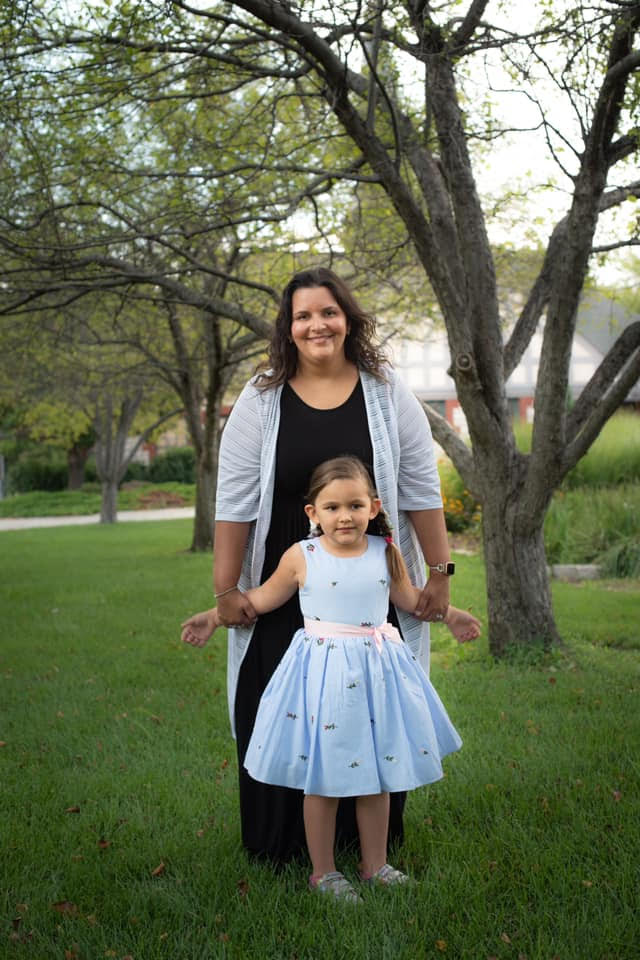
Anjali Kansal-Rill stands with her daughter. (Anjali Kansal-Rill)

Anjali said, “I love my daughter more than I ever could have imagined. It scares me to think about where she would be if I hadn’t gotten help.”

Thanks to maternal depression screenings, more Kansas mothers’ depression will be identified. But barriers to treatment remain, including health care coverage and costs. 

New federal policy allows states to extend Medicaid coverage to 12 months postpartum. Kansas needs to adopt this policy change to ensure mothers get the treatment they need.

Anjali Kansal-Rill stands with her daughter. (Anjali Kansal-Rill)

Extending coverage would prevent more pregnancy-related deaths — which disproportionately impact Black women in Kansas. It would also ensure mothers and babies have the healthiest start, save the state money by averting future care and decreasing interaction with the child welfare system, and reduce inequities. 

Maternal depression screenings are an important baby step in improving the health of families in our state. Let’s take the leap for Kansas mothers and extend postpartum coverage.

© United Methodist Health Ministry Fund