Listen now
Listen below or on any of your favorite podcast services. Like and subscribe to stay up-to-date with each new episode!
Listen below or on any of your favorite podcast services. Like and subscribe to stay up-to-date with each new episode!




Welcome to the Pioneers in Health podcast. In this podcast, we share inspiring stories of pioneering leaders from our nation and from your backyard who are working to improve health.
In episode 46, we interview Dr. Jennifer B. McKenney, MD, FAAFP. She owns and manages her practice, Fredonia Family Care, alongside her father and other colleagues. She was named the 2021 Rural Health Practitioner of the Year by the National Rural Health Association and received the Early Career Achievement Award by the University of Kansas School of Medicine in 2021.

She also is currently the associate dean for rural medical education for the KU School of Medicine. She serves as the Wilson County health officer and is co-chair of the statewide Health Officers of Kansas group. She is a past president of the Kansas Academy of Family Physicians and was the resident member of the AAFP Board of Directors. She serves on the medical staff at Fredonia Regional Hospital, a 25-bed critical access hospital. She has made numerous appearances on national and local news covering COVID-19 and rural health.
In this episode, she discusses what led her to pursuing a career in family medicine. She grew up with her father serving as the general surgeon at the local hospital in Fredonia.
“From the very beginning, I was able to see what my dad did for the people in this community, and it was beautiful,” she said.
Seeing the impact her dad had led her to following in her father’s footsteps to become a physician. Now, they work together at Fredonia Family Care.
“For me to be able to give back to the community that gave me so much is really cool,” she said. “Not to mention being able to work alongside my dad. …It really has become everything that I had ever hoped for in coming back to my hometown.”
She also discusses:
- The experience of practicing medicine in a small, rural town
- How to recruit more physicians to practice in rural areas
- Ways her community is working to introduce more students to health care positions
- Her rural family medicine fellowship
- The importance of family medicine
- Serving as the county health officer during the Covid pandemic
- The importance of public health
- Serving on her local school board
- Establishing the Fredonia Area Community Foundation and Cultivate Fredonia, a community growth initiative
- Creating Sausage Fest, a popular community festival that raises funds for Fredonia
- Opening Oasis Medical Spa
- Running a remote scribe company and utilizing technology in health care
- Investing in rural hospitals and Medicaid cuts
- What gives her hope
And much more! Listen now, and learn more about how Dr. McKenney is an innovative leader in Kansas.
Please see the Pioneers in Health page on our website for more information on our podcast series and links to other episodes.
Listen below or on any of your favorite podcast services. Like and subscribe to stay up-to-date with each new episode!
Welcome to the Pioneers in Health podcast. In this podcast, we share inspiring stories of pioneering leaders from our nation and from your backyard who are working to improve health.
In episode 45, we interview former Secretary Kathleen Sebelius. She served as the 21st secretary of the U.S. Health and Human Services from 2009-14. As HHS secretary, Sebelius was instrumental in overseeing the implementation of the Affordable Care Act. Before becoming secretary, she served as the 44th governor of Kansas from 2003-09, the second woman to hold that office. She currently serves as CEO of Sebelius Resources, LLC, as well as co-chair of the Aspen Institute Health Strategy Group, a nonpartisan group addressing critical U.S. health challenges.

In this episode, Secretary Sebelius discusses how she grew up around politics, with her dad first running for public office when she was just 5 years old.
“I didn’t know families went to football games and picnics. I thought they went door to door and put up yard signs,” she said. “So I kind of grew up in a political family and learned that that was a pretty exciting way to have some influence for the good on your community and on your country.”
Her dad won office and became a city councilman, then a Congressman and then ultimately governor of Ohio. When Sebelius became governor of Kansas in 2003, she became the first daughter of a governor to become governor.
However, she didn’t initially set out to run for office herself. Though she worked on campaigns for others running for office, she never foresaw becoming a candidate herself.
However, her neighbor — whose campaign Sebelius had worked on — approached her and said she wasn’t going to run for office again and encouraged her to run for the seat in the Kansas Legislature.
At the time, her husband was a busy trial attorney, and she served as the director of the Kansas Trial Lawyers Association. She was traveling a lot and working many hours, as was her husband.
“Frankly, I ran for the Legislature not to achieve higher political offices, but to go home,” she said. “It was a part-time job.”
However, she went on to find a career in public service.
“I’d say I backed in to a political career in some ways to really try to find a little balance between my family life and my professional life,” she said.
That decision to first run for office led to four terms in the Kansas Legislature, two terms as the Kansas insurance commissioner, and six years as Kansas governor before ultimately serving in President Barack Obama’s Cabinet as Secretary of Health and Human Services.
In this episode, she also discusses:
- Her experience as insurance commissioner
- Her time as governor working on health issues
- The Affordable Care Act (ACA)
- Medicaid expansion
- A recent report by the Aspen Institute Health Strategy Group that addresses rural health care
- The value of people within a community working together to improve health and how health is at the center of economic development
- The importance of modernizing infrastructure
- The Rural Health Transformation Fund
- ACA premium tax credits
- How community conversations can play a role in improving health care
- What gives her hope
And much more! Listen now, and learn more about how Secretary Sebelius is an innovative leader in Kansas.
Please see the Pioneers in Health page on our website for more information on our podcast series and links to other episodes.
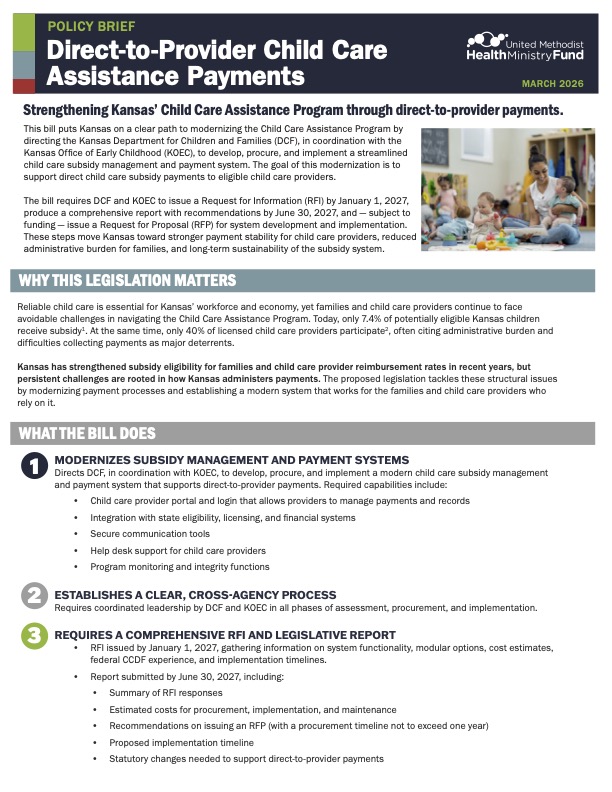
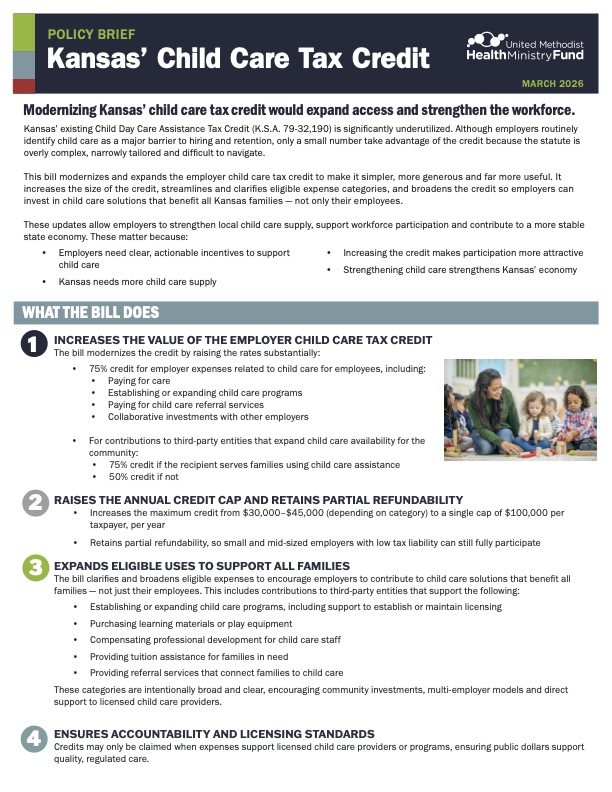
The Health Fund recently supported two bills that will strengthen the early childhood system and make child care more accessible for Kansas families.
SB 513 — Child Care Assistance Program
This bill strengthens Kansas’ Child Care Assistance Program through direct-to-provider payments. The Child Care Assistance Program is the state’s most reliable way to improve access to to child care. However, administrative challenges create barriers for providers to participate. Only 40% of the state’s providers currently participate in the program. Child care providers often site administrative burdens and difficulties collecting payments as major deterrents. Without provider participation, it makes it harder for families to participate. And, only 7.4% of potentially eligible children receive child care subsidy.
By paying providers directly, it would encourage more participation, and therefore more access to affordable child care for Kansas families.
View the testimony we submitted in support of this bill here.
We also created a brief about this issue, which you can access here or by clicking the file below.
SB 521 — Employer Child Care Tax Credit
This bill modernizes Kansas’ employer child care tax credit to make it more accessible, more effective and more responsive to the needs of Kansas families and employers. Access to reliable, affordable child care is essential for the health and well-being of children and families, and it’s critical to maintaining a strong workforce and economy.
The current Child Day Care Assistance Tax Credit has the potential to encourage employer investment in child care solutions, but it is significantly underutilized. Although employers routinely identify child care as a major barrier to hiring and retention, only a small number take advantage of the credit because the statute is overly complex, narrowly tailored and difficult to navigate.
SB 521 addresses these challenges by modernizing and expanding the employer child care tax credit to make it simpler, more generous and far more useful.
View the testimony we submitted in support of this bill here.
We also created a brief about this issue, which you can access here or by clicking the file below.
Listen below or on any of your favorite podcast services. Like and subscribe to stay up-to-date with each new episode!
Welcome to the Pioneers in Health podcast. In this podcast, we share inspiring stories of pioneering leaders from our nation and from your backyard who are working to improve health.
In episode 44, we interview Dr. Donna Ginther. She is the Roy A. Roberts & Regents Distinguished Professor of Economics, Director of the Institute for Policy & Social Research at the University of Kansas, and a Research Associate at the National Bureau of Economic Research.
Prior to joining the University of Kansas faculty, she was a research economist and associate policy adviser in the regional group of the Research Department of the Federal Reserve Bank of Atlanta from 2000 to 2002 and taught at Washington University from 1997 to 2000 and Southern Methodist University from 1995 to 1997.
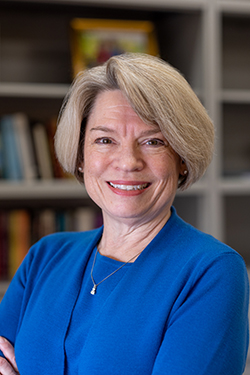
Her major fields of study are scientific labor markets, gender differences in employment outcomes, wage inequality, science policy and investments in children.
A native of Wisconsin, Dr. Ginther received her doctorate in economics in 1995, master’s degree in economics in 1991, and bachelor’s degree in economics in 1987, all from the University of Wisconsin-Madison.
In this episode, Donna shares how she first became interested in economics at an early age.
“I became interested in economics when I saw the economy affect my family. My dad was working for an automobile manufacturer and lost his job for several months in 1982 when we had a very deep recession,” she said. ” And I realized that the economy has an impact on everyday people.”
She pursued a bachelor’s degree and ultimately a master’s and doctorate degree in economics.
Now, as a distinguished economics professor, she shares about some of her recent and current research — much of which focuses on the drivers of inequality.
She discusses:
- Her research on women in economics
- Labor markets and how family structure affects educational outcomes
- Research on how better access to public programs, including Supplemental Nutrition Assistance Program (SNAP), reduces foster care placements and the number of children maltreated
- How artificial intelligence is impacting the labor market
- How inequality isn’t good for the economy or health
- The Institute for Policy & Social Research
- Property tax policies
- The impact of federal dollars on state economic activity
- The economic impact of not expanding Medicaid to include more Kansans
- What excites her and gives her hope
And much more! Listen now, and learn more about how Donna is an innovative leader in Kansas.
Please see the Pioneers in Health page on our website for more information on our podcast series and links to other episodes.
Community health workers help bridge the gap between their communities and health care and social services. They provide culturally responsive care, improve access to services and address social drivers of health — including food insecurity, housing instability and transportation barriers. They extend the reach of health care teams by offering follow-up, education and support beyond clinical settings.
In Kansas, CHWs are especially critical in rural areas, where geographic isolation, provider shortages and chronic diseases are more pronounced.
Since 2011, Kansas has made significant strides in building a strong, sustainable CHW workforce. Though considerable progress has been made, continued efforts are necessary to support, sustain and scale CHWs in our state.
The Health Fund recently convened partners from across the state to plan for CHW sustainability. This report discusses what areas were identified as critical to sustaining CHWs in Kansas, as well as recommendations for action.

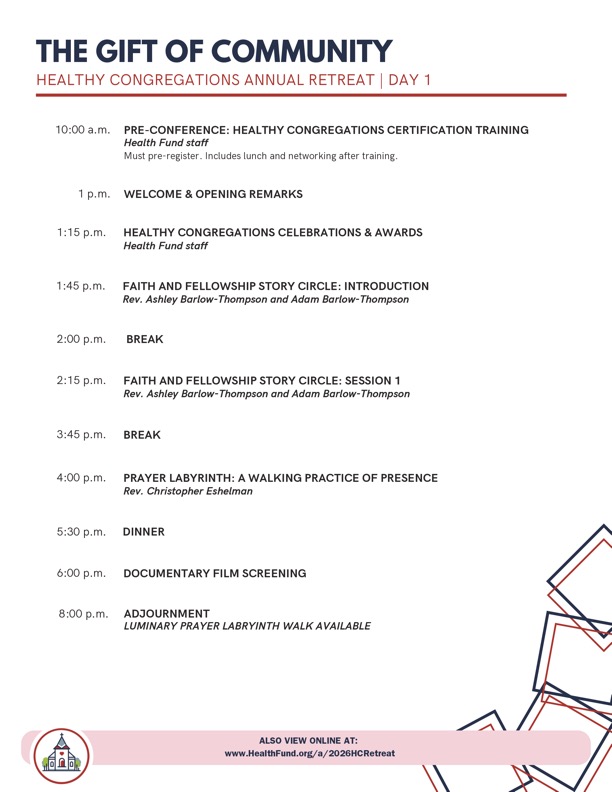
Come experience the Gift of Community at this year’s annual retreat. This two-day event is designed to leave you feeling inspired and connected to others who are passionate about the health of their congregations and communities. It will be held at the Homewood Suites in Salina, Kansas, April 16-17.
The event is free to attend and is open to all Healthy Congregations members or United Methodists in the Great Plains Conference.
The Health Fund will cover the hotel costs for any attendee who needs to stay the night. Simply indicate that while filling out the registration form below. Details about the hotel are also below. Those needing hotel rooms must register by March 19; room availability cannot be confirmed after this date.
Healthy Congregations contact: Jackie Biggs, program officer, jackie@healthfund.org
This year will focus on the Gift of Community — with each other, your congregation and the place you call home. Click here or on the image below to check out the agenda here!
Homewood Suites in Salina, Kansas
115 E Mulberry St.
Salina, KS, 67401, US
Please indicate on the registration form if you’ll need a hotel room.

Registration for the 2026 Healthy Congregations Retreat is now closed. Please contact info@healthfund.org with any questions. Thank you for your interest.
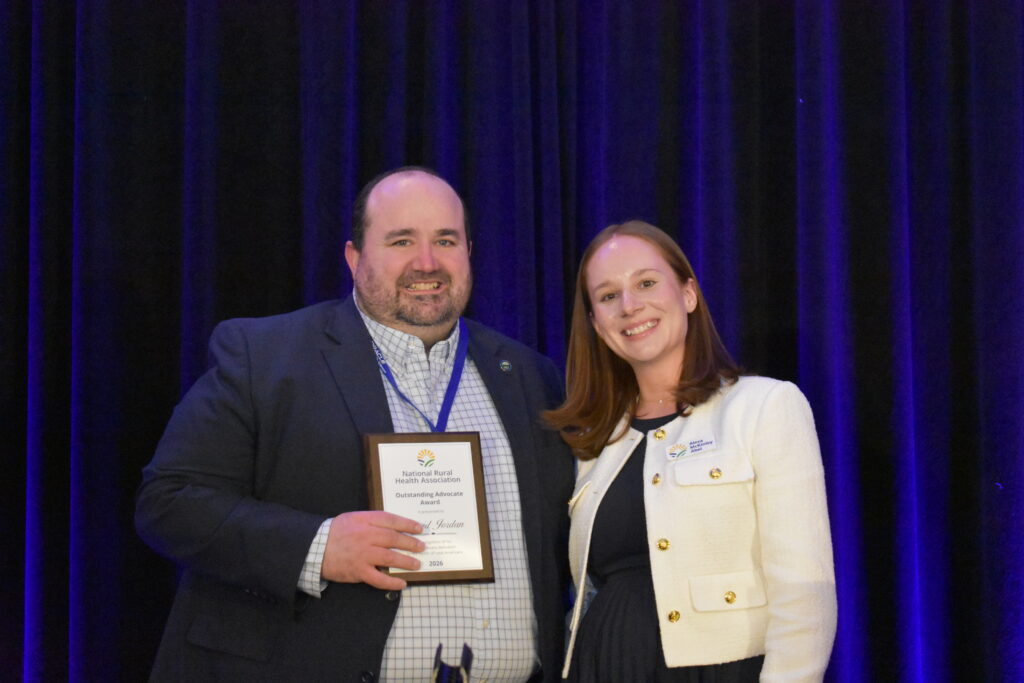
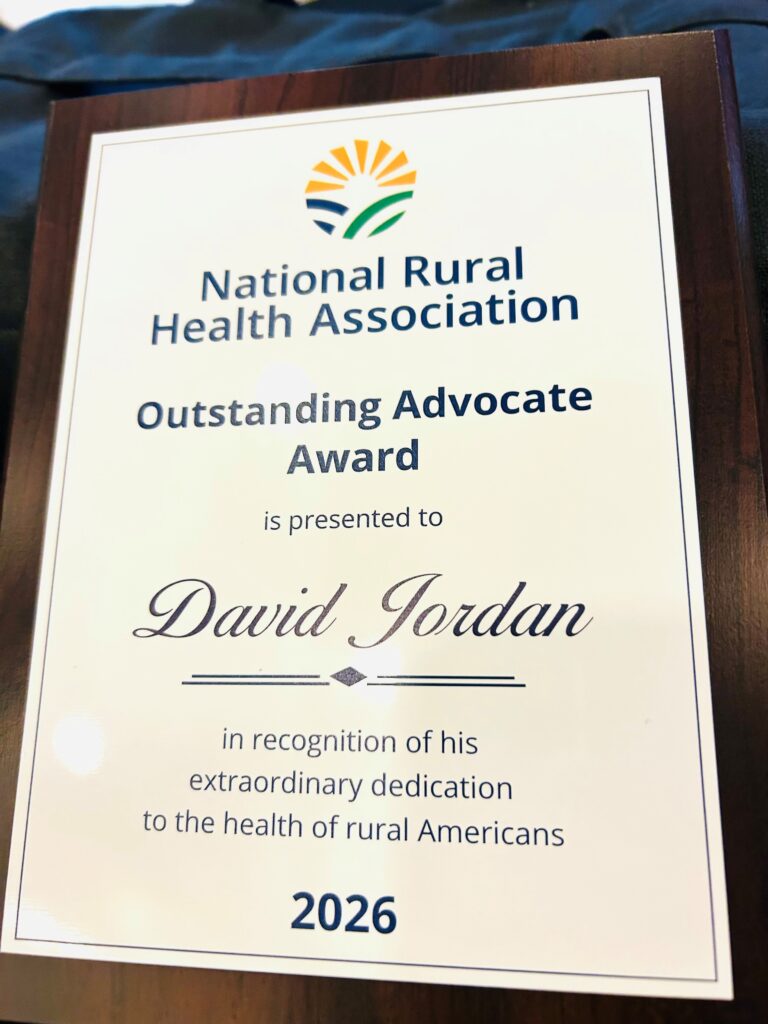
Health Fund President and CEO David Jordan received the Rural Health Advocate of the Year award by the National Rural Health Association Feb. 10 during the NRHA’s Rural Health Policy Institute.
He received the award as recognition for his extraordinary dedication to the health of rural Americans.
In presenting the award, NRHA leadership said David facilitated partnerships that helped the NRHA serve as a leading voice on rural Medicaid this past year.
“We really appreciate your work and commitment to rural communities,” said Alexa Mckinley Abel, NRHA director of government affairs and policy.
Welcome to the Pioneers in Health podcast. In this podcast, we share inspiring stories of pioneering leaders from our nation and from your backyard who are working to improve health.
In episode 43, we interview Rev. Dr. Beth Ludlum. Beth serves as vice president for strategic initiatives and executive director of The Hub for (Re)Imagining Ministry at Wesley Theological Seminary in Washington, D.C. She also serves on the Health Fund’s Board of Directors.
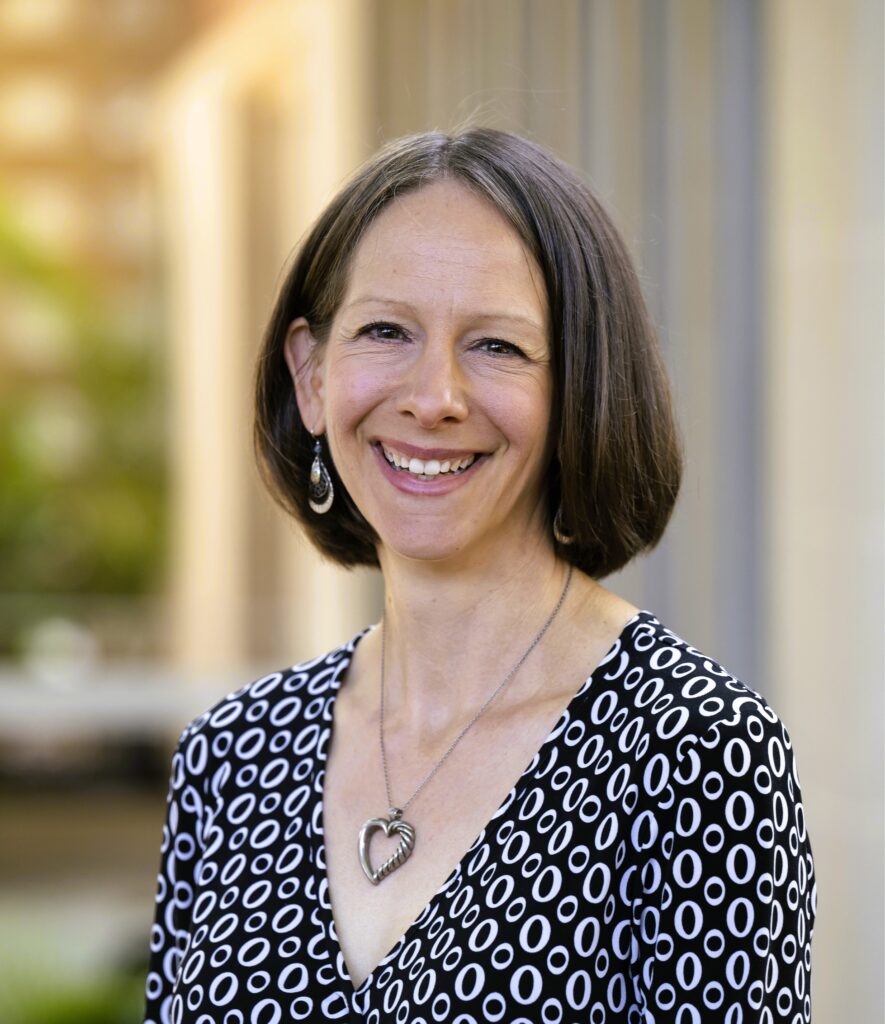
In this episode, Beth shares how she grew up on a sixth-generation farm in southeast Kansas. She grew up active in her small Methodist church, where the older women taught her to bake bread and pray and the older men would tell her stories.
“Church was always a big part of my life,” she said, noting those early experiences really shaped her faith and identify.
Upon graduating high school, she left her small town to attend Kansas State University, where she majored in agricultural communications. While there, she began getting more and more involved in ministry. When graduation time rolled around, she struggled to find a job that felt right.
“I kept looking at jobs and thinking, this isn’t the right next step,” she said. “And so finally, a friend told me about this opportunity to teach in China. It was with a Christian organization, so kind of with the idea of going with eyes and ears toward what God was doing there, and that somehow just hit the right chord.”
She spent a year there, and fell in love with the people. Upon her return to the states, she shares how her career took a different path and led her into politics in Washington, D.C., and then ultimately into her current faith-based role.
She also discusses:
- Her experience working in Washington, D.C., for U.S. Kansas Sen. Pat Roberts
- Discovering a love of policy
- Her journey into working in a faith-based role
- Her decision to go to seminary and what she loves about ministry
- Her passion for empowering young adult leadership and revitalizing ministry
- What The Hub for (Re)Imagining Ministry does
- The decline in church attendance
- The role churches can play in their communities
- The importance of lifting up the good in the world
- What gives her hope
And much more! Listen now, and learn more about how Beth is an innovative leader in Kansas.
Listen below or on any of your favorite podcast services. Like and subscribe to stay up-to-date with each new episode!
Please see the Pioneers in Health page on our website for more information on our podcast series and links to other episodes.
Welcome to the Pioneers in Health podcast. In this podcast, we share inspiring stories of pioneering leaders from our nation and from your backyard who are working to improve health.
In episode 42, we interview Kari Bruffett, president and CEO of Kansas Health Institute.
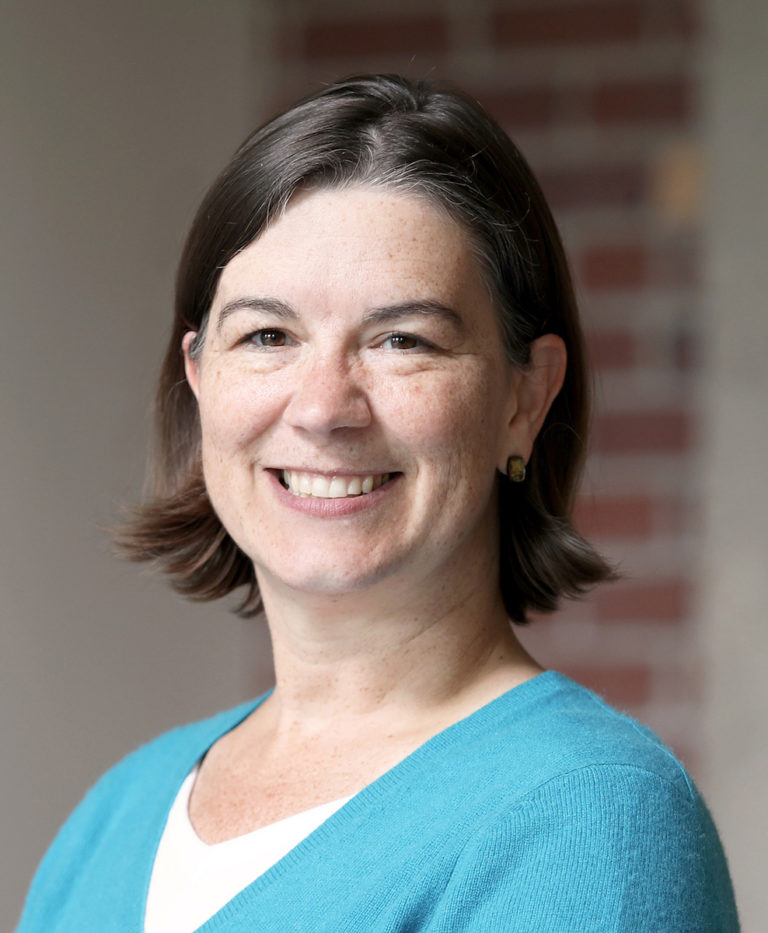
Kari, who grew up in western Kansas, began her career as a journalist for a small community newspaper in Paola, Kansas. There, she covered health care and government issues as part of her beat, which included localizing national health policy debate and covering an area hospital looking to expand into her county.
She also was able to interview U.S. Sen. Nancy Kassebaum during that time, who shortly after had a position open up in her office. Kari was hired for the position, which further introduced her to health care policy.
She shared about her experience going from covering local health policy to working on national health policies. She worked for both Kassebaum and U.S. Sen. Jerry Moran during her time in Washington, D.C.
“When I think about the kind of work that I’ve done, it really ties back to my strong belief that I really want folks to be able to live where they want to live, and where they live not to define their outcomes,” she said. “We know that’s such a real challenge in health care, but I didn’t know that that was going to be the sort of thing that was a motivating force for me when I first was starting out.”
Those experiences laid the foundation for a long career in health care and policy work.
In this episode, she also discusses:
- Her career journey and the types of health policy she helped with along the way
- Public health programs, including Medicaid
- Behavioral health care
- The Kansas Health Institute’s mission and work
- How policy impacts health and vice versa
- Opportunities that exist with rural health
- Workforce development efforts
- Policies they’re monitoring for this legislative session
- Reimagining the health care system
And much more! Listen now, and learn more about how Kari is an innovative leader in health care.
Listen below or on any of your favorite podcast services. Like and subscribe to stay up-to-date with each new episode!
Please see the Pioneers in Health page on our website for more information on our podcast series and links to other episodes.
Welcome to the Pioneers in Health podcast. In this podcast, we share inspiring stories of pioneering leaders from our nation and from your backyard who are working to improve health.
In episode 41, we interview Chase Blasi, Kansas senator and Senate majority leader. He is a fifth-generation Kansan who grew up in West Sedgwick County and represents Senate District 26 in the Kansas Legislature.

In this episode, Senator Blasi discusses his background and how his interest was sparked in politics.
He first became interested in politics in 2010 while in high school — a time when the Tea Party made headlines and was coming into prominence. He became a volunteer for Mike Pompeo’s campaign for Congress, who successfully was elected to public office and went on to hold many high-level positions, including CIA director and secretary of state.
In 2017, he joined Kansas Senator Susan Wagle’s office while she served as president of the Senate. He then worked for Senator Ty Masterson’s office after that; he, too, served as president of the Senate. After working five years as a staffer, Chase decided to leave the Statehouse.
“Only then, four months later, my senator (Gene Suellentrop) resigned, and I thought, well maybe I should run for office and and run for the Senate,” he said. “And so next thing you know, four months later, I’m back in the Senate — not as a staffer, but now as a senator.”
He was elected in a precinct special election and is now entering his fourth year of service in the Senate and his second year as senate majority leader. He became the youngest person to serve in either position.
He also discusses:
- Servant leadership
- His experience as a young senator and the perspective that brings to the Legislature
- How being a father makes him a better legislator
- The high cost of child care
- Efforts to pass a statewide ban on cell phones in schools and how he built a non-partisan coalition to support it
- His focus on child health issues for the 2026 legislative session
- Leadership Kansas
- What gives him hope
And much more! Listen now, and learn more about how Senator Blasi is an innovative leader in Kansas.
Listen below or on any of your favorite podcast services. Like and subscribe to stay up-to-date with each new episode!
Please see the Pioneers in Health page on our website for more information on our podcast series and links to other episodes.
© United Methodist Health Ministry Fund