Author: Nancy McCready

Health Fund recognizes physician with visionary leadership award

From left: Dr. Robert Kraft, David Jordan and Matt Penner

The Health Fund was honored to recognize Dr. Robert Kraft with the Kim Moore Visionary Leadership Award during a special ceremony May 5. He was honored for his extraordinary commitment to advancing health equity and strengthening rural health care in Kansas through partnership, vision and action.

This award, named in honor of our founding president, honors one individual whose leadership has had a positive effect on the health of Kansans.

Dr. Kraft embodies the spirit of this award. For more than 25 years, he has helped shape the future of family medicine in Kansas through clinical excellence, innovative leadership, and an unwavering commitment to patient-centered care.

Congratulations, Dr. Kraft, and thank you for the difference you make.

Health Fund honors education leaders with special project award

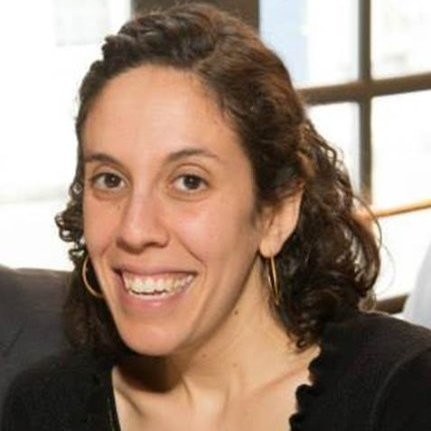
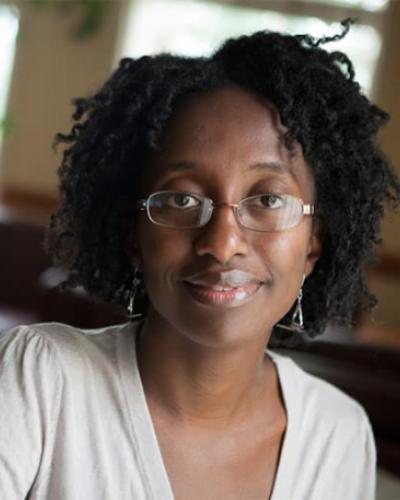
From left: Dr. Jennifer Francois, Kelly Davydov, David Jordan and Matt Penner

The Health Fund was honored to recognize Kelly Davydov, of Daydelys LLC, and Dr. Jennifer Francois, of Kansas State University, with the Janet Sevier Gilbreath Special Project Recognition Award at a special ceremony May 5 in Hutchinson.

This award, named in honor of our first board chairperson, recognizes one outstanding project from among all funded projects.

Kelly and Jennifer were honored for their commitment to data-driven research, meaningful stakeholder engagement and demonstrated impact on a system that serves Kansas families and children.

The Health Fund partnered with them to take an honest examination of why too few child care providers participate in the Child Care Assistance Program, contributing to only 7.4 percent of potentially eligible children participating. Access to affordable, high-quality child care is essential to the well-being of Kansas families.

Their efforts led to developing clear, actionable direction and led to the formation of a Governor’s Office advisory group that was focused on improving the child care subsidy system. A final report was then released with actionable recommendations.

Those recommendations are now being incorporated into the Office of Early Childhood’s transition planning and directly contributed to the passage of legislation this spring that will modernize the child care subsidy management and payment system, which should increase participation of families and child care providers in the subsidy program.

Congratulations to Kelly and Jennifer, and thank you for helping improve the lives of Kansas families.

New program aims to help Kansans find health insurance

Three Kansas organizations are embracing innovation in order to sustain a critical service that was decimated during recent federal funding cuts.

Thrive Allen County had initially received a $12.1 million federal grant to support multiple Navigators — people who are trained to help Kansans find and sign up for health insurance plans through the federal Health Insurance Marketplace. Navigators also could refer or assist with enrollment in Medicaid, the income-based federal public health program.

However, that funding was cut by 90% last year by the Trump administration, leaving the positions without funding and making it harder for Kansans to get the assistance they need to enroll in a health care plan that’s right for them. 

This prompted Thrive Kansas and the United Methodist Health Ministry Fund to search for innovative ways to provide this service without the reliance on federal dollars. 

Through a new approach, Thrive Kansas will use a private, nonprofit insurance broker model to continue providing this valuable service. The Health Fund is providing initial  financial support for the positions, who will become certified insurance brokers. They will earn commissions on assisting people, which will help financially sustain their positions in the future as grant funding is stepped down. 

“When this funding was cut, we had a choice — step back or find a better way forward. Kansans still need trusted, local help navigating their health insurance options, especially in rural communities where resources are limited,” said Lisse Regehr, president and CEO of Thrive Kansas. “By working together with partners across the state, we’re making sure this support doesn’t disappear but instead evolves into a more sustainable model for the future.”

This model was pioneered in Kansas by the Community Health Council of Wyandotte County, which has been operating a similar model for about five years and is providing guidance to Thrive Kansas. 

Thrive Kansas will base two positions in El Dorado to serve rural areas and has partnered with SENT Inc. to house a third position at its facility in Topeka. Together, they will help serve the entire state.

“Finding the right health insurance plan can be time consuming and complex,” said David Jordan, Health Fund president and CEO. “However, it’s critical that as many Kansans as possible have health coverage to benefit their families and the entire health system.”

Health care costs rise for everyone when more people are uninsured, as it forces hospitals and other medical providers to absorb the cost of care.

Under this new approach, the insurance brokers can assist Kansans with navigating and applying for Marketplace insurance, Medicaid and even Medicare — broadening the amount of plans they’re knowledgeable about to discuss. 

It will be free for Kansans to work with these specialists.

“Helping families find the right health coverage is not a small thing,” said Johnathan Sublet, executive director of SENT Inc. “It can shape whether they get care when they need it, whether they can stay financially stable, and whether they have a real chance to thrive. That is why this partnership is so important. It reflects the kind of collaboration Kansas needs, with rural and under-resourced urban communities working together to close gaps for families across our state. By housing this resource at SENT’s one-stop Family Resource Center, we can connect people not only to insurance help, but also to other supports that strengthen the whole family. When trusted help is in one place, it reduces strain, restores dignity, and makes it easier for people to move forward.”

Workshop series with The Neighboring Movement

We are pleased to host three workshops with The Neighboring Movement this year. Learn more about each workshop below and then register using the form. Registration is required to attend; Zoom information will be emailed following form completion. Feel free to download and share the flier, as well!

Congregations as Connectors | Noon June 5
60-75 minutes

Congregations play a crucial role in community development, but the traditional program-based church model struggles to adapt to cultural change. This workshop will introduce a missional perspective, helping congregations leverage their unique roles and resources beyond church walls into the surrounding neighborhoods and their members’ neighborhoods. 

We’ll provide a practical framework with actionable steps to address projects by focusing on strengths and abundance, allowing churches to become “community connectors” and active agents of flourishing neighborhoods. 

Covenantal Neighboring | Noon July 31
60-75 minutes

 We live in a time marked by “squishy commitment,” where relationships often involve one foot in and one foot out. People tend to avoid deep involvement, keeping their options open and feeling free to leave at any time. This transient behavior can damage trust and weaken communal culture. 

This workshop explores how to cultivate committed individuals, focusing on dedication to neighborhoods and their residents, ecology, and organizations. While we acknowledge that life can lead us in different directions, participants will learn to assess their commitments intentionally, welcome others, sustain relationships, and leave gracefully, ensuring community cultures remain strong despite changes. 

Holy Listening Conversations | Noon Oct. 2
45-60 minutes

 Many people lack the chance to engage in deep conversations about what makes them feel truly alive. This workshop offers hands-on experience with Holy Listening Conversations (HLCs), a method for discovering the unique gifts God has placed within each of us. You’ll learn to invite others to participate in HLCs, ask insightful questions, listen actively, and identify individual strengths to foster connections and strengthen relationships. 

The workshop wraps up with an introduction to asset mapping, demonstrating how to leverage connections to complete projects and overcome challenges. 

REGISTER BELOW

Neighboring Movement Faith-Based Workshops Series 2026

Faith-Based Workshops Series Registration

Retype email to confirm
Participation plans
Please mark all workshops in the series you plan to participate in. Calendar and Zoom connection information will be emailed to you following registration.
(Optional) add any comments, notes, or questions you’d like us to see.
Stay in Touch
Please let us know if you would like to receive relevant Health Fund communications in selected interest areas. You may update preferences or unsubscribe at any time.
Areas of Interest
If you would like to receive other Health Fund communications, please select your preferred areas of interest.

Podcast episode 49: Sherman Smith

Listen now

Listen below or on any of your favorite podcast services. Like and subscribe to stay up-to-date with each new episode!


This image has an empty alt attribute; its file name is RSS-Feed.png
This image has an empty alt attribute; its file name is Apple-Podcasts.png
This image has an empty alt attribute; its file name is Spotify.png
This image has an empty alt attribute; its file name is Amazon-Music.png


Welcome to the Pioneers in Health podcast. In this podcast, we share inspiring stories of pioneering leaders from our nation and from your backyard who are working to improve health.

In episode 49, we interview Sherman Smith, editor in chief of the Kansas Reflector.

In this episode, he shares how his love for news began at a very young age. He would arrive at school early and use the time to read the newspaper in the library.

“I was one of those weird kids who was really interested in current events and paid attention to the news,” he said.

He begged his mom for a subscription to Newsweek. When he went off to college at Emporia State University, he got a job as a sports reporter for the college newspaper. And, thus, his career into journalism began.

In this episode, he discusses:

  • How he started the Kansas Reflector in summer 2020
  • The role of nonprofit journalism and how the Kansas Reflector operates
  • Covering the Kansas legislative session this year and some of the larger headlines
  • The educational funding formula
  • The upcoming vote on a constitutional amendment
  • Conducting town-hall meetings across Kansas
  • The use of artificial intelligence
  • The upcoming elections
  • What gives him hope this election season

And much more! Listen now, and learn more about how Sherman is an innovative leader in Kansas.


Please see the Pioneers in Health page on our website for more information on our podcast series and links to other episodes.  

New bill to strengthen child care supply, support workforce participation

Kansas employers routinely identify child care as a major barrier to hiring and retention.

However, only a small handful have taken advantage of the state’s Child Day Care Assistance Tax Credit to expand child care options due to the statute being overly complex, narrowly tailored and difficult to navigate.

We are thrilled that Governor Kelly and Kansas legislators approved revisions to the statute that will make it simpler, more generous and far more useful.

The changes increase the value of the employer child care tax credit, raise the annual cap credit and include a three-year carry forward, and expand eligible uses to benefit more families.

These updates will allow employers to strengthen the local child care supply, support workforce participation and contribute to a more stable economy. This is a great win for child care in Kansas.

VIEW THE FACT SHEET

VIEW NEWS COVERAGE

News release from the Office of the Governor

Sunflower State Journal

State Affairs

2026 Healthy Congregations Retreat

We appreciate everyone who attended our annual Healthy Congregations retreat this year. We hope you enjoyed connecting, learning, sharing and developing relationships with others who share a passion for congregational and community health.

We’ve included resources from the 2026 retreat below. If you posted on social media during the event, we’d love for you to tag us @umhealthfund! And, we hope to see you again in 2027!

Healthy Congregations contact: Jackie Biggs, program officer, jackie@healthfund.org


Story Circles
Presenter: Adam Barlow-Thompson
Interested in receiving the full guide book on story circles? Click here to fill out the request form.

Prayer Labyrinth: A Walking Practice of Presence
Presenter: Rev. Christopher Eshelman, of Fort Scott First UMC
Presentation

Faith, Food and the Work of Justice
Presenter: Karen Siebert, of Harvesters
Presentation | Placemat | Paper Plate Campaign

Healthy Congregations in Practice: Stories of Connection, Care and Community Impact
Resources provided by Ranita Lilyhorn, of Omaha First UMC
Celebration of Soulful Healing | Health & Healing Ministries Brochure | Ongoing Projects & Events

Click here to view photos from the retreat!

We’re grateful to The Neighboring Movement for having a booth this year and sharing more about their organization.

Interested in learning even more? Feel free to reach out to Ian directly below.

Ian Campbell, ian@neighboringmovement.org

Wanting to join the next cohort for their Faith-Based Animator Network? The registration deadline is May 7. More information about FAN is here, or you can visit the FAN website here.

Podcast episode 48: Christina Holt

Listen now

Listen below or on any of your favorite podcast services. Like and subscribe to stay up-to-date with each new episode!

This image has an empty alt attribute; its file name is RSS-Feed.png
This image has an empty alt attribute; its file name is Apple-Podcasts.png
This image has an empty alt attribute; its file name is Spotify.png
This image has an empty alt attribute; its file name is Amazon-Music.png


Welcome to the Pioneers in Health podcast. In this podcast, we share inspiring stories of pioneering leaders from our nation and from your backyard who are working to improve health.

In episode 48, we interview Christina Holt, who was recently named interim director of the Center for Community Health and Development. She has served six years as the assistant director.

In this episode, she shares how she originally planned on a career in medicine, starting college as a pre-med student with visions of someday opening a free health clinic. Her advisor, knowing her interests, urged her to meet with professor Steve Fawcett, Ph.D. He convinced her to take a community health and development class.

That took her down a new path, where she ended up becoming a member of the Kansas Community Leadership Corps through the Center for Community Health and Development. Through that program, she returned to her hometown of Wichita and worked in HIV and AIDS prevention and intervention. She also worked with youth experiencing homelessness.

“It was really through transformative experiences like that, that it really shaped my interests and introduced the world of prevention to me, and really got me passionate about the idea of prevention and stopping suffering before it even starts,” Christina said.

She changed her major, and that led to a lifelong career with the Center for Community Health and Development.

In this episode, she also discusses:

  • What the Center for Community Health and Development does
  • Being designated as a collaborating center with the World Health Organization
  • The Community Toolbox
  • Sexual and domestic violence prevention efforts
  • Partnership with the Ewing Marion Kauffman Foundation
  • The role and power of participatory research and capacity building
  • What gives her hope

And much more! Listen now, and learn more about how Christina is an innovative leader in Kansas.


Please see the Pioneers in Health page on our website for more information on our podcast series and links to other episodes.  

Podcast episode 47: Brenda Bandy

Listen now

Listen below or on any of your favorite podcast services. Like and subscribe to stay up-to-date with each new episode!

This image has an empty alt attribute; its file name is RSS-Feed.png
This image has an empty alt attribute; its file name is Apple-Podcasts.png
This image has an empty alt attribute; its file name is Spotify.png
This image has an empty alt attribute; its file name is Amazon-Music.png


Welcome to the Pioneers in Health podcast. In this podcast, we share inspiring stories of pioneering leaders from our nation and from your backyard who are working to improve health.

In episode 47, we interview Brenda Bandy, executive director of the Kansas Breastfeeding Coalition, Inc. The Kansas Breastfeeding Coalition promotes breastfeeding support through advocacy and education across the state of Kansas.

In this episode, Brenda shares how becoming a mother sparked her interest in becoming involved in breastfeeding advocacy, which became her life’s work.

“I like to say that it began the day my first child was born. Becoming a mom was the beginning,” she said. “I became an advocate the day I became a mom.”

She had challenges with breastfeeding and reached out to La Leche League, which supports breastfeeding mothers, for help. She then began volunteering with that organization, where she helped for almost 20 years.

As she helped moms, she discovered there were common issues many women faced. She started to see there could be a larger impact possible.

“I thought, ‘Oh, if we could only talk to your employer, if we could only talk to the physician’s office or hospital, maybe this could fix the problem for a lot of people and not just one person,” she said. “So that’s kind of what got me curious about how can we work to fix problems further upstream.”

She has now worked in breastfeeding advocacy for several decades and oversees the Kansas Breastfeeding Coalition to provide education and support statewide.

In this episode, she also discusses:

  • The benefits of breastfeeding for both babies and mothers
  • The background and mission of Kansas Breastfeeding Coalition, Inc.
  • Breastfeeding initiation and duration rates
  • The business case for breastfeeding
  • The role hospitals and doctors have in increasing breastfeeding rates
  • The role lactation specialists play
  • The First 1,000 Days program
  • Paid leave for mothers
  • What gives her hope

And much more! Listen now, and learn more about how Brenda is an innovative leader in Kansas.


Please see the Pioneers in Health page on our website for more information on our podcast series and links to other episodes.  

Podcast episode 46: Dr. Jennifer B. McKenney

Listen now

Listen below or on any of your favorite podcast services. Like and subscribe to stay up-to-date with each new episode!

This image has an empty alt attribute; its file name is RSS-Feed.png
This image has an empty alt attribute; its file name is Apple-Podcasts.png
This image has an empty alt attribute; its file name is Spotify.png
This image has an empty alt attribute; its file name is Amazon-Music.png


Welcome to the Pioneers in Health podcast. In this podcast, we share inspiring stories of pioneering leaders from our nation and from your backyard who are working to improve health.

In episode 46, we interview Dr. Jennifer B. McKenney, MD, FAAFP. She owns and manages her practice, Fredonia Family Care, alongside her father and other colleagues. She was named the 2021 Rural Health Practitioner of the Year by the National Rural Health Association and received the Early Career Achievement Award by the University of Kansas School of Medicine in 2021.

She also is currently the associate dean for rural medical education for the KU School of Medicine. She serves as the Wilson County health officer and is co-chair of the statewide Health Officers of Kansas group. She is a past president of the Kansas Academy of Family Physicians and was the resident member of the AAFP Board of Directors. She serves on the medical staff at Fredonia Regional Hospital, a 25-bed critical access hospital. She has made numerous appearances on national and local news covering COVID-19 and rural health.

In this episode, she discusses what led her to pursuing a career in family medicine. She grew up with her father serving as the general surgeon at the local hospital in Fredonia.

“From the very beginning, I was able to see what my dad did for the people in this community, and it was beautiful,” she said.

Seeing the impact her dad had led her to following in her father’s footsteps to become a physician. Now, they work together at Fredonia Family Care.

“For me to be able to give back to the community that gave me so much is really cool,” she said. “Not to mention being able to work alongside my dad. …It really has become everything that I had ever hoped for in coming back to my hometown.”

She also discusses:

  • The experience of practicing medicine in a small, rural town
  • How to recruit more physicians to practice in rural areas
  • Ways her community is working to introduce more students to health care positions
  • Her rural family medicine fellowship
  • The importance of family medicine
  • Serving as the county health officer during the Covid pandemic
  • The importance of public health
  • Serving on her local school board
  • Establishing the Fredonia Area Community Foundation and Cultivate Fredonia, a community growth initiative
  • Creating Sausage Fest, a popular community festival that raises funds for Fredonia
  • Opening Oasis Medical Spa
  • Running a remote scribe company and utilizing technology in health care
  • Investing in rural hospitals and Medicaid cuts
  • What gives her hope

And much more! Listen now, and learn more about how Dr. McKenney is an innovative leader in Kansas.


Please see the Pioneers in Health page on our website for more information on our podcast series and links to other episodes.  

© United Methodist Health Ministry Fund