Ensuring that moms and babies have a healthy start to life shapes lifelong health; access to quality, culturally competent maternity care is critical to having that healthy start to life and a healthy life.
Unfortunately, gaps in maternity care have led to uneven health outcomes in Kansas, which is why the Health Fund commissioned this newest study to better understand what efforts would best reduce gaps in care and improve overall access to care.
The study, called the “Toward a Maternal and Perinatal Health Action Agenda for Kansas,” included a landscape assessment, interviews with key leaders, and meetings with diverse stakeholders to establish a shared vision and agenda.
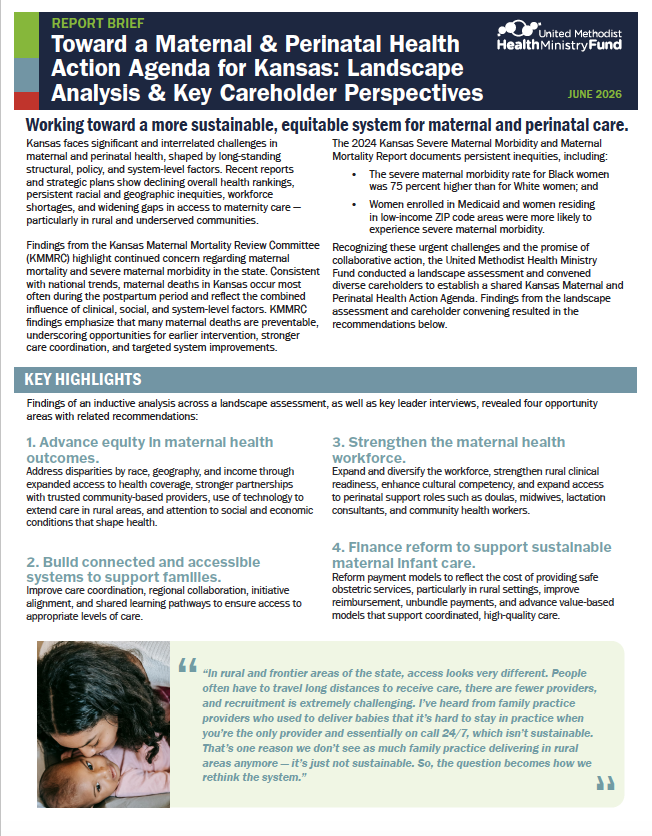
According to the report, Kansas faces significant and interrelated challenges in maternal and perinatal health, shaped by long-standing structural, policy, and system-level factors. Recent reports and strategic plans show declining overall health rankings, persistent racial and geographic inequities, workforce shortages, and widening gaps in access to maternity care —particularly in rural and underserved communities.
The report outlined four key areas to focus on in order to improve access to maternal healthcare in Kansas. Those four key findings include:
1. Advance equity in maternal health outcomes.
Address disparities by race, geography, and income through expanded access to health coverage, stronger partnerships with trusted community-based providers, use of technology to extend care in rural areas, and attention to social and economic conditions that shape health.
2. Build connected and accessible systems to support families.
Improve care coordination, regional collaboration, initiative alignment, and shared learning pathways to ensure access to appropriate levels of care.
3. Strengthen the maternal health workforce.
Expand and diversify the workforce, strengthen rural clinical readiness, enhance cultural competency, and expand access to perinatal support roles such as doulas, midwives, lactation consultants, and community health workers.
4. Finance reform to support sustainable maternal infant care.
Reform payment models to reflect the cost of providing safe obstetric services, particularly in rural settings, improve reimbursement, unbundle payments, and advance value-based models that support coordinated, high-quality care.
For more details and recommendations for each finding, view the report brief here or the full report here. They also can be accessed below.
Report brief
Full report