Author: Jeff

HC Webinar: Census 2020

Our February 11, 2020 Healthy Congregations Learning Community webinar features Blanca Soto, Southwest Kansas Campaign Director, covering Why the Census Matters: Ensuring Everyone is Counted. The webinar also highlights special HC grant opportunities and program updates.

The recording is available below. Presentation slides: 2-11-2020 Webinar.

2-12-2020 Healthy Congregations Learning Community Webinar – Census 2020
Kansas Counts Census 2020

Every 10 years, the Census Bureau takes a count of all people living in the United States, but many Kansas communities and populations are at risk of being undercounted. The census affects business planning, community development, funding for essential community programs (an estimated $4.5 billion in federal funding for Kansas) and our representation in Congress. Faith leaders are our trusted voices in the community. You know how to reach your congregation and members; hard-to-count families, individuals and children. If your team is interested in ensuring everyone is counted this webinar outlines practical ways your congregation can get involved! Learn more at KansasCounts.org.

August Proclaimed Breastfeeding Awareness Month

Press Release from KDHE, August 2, 2019

Governor Kelly Proclaims August “Breastfeeding Awareness Month”

TOPEKA – At an official signing ceremony, Governor Laura Kelly proclaimed August “Breastfeeding Awareness Month” in Kansas. This proclamation recognizes the importance of breastfeeding for the health and wellbeing of Kansans.

“We are extremely pleased with Governor Kelly’s proclamation which highlights the importance of breastfeeding support for families in Kansas. This proclamation supports their decision and provides a foundation to build support for the policy and practice changes needed to build a landscape of breastfeeding support in our state,” said Brenda Bandy, Executive Director of the Kansas Breastfeeding Coalition (KBC).

“Kansas recognizes breastfeeding as a public health responsibility and priority,” said KDHE Secretary Lee Norman, MD. “Strides in improved breastfeeding rates have been possible through strong statewide partnerships and community collaboration. We will continue to promote and support breastfeeding as a way to protect and improve the health of mothers and infants.”

More than 90 percent of families in Kansas choose to breastfeed. Yet despite its importance, only 31 percent of Kansas’ infants are exclusively breastfed during the critical first six months of life. Increased investment in breastfeeding could result in saving an estimated 22 women’s lives each year due to breast cancer, heart disease, diabetes and hypertension. Investing in breastfeeding could save the lives of seven children annually, due mostly to Sudden Infant Death Syndrome (SIDS) prevention. And finally, investing in breastfeeding would save Kansas more than $27 million in medical costs each year1.

Today’s proclamation stresses the role of every Kansan to make breastfeeding easier in our state. The Kansas Breastfeeding Coalition has suggested actions various groups and individuals can take to support breastfeeding in “The State of Breastfeeding in Kansas.”

1 Breastfeeding Saves Lives Calculator Access July 2019. Stuebe, A. M. et al (in press – 2017). An online calculator to estimate the impact of changes in breastfeeding rates on population health and costs. Breastfeeding Medicine.

Bike Share in a Box

Applications due: ongoing
Application details: see below

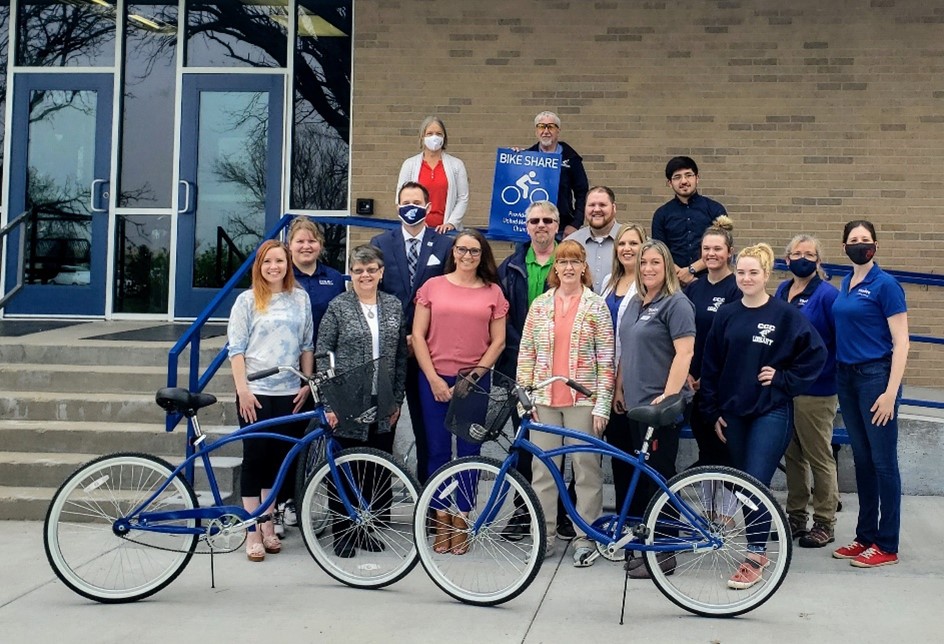
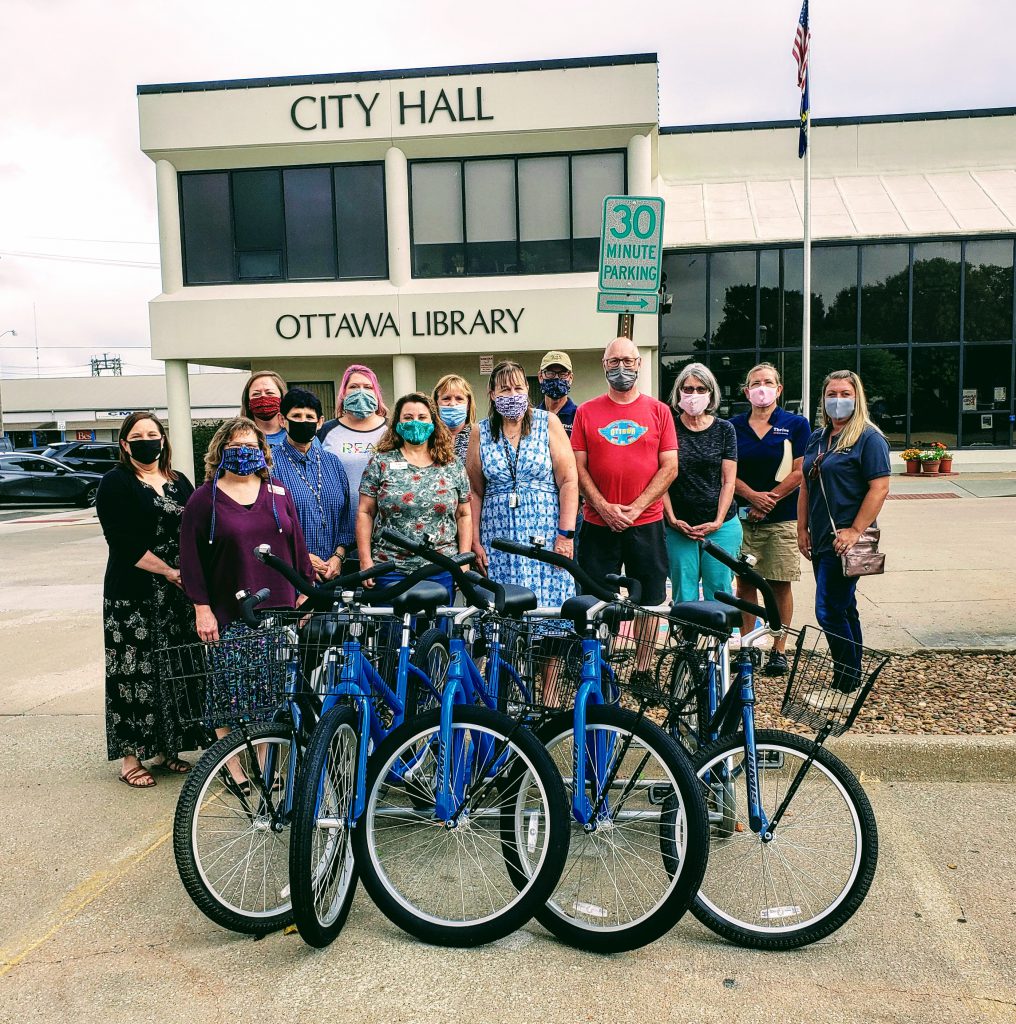
In partnership with Thrive Allen County, the Health Fund is excited to offer a special opportunity for Healthy Congregations churches to work with their rural communities to establish a free bike share program supporting active living and transportation. View a webinar about this opportunity below – slides available for download here.

Webinar recording detailing the Bike Share in a Box opportunity for Healthy Congregations.

Eligibility Criteria

  • Must be signed up as a Healthy Congregations church
  • A lead individual to work on the Bike in a Box program, along with a team or coalition to assist in making this program a success for the long term.
  • A location for the bike share program with an ability to assist bike share users with checking in and checking out bikes, answering questions, etc.
  • Ideas or connections to possible bike repair volunteers or a local bike store that can help maintain the bikes.
  • Enthusiasm, excitement and the understanding that every community is different and unique, meaning every community’s bike share program will operate slightly differently. Flexibility and openness are key!

Questions and Application

If you have questions and/or would like to discuss applying for one of the Bike Share in a Box grants, please contact Patrick Zirjacks at patrick@thriveallencounty.org.

If you have questions about the Healthy Congregations program, please contact our Healthy Congregations team at hcnews@healthfund.org or 620-662-8586.

2019 Healthy Congregations Retreat

The 18th annual Healthy Congregations Retreat, with a theme of Building a Healthier Tomorrow Together, brought nearly 110 participants to Rock Springs in late April to explore new ways Great Plains United Methodist churches can facilitate congregation-led community projects aimed at improving health – both directly and by addressing key underlying factors. Dr. Kate Kingery Deputy Director, Community Transformation, County Health Rankings and Roadmaps, kicked off the event with a keynote titled Health is More Than What Happens in Your Doctor’s Office illustrating how factors in the places we live, learn, work, and pray have a strong influence on health. See the below video for highlights of the 2019 event.

Stormont Vail Health Receives Project of the Year Award

Stormont Vail Health received the United Methodist Health Ministry Fund’s 2018 Janet Sevier Gilbreath Special Project Recognition Award for its Integrating Community Prenatal Breastfeeding Support project at a May 7 celebration in Hutchinson.

The award, in honor of the Fund’s first Board chair, is presented each year to one outstanding project selected by the Board of Directors from among all current funded projects.

Most mothers choose their infant feeding preference prior to delivery. However, current health care practice provides little direct information and support for breastfeeding during prenatal care. In response to this knowledge, Stormont Vail Health staff desired to be proactive in providing prenatal breastfeeding education and resources to expectant mothers as they are making this important decision for their child. The Obstetric Care Nurse Navigator position was created by Stormont Vail Health to lead the expansion of educational services to expectant mothers and staff at the largest obstetric practice in Shawnee County and at the local health department, where 70% of expectant mothers are Medicaid recipients.  The OB Nurse Navigator position was created with the expectation of providing prenatal women extensive education on the benefits of breastfeeding and information on hospital and community breastfeeding support resources and to assure continuity of care for these women through the completion of their breastfeeding experience.

Stormont Vail delivers approximately 2,000 babies annually – nearly 65% of all births in the region. Through the development of the OB Nurse Navigator position, the facility saw exclusive breastfeeding increase from 47% in 2016 to 76% in 2018.  Additionally, exclusive breastfeeding rates for mothers previously seen by the Nurse Navigator was 75% by the end of the grant, which, according to Joint Commission standards, places Stormont Vail Health in the top 10% of all hospitals for breastfeeding best practice. Furthermore, 88% of all women who delivered at Stormont Vail between January and June of 2018 initiated breastfeeding while in the hospital (up four percent from the prior year) and 76% of them continued this practice exclusively, offering no supplemental formula to their infant – an 8% increase over the prior year.

The Stormont Vail OB Nurse Navigator met with expectant mothers at the hospital clinic and at the Shawnee County Health Department.  By the completion of the grant, the OB Nurse Navigator had met with 3,436 mothers.  There were numerous other contact points which reached a total of 5,760 mothers through prenatal education classes and support provided by community outreach. In addition to supporting these mothers, the OB Nurse Navigator provided 18 breastfeeding educational offerings for staff at the hospital and the health department to further encourage sustainability and support of Stormont’s efforts.  The senior leadership of Stormont Vail Health view the Nurse Navigation service as a very important investment for their patients and were committed, from the inception of this grant, to fully sustain this position at the conclusion of the grant. For these accomplishments and for the leadership and service to expectant mothers and their infants, Stormont Vail Health is presented the 2018 Janet Sevier Gilbreath Special Project Recognition award for the work of its Obstetric Care Nurse Navigator program.

Representing the project at the awards ceremony were Karen Copeland, RN, Clinical Nurse Leader; Christy Crawford, RN, Director, Birthplace, Maternal Fetal Medicine and Breastfeeding Center; Libby Averill Rosen, PhD, RN, IBCLC, Professor of Nursing, Baker University – Stormont Vail Campus, and Randy Peterson, recently retired CEO.
The Benefits of Home Visiting

A new brief from KAC and UMHMF focuses on the many benefits of evidence-based home visiting programs in helping parents take an informed, active role in the lives of their children.

Through home-based visits with trained professionals equipped with evidence-based strategies and tactics, parents gain skills and competencies essential to supporting and improving the health and development of their children. Ensuring a strong start to a child’s life is critical; therefore, investing in preventive programs from the beginning of life will yield better outcomes than paying for reparative services needed when future challenges emerge. Well-designed and implemented home visiting programs can reduce the societal cost of poor health and academic failure, and return $5.70 for every dollar invested.

Research demonstrates there are multiple benefits of quality home visiting programs that positively impact outcomes including:

  • Preventing child maltreatment
  • Supporting positive parenting
  • Improving maternal and child health
  • Promoting child development, and
  • Increasing school readiness

To learn more, read the full brief here

Radio show educates on Medicaid expansion impact

Update: KS House passes KanCare expansion bill today 69-54

KWBW Morning Show interview with Mike Garrett, Ken Johnson, and David Jordan

Hutchinson radio station KWBW host John Brennan this morning interviewed Hutchinson Regional Healthcare System President/CEO Ken Johnson, Health Fund President David Jordan, and Horizons Mental Health Center CEO Mike Garrett to explore current healthcare challenges and increase awareness and understanding of the impact Medicaid expansion would have on our communities and our state. The recording is available here – read on for some quick highlights.

[Jordan] Up to 150,000 Kansans stand to gain coverage from this policy change but it also means we’d be bringing back $1.9 million/day from the federal government to pay for it – so it would be done in a very budget-neutral way for Kansas.

[Jordan] It will protect hospitals like Ken’s [HRHS], but really a lot of the hospitals out west that depend on Hutchinson to provide that more complex care – they’re in dire straits, financially vulnerable. Half of the uncompensated care costs they have would be wiped off the books if we expand Medicaid. So it would shore them up, make those communities healthier, and really stabilize property taxes.

[Jordan] It’s also going to create jobs. KS does a lot to create jobs in communities across the state and this is really a significant policy change that’s not going to cost the state much – not a lot of economic incentives that will have to be put on the table. But it’s really about helping our neighbors be healthier.

[Brennan] Go back to what you said about stabilizing property taxes – tell me what that means.

[Jordan] If you look at the math across the state, the highest rates of uninsured people in KS are in western KS communities, rural KS communities. So you have uninsured rates as high at 18%. Those people are going to hospital emergency rooms. In order to make sure those hospitals can stay open, a lot of western KS communities are supporting those hospitals with property taxes.

Listen to the full interview for more from Ken, David, and Mike on challenges in the healthcare system and the impact of KanCare expansion on health in our state.

Maximizing Medicaid for Kansas Kids

A new brief from KAC and UMHMF looks at how focusing on our children’s health from their earliest days provides not only the best lifetime health outcomes but also an incredible return on investment.

From access to prenatal care, to a baby’s first encounters with a doctor, Kansas’ Medicaid program provides for powerful opportunities to shape the lives of Kansas kids and their families. Healthy parents are more likely to engage with their young children, bolstering the brain development that is critical to the first year. States across the country are leveraging their respective Medicaid programs to shape the earliest years, reduce infant mortality, and transform outcomes in early childhood and beyond.

Some key points from the brief:

  • Kids enrolled in Medicaid miss fewer days of school for illness, do better in school, and grow up to be healthier adults, among other positive outcomes
  • States that have expanded Medicaid saw greater declines in infant mortality rates than in non-expansion states, and more pre-natal care for first-time moms
  • Prioritizing the health of parents and caregivers ensures they can take care of themselves so they can best take care of their children
  • Investments in early health interventions make good economic sense by preparing children to enter school ready to learn and lead healthy and successful lives

To learn more about the issues and abundant suggestions on how we can help the next generation thrive, please see the full brief here.

Health Fund Celebrates $70M in Grantmaking

In 1986, the United Methodist Health Ministry Fund started with a $30 million endowment established from the sale of Wesley Hospital. Since that time, the Health Fund has turned that investment into more than $70 million in grants to improve the health and wholeness of Kansans.

The Health Fund, which serves the state of Kansas from its headquarters in Hutchinson, has supported more than 2,400 health projects since inception, helping drive progress especially on oral health, breastfeeding, and rural health issues. Now the organization is looking to the future, with plans to focus specifically on access to care, early childhood, and congregation-led community health projects through a program called Healthy Congregations.

“$70 million in grants is a major milestone, and it is the result of board members and staff who have dedicated themselves to the sound management of our assets and the strategic deployment of grants,” said David Jordan, President and CEO of the Health Fund. “We are positioned to make an even greater difference in Kansans’ health for generations to come.”

In addition to a three-year strategic plan focused on their three areas of work, the Health Fund recently released a new brand identity including a new logo, website, and messaging. “Our ability to communicate with and inspire our audiences is crucial for creating impact,” said Jordan. “We saw an opportunity to communicate our role and our work through a new look and better storytelling.”

For more information about the United Methodist Health Ministry Fund, the strategic plan, or the visual identity, visit HealthFund.org

About the Health Fund

The United Methodist Health Ministry Fund works to facilitate conversation and action to improve the health and wholeness of Kansans—especially those in rural and under-served communities. By funding programs, moving ideas to solutions, providing hands-on expertise, and convening influencers, we work to advance innovative solutions to improve Kansans’ health for generations to come. We steward a $55 million endowment, which has provided more than $70 million in grants and program support since our inception in 1986.

Health care: Alternative solutions sought in rural Kansas

The announcement earlier this year that Mercy Hospital in Fort Scott would close by the end of the year was a surprise and shock to the community, which will lose several hundred jobs and more than a century of community health care legacy.

But it was not necessarily unexpected to those in the industry.

Many hospitals across Kansas, as around the country, have struggled the past decade with declining patient numbers amid rising costs.

According to the Kansas Hospital Association, of the state’s 127 hospitals spread across 91 counties, more than two-thirds had negative operating margins in a recent national study.

Read Full Story

By John Green, GateHouse Kansas

© United Methodist Health Ministry Fund