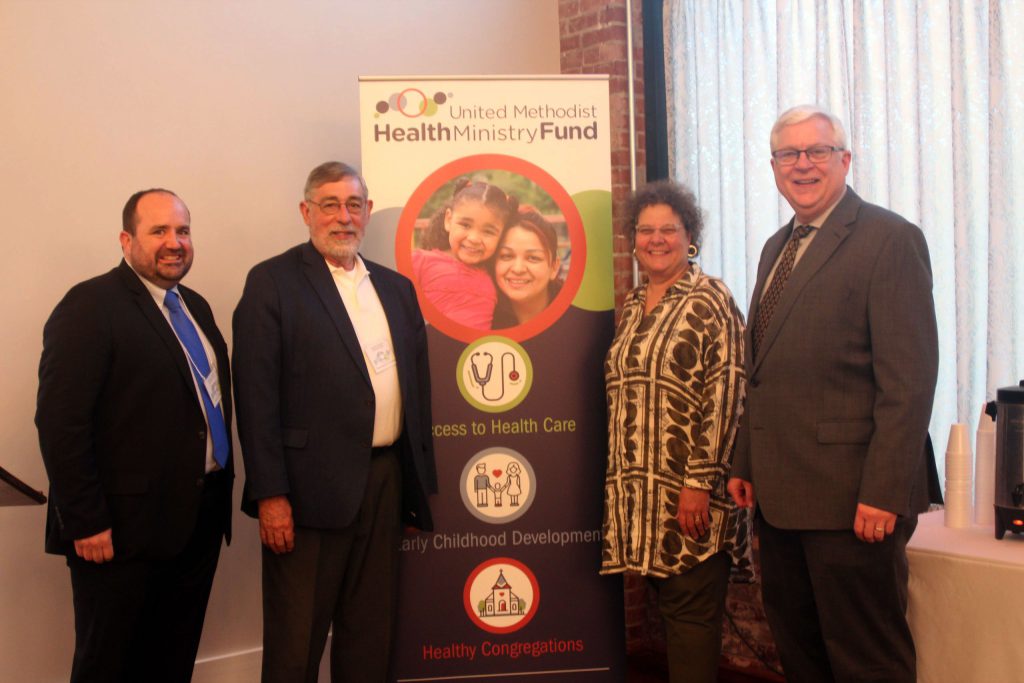
HUTCHINSON, Kan.— United Methodist Health Ministry Fund honored Monica Murnan with the 2022 Kim Moore Award for Visionary Leadership at a May 2 celebration in Hutchinson. Murnan is a former Kansas State Representative and currently serves as Director of Community Support Services at Greenbush.
Since 2017, the Health Fund has honored recipients in a chosen strategic field of work whose leadership has had a positive effect on the health of a specific group of persons. For 2022, the Fund invited nominations for a leader previously or currently serving in the strategic area of early childhood development.
Murnan received the honor for her outstanding work with children in Kansas as a licensed teacher and administrator in public schools, the non-profit arena, education service center settings and in public service.
“Monica has dedicated her life and career to improving the health and wellbeing of children in her community and across the state,” said John Wilson, President and CEO of Kansas Action for Children. “She has raised the collective expectations for how we treat children in the earliest years of their lives.”
Throughout her career, Murnan has shown leadership and prevailed through advocacy for early childhood development. She was the founding executive director of the Family Resource Center, one of the largest childcare centers in Kansas and also helped develop the Community Health Center of Southeast Kansas.
Murnan has served the public at the Kansas State House, on the Pittsburg City Commission, as the mayor of Pittsburg and as the House Minority Leader’s appointee to the Kansas Children’s Cabinet and Trust Fund. She currently chairs the Kansas Action for Children board of directors.
“Monica’s passion for this work has resulted in thousands of children receiving high-quality early learning opportunities, thousands of parents getting supports they need to be better caregivers, and hundreds of early childhood educators and practitioners growing professionally,” said Wilson.
The recipient is honored during the Health Fund’s annual awards celebration. The individual receives a cash award of $500, and if associated with an organization, that agency receives an additional $2,000 to use as it deems.
Kansas Hospital Association receives Janet Sevier Gilbreath Project of the Year Award
HUTCHINSON, Kan.— Kansas Hospital Association was honored with the 2022 Janet Sevier Gilbreath Special Project Recognition Award at a May 2 celebration in Hutchinson. The annual award, named in honor of the United Methodist Health Ministry Fund’s first chairperson, is given to one funded project each year best exemplifying the Fund’s vision of strategic philanthropy and demonstrating scale, results, operational excellence, and social justice.
Kansas Hospital Association (KHA) was honored for its leadership in building sustainable rural health care for the future of Kansas. Through partnerships, data driven research and active community engagement, KHA developed a new model of health care delivery, the Primary Health Care (PHC) model.
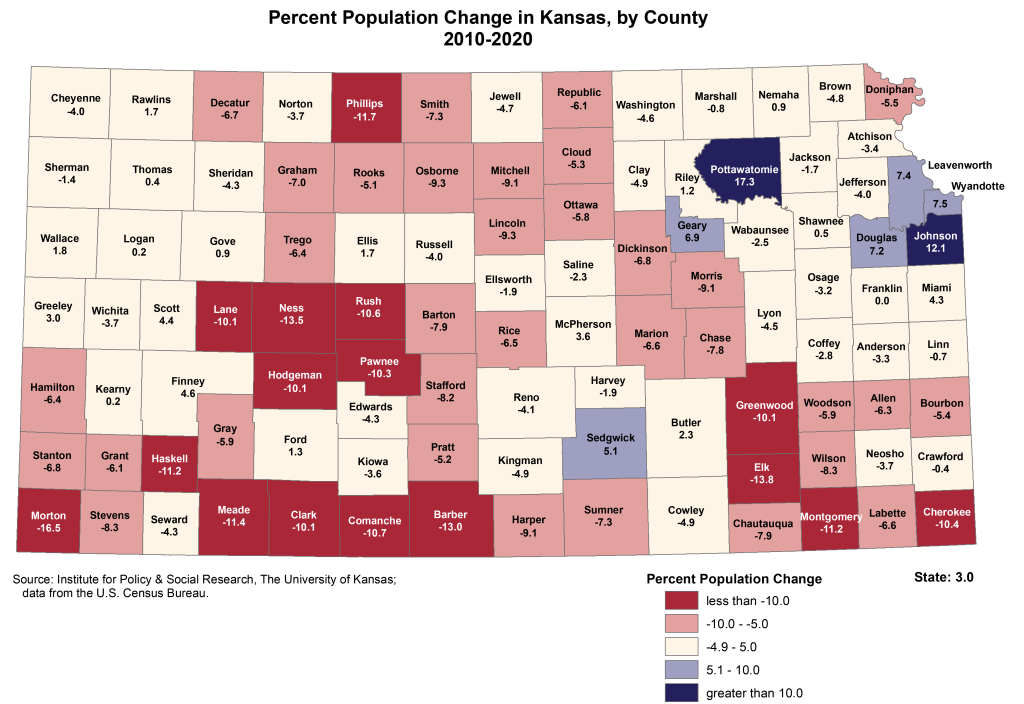
As Kansas continues to face challenges in delivering rural health care, KHA has answered the call. Kansas has more financially vulnerable hospitals than any other state and this issue is exacerbated by declining populations in rural regions.
“More than 10 years ago, the Kansas Hospital Association and Healthworks boards recognized the importance of looking to the future to ensure access to health services in rural communities would remain,” said Chad Austin, president and CEO of the Kansas Hospital Association. “Kansas hospitals provide essential health care services to a growing population of rural residents. Kansas communities depend on hospitals to be there when they need them – to respond swiftly to emergencies, to help patients cope with acute and chronic illness and to care for those who have no place left to turn – 24 hours a day, seven days a week, 365 days a year. It is an honor to be recognized for this work.”
The Kansas Hospital Association, Kansas’ trade association of hospitals dedicated to improving hospital care and achieving optimal health for Kansas, and their non-profit health foundation, Healthworks, have partnered with the Health Fund to advance rural health for nearly a decade. In 2014, with a grant provided by the United Methodist Health Ministry Fund and research conducted through Healthworks, KHA brought forth this new model of health care delivery, the PHC model.
Over the last several years, KHA has worked with policymakers, stakeholders, and the public through education on the changing health care needs of rural Kansas and the benefits of the PHC model. They have built public engagement and held conversations with local communities to develop a process that works for all.
In the winter of 2020, Congress passed the Rural Emergency Hospital (REH) model, which mirrored the Primary Health Center model, and in 2021 Kansas became the first state to pass state legislation establishing the REH model.
According to United Methodist Health Ministry Fund President David Jordan, “We are looking to the future of rural health care in Kansas with optimism. The work of KHA is building a sustainable and effective delivery model that will continue to serve all Kansans.”
During the celebration, Monica Murnan, former Kansas State Representative and Director of Community Support Services at Greenbush was recognized as the 2022 recipient of the Kim Moore Visionary Leadership Award for her outstanding work for Kansas child.
As we reflect on 2022 and look forward to the work ahead, it is important to celebrate where we have been and the partnerships that we have forged to improve health. Inside:
Applications due: The next nationwide cohort begins in January 2024.
The Good Neighbor Experiment (GNE) is a cohort-based learning process for congregations who wish to engage their community as neighbors. GNE is rooted in the practices of Asset-Based Community Development and the Christian Faith. The material has been used in congregations since 2017 and the Neighboring Movement team has refined the material with each cohort led. The process includes a 4 week worship series, online events with other participating churches from across the country, 3 action-based “Labs” of small group materials you do with your own congregation (each 5 weeks long) and congregational coaching for churches; all occurring over a 4 month period.
The Health Fund is excited to partner with NeighboringMovement.org and the Lilly Endowment to offer Great Plains United Methodist Churches a special opportunity for current or new signup Healthy Congregations (HC) teams to participate in the The Good Neighbor Experiment (GNE) at no cost. Not a Great Plains United Methodist Church? You are still welcome participate in GNE – please visit https://neighboringmovement.org/gne to learn more.
To get started, please fill out the below interest form. There is no obligation – staff will reach out to you to guide next steps and answer questions. To learn more about GNE first, please visit the GNE website. Questions? Please email dashinika@healthfund.org or ian@neighboringmovement.org.
GNE was created for local congregations of Christian churches. It is done best when 4-12 people from a church are willing to commit to the full scope of the training, including attending all the online kickoff events and personally participating in all 15 weeks of the small group curriculum.
NOT a church growth program
While some congregations do experience numerical growth, GNE is not intended to increase attendance on Sunday mornings or financial contributions. Instead, GNE is meant to create renewed vitality and to help the congregation become more deeply embedded within its community. GNE is for churches that are tired of creating programs that nobody wants to come to. Many of us have been taught that you can only engage your neighbor through evangelism or by providing a service to them; GNE offers another option. Throughout the experiment, churches are invited to move from scarcity to abundance and to see their role shift from service provider to community connector.
How do you participate?
GNE offers two ways to participate in a cohort:
Nationwide cohort: The Neighboring Movement staff leads two cohorts a year that will usually start in April and July.
Local facilitator/coach: If you would like to become a neighboring coach for local congregations near you as they participate in GNE and beyond, please contact ian@neighboringmovement.org.
Financial Costs: Great Plains Conference (UMC) church participation is covered at no cost. For other congregations, cohorts cost $1000 per church, though some local or regional conferences or organizations may provide financial support, depending on the area.
People Power: Churches are asked to form a team with a minimum of 4 lay people and 1 church staff person who are committed to attending every workshop and doing all 15 weeks of the small group curriculum.
Responsibilities of Individuals
Action Ready: GNE only works if the church is committed to actually engaging their neighbors. All participants should have the expectation of meeting their actual neighbors, both where they live and in the neighborhood of the church.
Kansas workers, health providers and employers increasingly rely on broadband access for their jobs, health care and enterprises. Held December 12 in Topeka, “Broadband Access and Telehealth: Exploring Policy Approaches for Kansas” engaged state policymakers, hospital and health system leaders, insurers and rural network directors during a presentation of recent studies and program developments followed by a policy leader panel offering perspectives on future broadband expansion and telehealth usage.
This opinion piece by Health Fund President David Jordan originally appeared in the Kansas Reflector on November 17, 2022, the second in a two-part series on current and emerging challenges and how Kansans are looking ahead to develop innovative solutions and ensure health care for generations to come.
Health care is vital for our communities — and under increasing pressure. In part 1 of this series, we looked at challenges Kansas faces in supporting the health care systems and workforce needed for our communities to thrive.
By recognizing shifting demographics, workforce challenges and changes in health care delivery, we have the opportunity to build a sustainable health care system for the future.
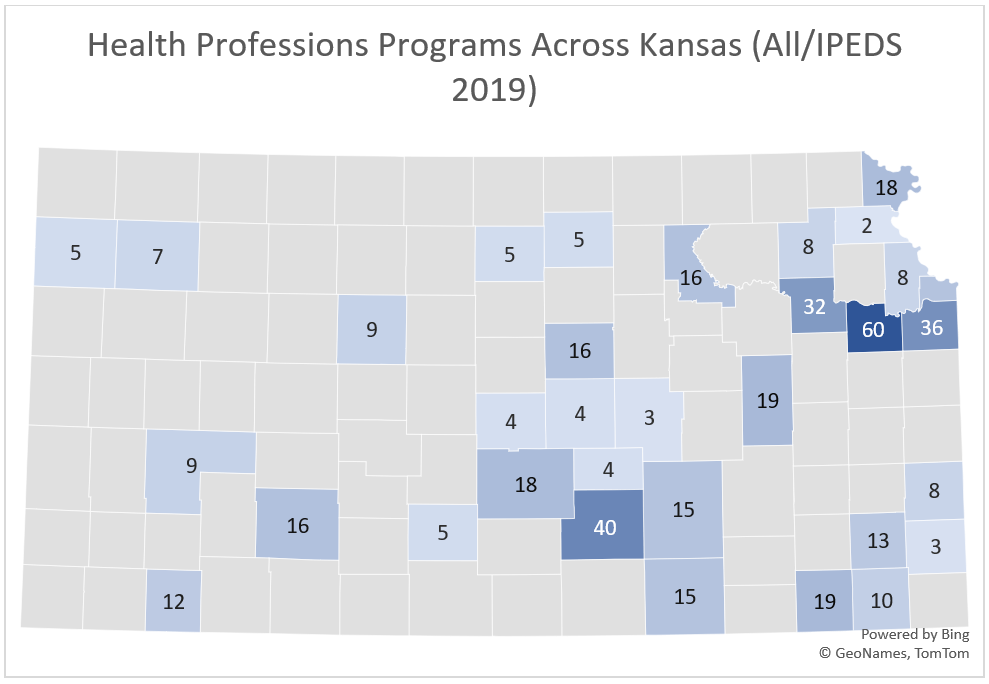
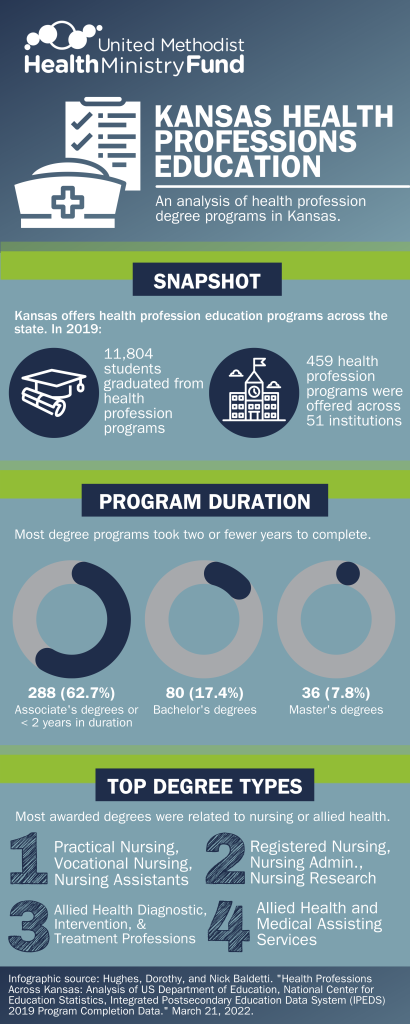
To plan ahead and better understand the health care workforce crisis, United Methodist Health Ministry Fund commissioned research examining the current health professional education pipeline in Kansas. KU School of Medicine and McPherson College researchers analyzed 2019 program completion data using the National Center for Education Statistics’ Integrated Postsecondary Education Data System (IPEDS).
As health care faces significant staffing shortages, the report illustrates an opportunity for Kansas — with health profession programs located throughout the state — to strengthen that foundation and increase our homegrown workforce.
In 2019, 11,804 students graduated from 459 health profession programs located across 51 Kansas institutions. Most (62.7%) completed degree programs of two years or less in duration. The largest number of graduates completed degree programs in nursing or allied health.
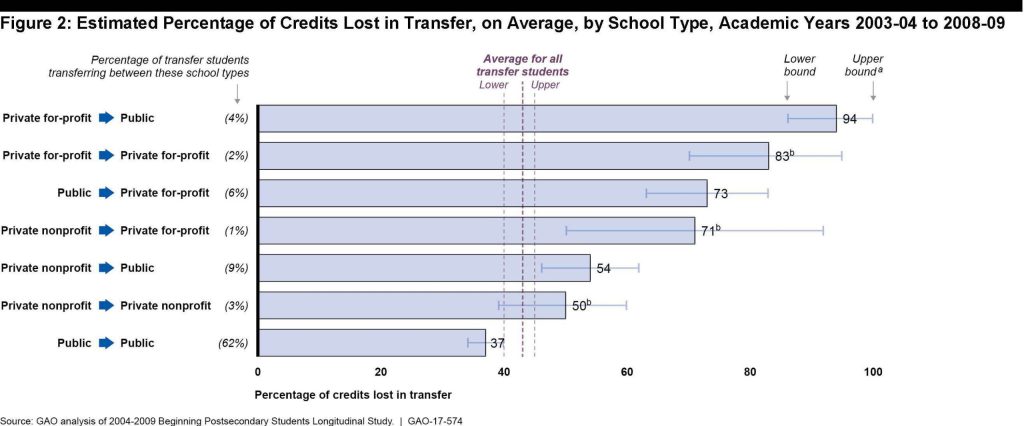
Likewise, we need to align secondary, technical education and postsecondary education programs, and ensure health care training completed in high school is transferrable and aligned with degree programs and employer needs.
We should continue to invest in nontraditional workforce development programs such as Gov. Laura Kelly’s recently launched Office of Apprenticeship, which seeks to develop and train new talent in critical industries such as healthcare.
We need to examine scope of practice and payment policies to best use our workforce, and implement smart systems and policies enabling every provider on the team to practice to the top of their scope.
We have an opportunity to better leverage providers such as physician assistants, dental therapists and others to provide care under doctor-led teams. Expanding team members’ scope of practice can increase capacity and address workforce challenges.
We can leverage technology to maximize our workforce and better serve Kansans. Telehealth provides that opportunity. Before COVID-19, just 11% of US consumers were using telehealth, but in 2020 its unique advantages (especially in rural areas) became clear. Now, consumers and providers agree telehealth is here to stay, playing a key role in integrated, patient-centered systems of care.
Ensuring all Kansans have access to reliable broadband allows us to distribute workforce and re-design our health system in a different way. Residents can access hard-to-recruit specialty care in their communities, benefiting them while reducing burdens of recruitment. However, we must change policies to foster this innovation for the long term.
Beyond direct workforce and health system issues, we need to ensure Kansas has community supports to ensure health care workers remain in Kansas, including child care. A 2020 study reported only 3% of Kansas counties met desired capacity — before COVID-19. While solving the child care crisis requires sustained work at all government levels, we can take steps today, including better use of child care subsidies.
There is no single solution. Increasing our health care workforce requires research, collaboration, policy change and willingness to change the status quo. Kansans, working together, can ensure our communities have health care and thrive for generations. Join the conversation at https://communityconversationsks.com.
Health care is vital for our communities, but our ability to maintain the workforce needed to adequately deliver that care is under pressure. In this two-part series, we look at current and emerging challenges, as well as how Kansans are looking ahead to develop innovative solutions and ensure health care for generations to come.
Kansas faces many challenges in delivering health care, especially in rural areas. The state is experiencing shifting demographics, uninsurance rates higher than the national average, and difficulty attracting and retaining workers.
As we plan for the future, we need to consider how outside factors will affect demand for workers, who we are recruiting to the health care workforce, where and how they will be trained, how technology will impact care delivery, and where providers will need to be located.
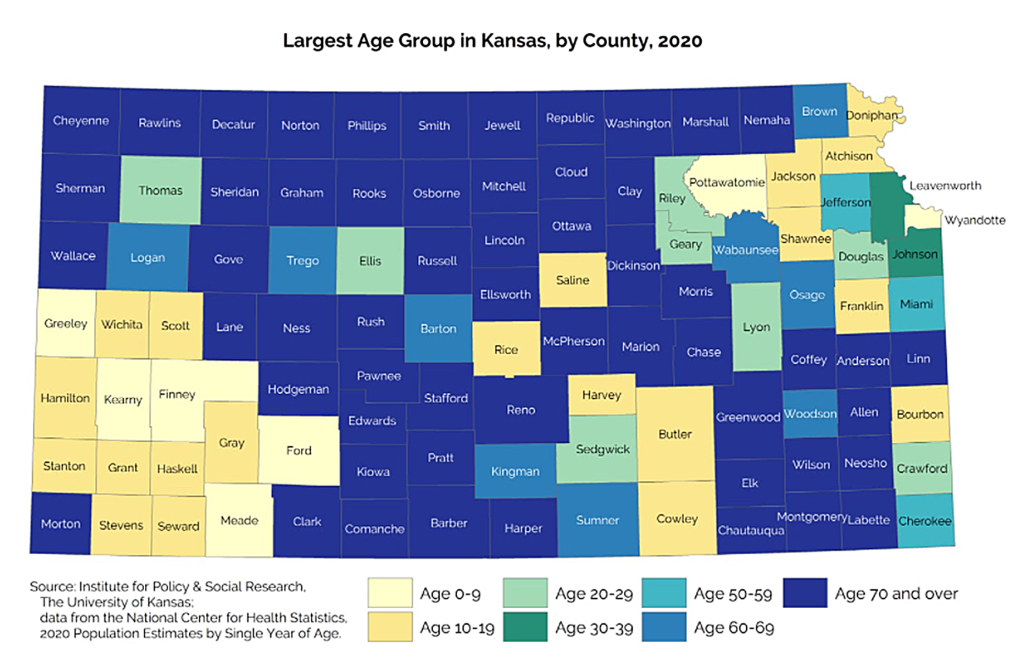
Kansas’ population trends will affect demand and workforce composition
That trend makes it critically important for Kansas to address longstanding racial and ethnic disparities in health, poverty rates and educational attainment. Training and hiring culturally competent health care workers will become increasingly important to addressing health inequities and building a health care system to meet future needs.
COVID-19 worsened an already inadequate supply of providers
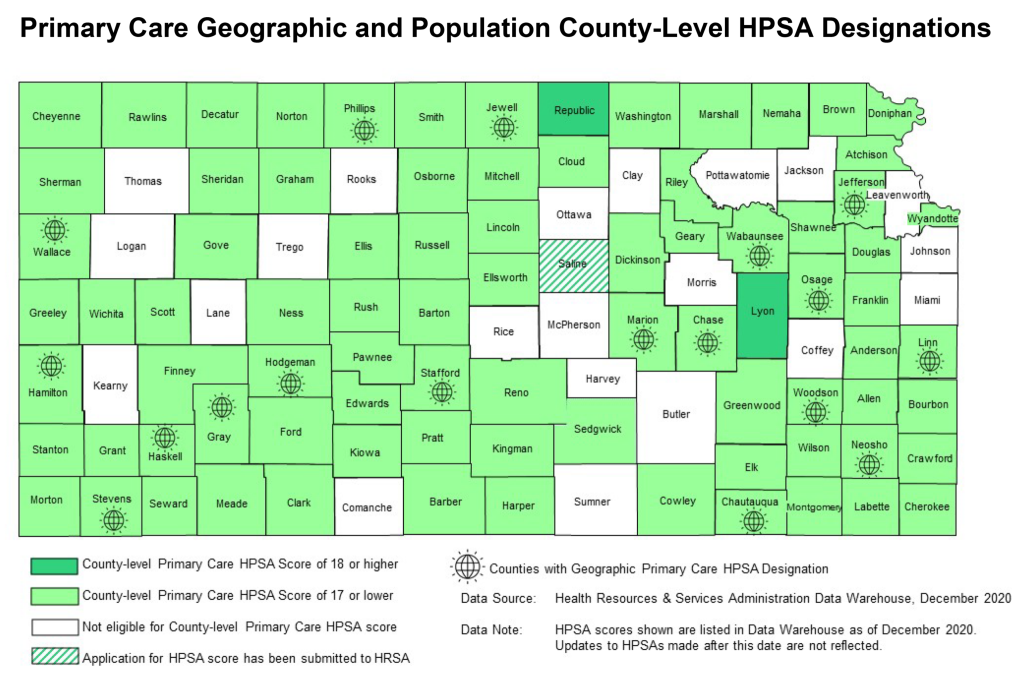
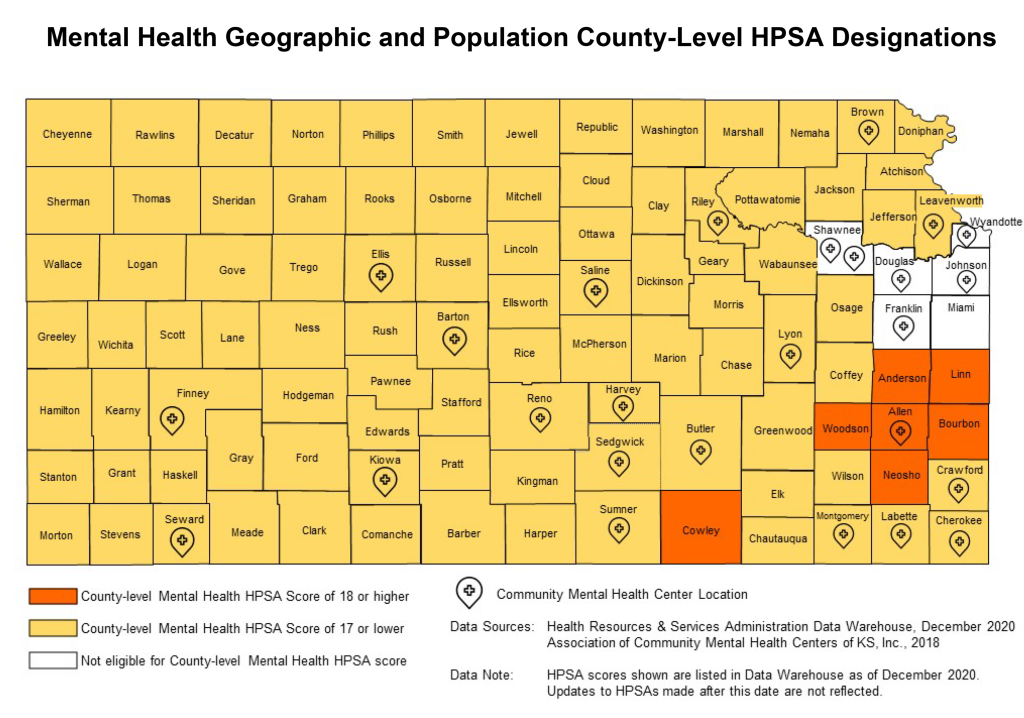
Before COVID-19, many Kansas counties already had an inadequate supply of health professionals. As the below Kansas Department of Health and Environment figures depict, the majority are considered health professional shortage areas (HPSAs) for both primary and mental health care — lacking the health professionals necessary to meet their population’s health care needs.
COVID-19 exacerbated that existing workforce challenge. In a 2021 KFF report, 3 in 10 health care workers said due to the pandemic they have considered leaving health care. Earlier this year, McKinsey and Company reported 32% of RNs surveyed in November 2021 said they may leave in the next year.
Provider retirements will create additional pressure – a Kansas Health Institute brief illustrates that in 2020, nearly 4 in 10 (39.2%) of primary care providers in Kansas were over the age of 55, rising to nearly half in some regions (45.2% in southwest Kansas and 42.5% in southeast Kansas).
Kansas lags national insurance rates, reducing competitiveness for health care professionals
Uninsured patients and resulting uncompensated care complicate financial sustainability for health systems, impacting daily operations and long-term viability of health care — especially in rural communities and communities of color.
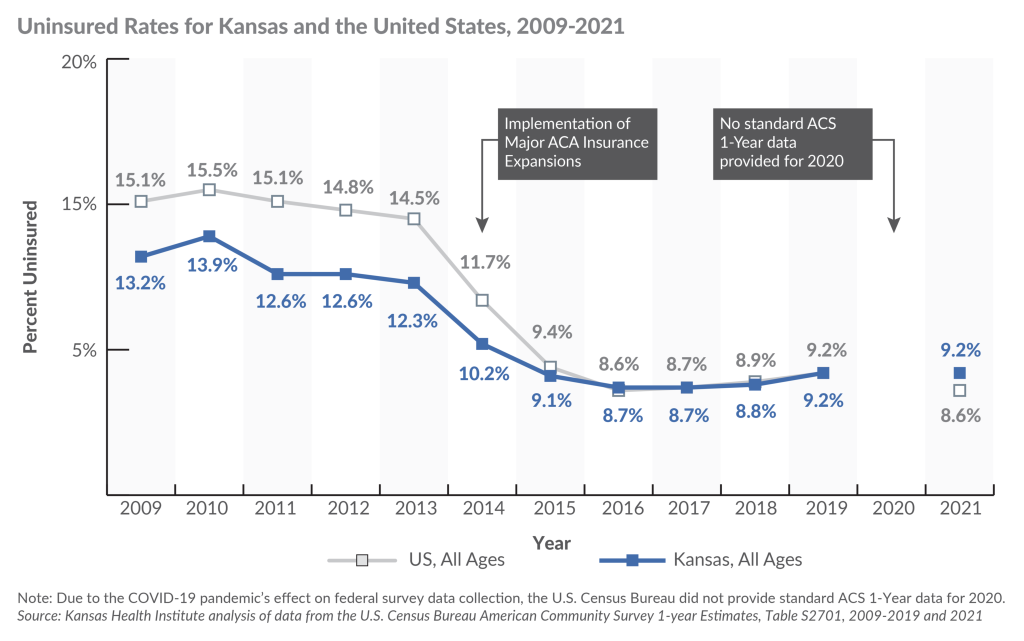
Kansas is one of 12 states that have not expanded Medicaid, evidenced in our stagnant uninsurance rate. According to KHI, as the national uninsurance rate declined to 8.6% in 2021, Kansas’ rate remained at 9.2%. This was the first time in decades our uninsurance rate exceeded the national average. The difference in 2021 primarily reflects a higher uninsured rate in Kansas versus the U.S. among working-age adults.
Historically, uninsured rates in rural counties are among the highest in Kansas. There are also significant disparities among Kansas residents by race and ethnicity. Those identifying as Hispanic or Black are more likely to be uninsured in Kansas than the United States. In Kansas, uninsurance rates were 20.3% for Hispanic residents and 14.1% for Black or African American, versus 17.7% and 9.6% U.S. averages, respectively.
Before implementation of the Affordable Care Act, Kansas boasted a better uninsurance rate than the national average but now lags.
The high uninsured rate and financial instability make us less competitive in recruiting providers versus surrounding states that have all expanded Medicaid.
In part two of this series, we’ll move beyond the challenges and explore how Kansans are collaborating to develop innovative solutions. To learn more, visit https://communityconversationsks.com.
Access to behavioral health is a top concern for all Kansans. We all benefit when behavioral health services are better integrated into our health care system.
For more than 30 years, Kansas has ensured that each county received safety net mental health services provided by a community mental health center. Community mental health centers have faced increased demand for services coupled with workforce shortages.
To better meet demand and serve their communities, community mental health centers will transition to an integrated care approach. The Certified Community Behavioral Health Clinic (CCBHC) model was designed so that all individuals can access coordinated comprehensive behavioral health care, such as outpatient mental health and substance use services. CCBHCs also provide care coordination to help patients navigate the health care and social services systems. CCBHCs must provide services regardless of where patients live or their ability to pay.
Transforming from a community mental health center to a CCBHC takes time, planning, and money. That takes capacity in the form of staff, resources, and knowledge. Rural communities typically have less capacity to apply for federal grants than metropolitan areas. Kansas is one of the 10 states with the most limited community capacity—it’s not surprising that Kansas ranks 47th in drawing down federal funds.
To create greater access to behavioral health services, especially in rural and under-served areas in Kansas, the United Methodist Health Ministry Fund (Health Fund) provided technical assistance to community mental health centers to bring back federal grant dollars to support their efforts as they seek CCBHC status.
The Substance Abuse and Mental Health Services Administration (SAMHSA) recently awarded CCBHC planning, development, and implementation (PDI) grants to 10 Kansas community health centers, including the following four that received technical assistance from the Health Fund:
Elizabeth Layton Center (ELC) in Ottawa was awarded $988,841 for its first year of CCBHC PDI funding. ELC serves Franklin and Miami counties in eastern Kansas. The SAMHSA grant will allow the ELC to expand access to comprehensive behavioral health services.
Iroquois Center for Human Development in Greensburg was awarded $1,000,000 for its first year of CCBHC PDI funding. Iroquois serves four rural counties in southwest Kansas. Its SAMHSA funding will allow it to increase access to comprehensive mental health services, especially among vulnerable farmers, the elderly, and veterans.
Southwest Guidance Center (SWGC) in Liberal was awarded $1,000,000 for its first year of CCBHC PDI funding. SWGC serves four frontier or rural southwest Kansas counties. Its SAMHSA grant will enable more individuals to successfully access comprehensive behavioral health services, especially within the Hispanic and veteran communities.
Spring River Mental Health & Wellness, Inc. in Riverton was awarded $955,314 for its first year of CCBHC PDI funding. Spring River serves Cherokee County in southeast Kansas. SAMHSA grant funding will support the expansion of Spring River’s services offered and the use of evidence-based practices.
Over the course of the four-year grants, we expect more than $15 million to return to Kansas to support these four community mental health centers as they transition to the CCBHC model.
“This is a big lift for community mental health centers to increase capacity to meet the new requirements,” said Kyle Kessler, Executive Director of the Association of Community Mental Health Centers of Kansas. “The grant funding awarded by the Substance Abuse and Mental Health Services Administration provides the support they need to recruit and retain staff, complete necessary trainings, and implement new programs. We are thankful to the United Methodist Health Ministry Fund for assisting our members to successfully apply for the grant funding; it is a huge win not only for the centers but most importantly for the communities they serve who will now have easier access to a broader array of behavioral health services.”
The Health Fund has been providing grants in Kansas for more than 35 years, but recently began providing technical assistance and grant writing support to partners working in our strategic areas of interest. This new strategy leverages resources and expertise to bring crucial federal dollars back to Kansas to improve access to care and early childhood services while making the systems more financially sustainable.
Altogether, the Health’s Fund investments in technical assistance in 2021 and 2022 have helped bring back more than $30 million in federal funding to Kansas to improve access to health insurance and behavioral health services.
“The Health Fund is always working to leverage our resources most effectively to increase access to sustainable health care for Kansans,” said David Jordan, president and CEO of the United Methodist Health Ministry Fund. “These newest grants will strengthen access to behavioral health care and support an innovative delivery model—which represent two major priorities for the Health Fund. I’m proud we’re able to help bring critical funds back to Kansans to strengthen behavioral health care in rural communities and create a healthier future for all Kansans.”
###
The United Methodist Health Ministry Fund is a statewide health foundation that facilitates conversation and action to improve the health and wholeness of Kansans—especially those in rural and under-served communities. Through funding programs and ideas, providing hands-on expertise, and convening influencers, the Health Fund advances innovative solutions to improve Kansans’ health for generations to come. Located in Hutchinson, Kansas, the Health Fund has provided more than $75 million in grants and program support since its inception in 1986.
The United Methodist Health Ministry Fund (Health Fund) has launched a “Faith in Vaccines” campaign to promote COVID-19 vaccination and help ensure Kansas families are as prepared and protected as possible against emerging COVID-19 variants.
The campaign has highlighted the efficacy of the current vaccines and has included voices from trusted sources, such as pediatricians, faith leaders and rural community leaders, as well as testimonials from individuals who have been directly impacted by COVID-19.
“The decision to be vaccinated is a personal one,” said David Jordan, Health Fund president and CEO. “We hope this campaign will provide Kansans with the additional information they need from trusted sources to consider if the vaccine is right for them. Ultimately, we want to see more people choose to be vaccinated and limit their chances of severe illness or death due to COVID-19.”
This commentary by Health Fund President David Jordan on strengthening rural health care through KanCare expansion originally appeared in the Wichita Eagle on March 9, 2022.
Kansas is a rural state with nearly one-third of the population living in rural communities. As Kansans we take pride in self-reliance and taking care of our own.
Yet Kansans living in rural and frontier areas are more likely to be uninsured than those in more populated communities. Kansans living in frontier communities have the highest uninsured rate in the state (12.9%). When it comes to health care and sustaining rural health systems and communities, we need more than self-reliance. We need health insurance.
Many of our uninsured neighbors are hardworking Kansans who earn too much to qualify for KanCare, the state’s Medicaid program, and too little to qualify for health insurance through the Affordable Care Act. In fact, a single parent of two kids earning more than $4.00 an hour earns too much to qualify for KanCare.
These hardworking Kansans are our neighbors. Kansans like Jim, an uninsured farmer who enjoys working with crops and large machinery. He lost his health insurance after a seasonal job ended. Getting insurance now is beyond his means.
He’s dealing with diabetes and an injured foot. The bones were broken, but Jim hasn’t been able to get it addressed. He calls it a “Catch-22.” He was hurt and needs money to get well, but he can’t work to make money because of the injury.
Without health insurance, Jim is scraping by and going without regular care.
Emergency room care is often the only option for uninsured Kansans like Jim. But hospital bottom lines and viability are threatened if uninsured patients can’t pay bills. Currently, 70 rural Kansas hospitals are financially vulnerable and categorized as at-risk of closing, more than in any other state.
Rural and frontier towns rely on hospitals for health care and to anchor communities.
According to the Kansas Hospital Association, in 2020, 12% of Kansas employment was in the health services sector. The health care sector was the fifth largest producer of total income and of total sales.
For health and prosperity, a sustainable health system is crucial to the future of our rural regions and our rural way of life.
Kansas can take an immediate step to strengthen rural health systems and communities by expanding KanCare, the state’s Medicaid program.
Multiple studies show that hospitals, particularly rural ones, are at significantly higher risk of closure in states that have not expanded Medicaid. A 2018 study published in Health Affairs found “Medicaid expansion was associated with improved hospital financial performance and substantially lower likelihoods of closure, especially in rural markets and counties with large numbers of uninsured adults before Medicaid expansion.”
Expanding KanCare would cut our uninsured rate in half. Expansion would boost hospital finances by covering 25% of the uncompensated care in rural hospitals and 44% in frontier hospitals.
Kansans know expanding KanCare is the right thing to do. Expansion has broad support across geography and political party. A new survey finds almost 8 in 10 Kansas voters (78%) support expanding KanCare.
All neighboring states have expanded their Medicaid programs. Expanding KanCare would keep us competitive — adding nearly 23,000 new jobs to the state’s economy and increasing economic output by $17 billion.
Expanding KanCare would strengthen rural health care and help ensure rural Kansans get the health care they need while improving their economies. The time to expand is now.