Welcome to our Pioneers in Health podcast! Here, we share inspiring stories of pioneering leaders working to improve health. We bring you guests from our state, from our nation and from your backyard to tell their stories of how they broke new ground and changed the landscape of health care.
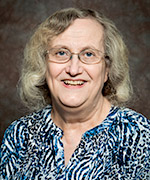
In episode 10, we interview Kansas native Shannon Cotsoradis. She serves as the director of policy and strategy at the Buffett Early Childhood Fund in Omaha, Nebraska.
The Buffett Early Childhood Fund focuses its philanthropy on children ages birth to 5, paying particular attention to infants and toddlers — a population often overlooked in public funding but where early investment can result in some of the greatest gains and help ensure children grow up eager to learn, ready for school and inspired with hope.
Prior to joining the Fund, Shannon served as president and CEO at Nebraska Early Childhood Collaborative starting in 2016. She has a strong background in advocacy and leadership, having served as president and CEO of the children’s advocacy group Kansas Action for Children from 2010-16 and as executive vice president and chief operating officer from 2001-10.
In this episode, Shannon discusses challenges facing early childhood education and barriers to accessing quality care.
“Parents are feeling really stretched when it comes to paying for their early learning experiences that their children need,” she said.
“The industry is really at a critical point — a breaking point, if you will,” Shannon said. “The pandemic was hard on an already beaten-down industry, and so the time is right for an infusion of public investment in the early years.”
To build out a quality network of child care, she said greater public investment is needed.
“There’s really no other way to elevate the quality of care without that greater public investment,” Shannon said.
The industry is at a breaking point, she said. The pandemic was hard on an already beaten-down industry, and the time is right for an infusion of public investment in the early years.
She also discussed how child care subsidies are important tools for providing access to early learning for families, as well as providing a source of revenue for providers.
However, in a lot of states, Shannon said these subsidies often come with significant administrative burdens for both providers and families. Many families give up before successfully accessing the subsidies, or at renewal time, their case is closed because they didn’t complete the necessary processes, which can be cumbersome for families.
“Reducing the administrative burden both for the families that use the system and the providers that want to serve families that use the system is critical,” Shannon said.
Proactively paying providers is a must, she said, as oftentimes they wait weeks to get paid.
“Eliminating some of those barriers is really critical to changing the system so it works better for families,” she said.
She also discusses:
How some states are taking aggressive approaches to public investment, such as New Mexico and Vermont
Efforts to deregulate child care
The foundation’s approach to advocacy
And much more! Listen now, and learn more about how Shannon is a pioneering leader in health care.
Listen now
Listen below or on any of your favorite podcast services. Like and subscribe to stay up-to-date with each new episode!
Episode 10 features Shannon Cotsoradis, Buffett Early Childhood Fund
Please see the Pioneers in Health page on our website for more information on our podcast series and links to other episodes.
Health Fund President and CEO David Jordan was recently interviewed in The Topeka Capital-Journal about how Rural Emergency Hospital designations may ease the Kansas health care crisis.
Kansas has more rural hospitals at immediate risk of closure than any other state in the nation, with 31 of Kansas’s 98 rural inpatient hospitals at risk.
Since 2010, eight Kansas hospitals have closed, leaving patients with less access to health care in their communities. The added barriers can add more difficulty on a population that already experiences health disparities compared to urban and suburban populations.
“There’s longstanding disparities that are prevalent in rural communities as well as communities of color,” said David Jordan, president of the United Methodist Health Ministry Fund, “and I think that’s attributable to multiple factors: access to health care, access to educational and economic opportunity, access to early childhood services, and then physical activity and lifestyle behaviors.”
The University of Kansas’s Center for Rural Health reports that rural death rates are higher, that accidents are more likely to result in death and that suicide is significantly higher. The health care system responding to these trends has significantly fewer physicians, specialists and mental health services than non-rural areas, and is more likely to use volunteers for emergency services.
What happens when you lose a hospital?
Mercy Hospital in Fort Scott, Kansas, closed its doors in early 2019, leaving the town of about 7,500 people having to cross state lines into Missouri to reach the nearest hospital. Ascension Via Christi, a Pittsburg, Kansas, based health care provider moved into what was Mercy to provide emergency services, but it announced in December that it would also exit the market.
In an emergency, locals would have to drive about 25 minutes to Nevada, Missouri, or 40 minutes to Pittsburg.
The result of the loss of health care access is fear in the community, Jody Love said. Love worked with Mercy before it closed its doors in community health, clinic quality and as a social worker. While working for the hospital, she formed the Healthy Bourbon County Action Team, which promotes access to healthy food, physical activity and tobacco cessation.
Bourbon County voters approved a quarter-cent sales tax to fund its hospital after two companies failed to sustain it. Sarah Jane Tribble/Kaiser Health News/TNS
“There are a lot of fear and people who have elderly parents or are caring for those with disabilities or chronic disease and how they’re going to get the care, or how are they going to get to a hospital on time,” Love said. “Individuals who are women, who are pregnant are having to travel long distances to give birth, and that’s kind of scary.”
The downstream economic impact is still too early to tell, but studies tend to show the closure of a community’s sole hospital leads to lower overall employment and lower per capita income at the county level. A 2022 University of Pennsylvania study posits that hospital closures reflect existing downward economic trends rather than drive them.
Bourbon County’s population has steadily declined in the past century, losing population in nine of 10 census counts. In 2020, about 14,000 people called the county home, about half of its population peak over a century earlier.
“The population decline starts to snowball with the burden that puts on government, with per capita evaluations; it’s like a snowball effect when you reach a certain point where you’re not able to meet critical services for your community,” Love said. “From a tax burden standpoint, a lot of the emergency management and ambulance, all of that burden ended up on the county because by law they’re required to provide those services.”
Why are Kansas hospitals in such rough financial shape?
The Kansas Hospital Association says hospitals are struggling with the cost of maintaining a workforce, inflation and hospital reimbursement rates from private and public insurers. All three are related: Inflation increases desired salaries, which in turn increases workforce competition and turnover, which increases the reimbursement costs of insurers.
But much of the care doled out in Kansas doesn’t even cover the costs hospitals incur to provide it. Medicare, the government-funded insurance program for seniors, historically has underpaid for services. In 2022, it hit an all-time low, providing just 82 cents for every dollar hospitals spend caring for Medicare patients, according to The American Hospital Association.
“In the position we are in, as 122 community hospitals in our state, we’re not going to turn anyone away. So we’re open 24/7/365 for everybody. And if you come in and you have Medicare and Medicaid and they do not pay the cost of care, there’s really nothing we can do about it,” said Cindy Samuelson, senior vice president member and public relations specialist for the Kansas Hospital Association.
In Kansas, 91% of hospitals reported that more than half of their inpatient days billed are to Medicare or Medicaid, and 43% of hospitals said Medicare and Medicaid patients account for more than 75% of their billable inpatient days.
The state has also not opted into the expansion of Medicaid, which several hospital providers cited as another drain on expenses. Just 3.8% of hospital care in Kansas is uncompensated, but it could be nearly halved for certain types of hospitals if expanded to people who make up to 138% of the federal poverty level — in 2024 that’s $20,783 for an individual.
“Expanding Medicaid would have a huge impact on some of these rural hospitals. Bottom line, if we expanded Medicaid, critical access hospitals, 44% of their uncompensated care would be wiped off the book,” Jordan said.
Mercy Hospital registered nurse Matthew Belshe answers the phone connected to the emergency room on Wednesday, Oct. 9, 2024. The hospital, part of the Rural Emergency Hospital system, sees three or four patients a day. Evert Nelson/The Capital-Journal
Private insurance is trickier to determine the amount reimbursed for services delivered. Hospitals and insurance companies negotiate their rates and can get extremely granular on which services insurance covers and the rate it will pay. But a study from the Kaiser Family Foundation in April 2020, prior to the pandemic causing a slew of issues in the health care industry, estimates that private insurance pays out double for all hospital services on average.
But private insurance comes with its own headaches for hospitals, which have to deal with additional administrative costs when dealing with private insurers.
“Part of the reason health care is so expensive in the United States is because we have negotiators, we have individuals involved with handling transactions that are not either rendering the care or receiving the care. So the more pieces that you insert in between the person who’s rendering the care and the person who’s receiving the care, and everybody wants a piece of that pie, the more expensive that becomes,” said Aaron Herbel, CEO of Mercy Hospital in Moundridge, Kansas.
That can happen with Medicare as well. Medicare Advantage plans, which are offered by private insurance but funded through Medicare, comes with similar administrative burdens.
More than 40% of total costs in hospitals is administrative — the paperwork, dealing with insurers who must authorize tests or treatment and billing.
Mercy Hospital CEO Aaron Herbal, left, chats with human resources manager Fernetta Phillips about current administrative needs on Wednesday, Oct. 9, 2024. Evert Nelson/The Capital-Journal
What is a Rural Emergency Hospital?
With difficulty to fit into traditional payment models for hospitals, Rural Emergency Hospitals were created to fill gaps in services while getting subsidized by the federal government. It acts like a middle ground between a health clinic and a hospital — offering 24-hour-a-day emergency services like hospitals, and with primary care services like clinics.
The U.S. Congress approved the new designation in the Consolidated Appropriations Act of 2021, and it took effect in January 2023.
But the designation also adds limits to what the hospital can offer, particularly that stays must remain under an average of 24 hours or less.
Mercy Hospital in Moundridge, one of three Kansas hospitals that have gained the status as a Rural Emergency Hospital, said the hospital faced tough decisions when deciding to opt into the Rural Emergency hospital designation. The other two are Rush County Memorial Hospital in La Crosse and SCK Health in Arkansas City.
“We really appreciate the ability to see that patient who gets admitted to a hospital for several days, three to five to seven days, however long they’re here, and we are able to watch them walk out of the hospital with a smile on their face because they’re well,” Herbel said. “But realistically, we had to look at what it was costing us to provide that service for a continually decreased volume, and at the end of the day, we had to say it’s not worth it.”
Leaders at Mercy Hospital in Moundridge faced tough decisions when deciding to opt into the Rural Emergency Hospital designation. Evert Nelson/The Capital-Journal
Mercy gave up acute inpatient care, which includes treatment for brief but severe health episodes, and swing beds, which includes long-term nursing care. With a reduction in services, Rural Emergency Hospitals may be more appropriate in rural areas that are relatively close to other health care providers.
“McPherson Hospital is about 20 minutes to the north, and Newton Medical Center is about 20 minutes to the south,” Herbel said. “Both of those hospitals have ICU services, both of those hospitals have OB services. And so that does give us a certain ability to know that we’re not just totally leaving our patients stranded if they should need higher level acute care service.”
Rural Emergency Hospitals are paid differently than other hospitals, with a monthly distribution by the Federal Government of $272,866 per month, and pays 5% above the reimbursement rate of the Hospital Outpatient Prospective Payment System. The model can be resilient for rural hospitals, where it may experience lulls in patients.
“There are times where you might have a lot of people, like in the winter when people are sick, and then there are times you wouldn’t have any but guess what, you still have to pay your electric bill, you still have to pay your staff, you still have to pay all those other standing costs,” said Samuelson, of the Kansas Hospital Association.
Other types of rural hospitals
Rural Emergency Hospitals are the latest addition to special hospital designations designed to reduce financial vulnerability and to improve access to vulnerable rural communities. The hospitals that have the easiest transitions are Critical Access Hospitals.
Critical Access Hospitals are limited to 25 or fewer acute care impatient beds, at least 35 miles from the nearest hospital, maintain a stay for 96 hours or less and provide emergency care around the clock.
In return, Medicare fully funds the cost of care plus 1%, rather than the reimbursement below cost typical of Medicare, flexibility in staffing, access to technical assistance and grants and factoring in capital improvements when determining Medicare reimbursement.
Counties have also taken an increasingly large role in providing funding for hospitals. In Fort Scott, which lost its hospital, the county passed a quarter-cent tax to fund an emergency department, with the remaining funds going to EMS and property tax reductions.
The vote passed by a margin of 76-24. But it may also be opting into the Rural Emergency Hospital model — county officials said they are watching the Rural Emergency Hospital Adjustment Act and hope it will allow previously closed hospitals to re-apply for the designation.
We are proud to recognize four hospitals for having celebrated 10 years of earning the High 5 for Mom & Baby recognition.
High 5 Program Coordinator Cara Gerhardt, BSN, RN, IBCLC, (pictured at left) recognized the 10-year anniversaries of these hospitals at the 2024 Kansas Breastfeeding Conference in October.
The High 5 for Mom & Baby program is a Health Fund initiative that connects hospitals and birthing centers to policies and practices that improve breastfeeding outcomes.
Breastfeeding makes a significant impact on the health of moms and babies, and hospitals and birthing centers play a crucial role in the initiation and successful continuation of breastfeeding after leaving their facility.
Completing the High 5 for Mom & Baby program requires an investment of time and resources by participating hospitals and birthing centers. It demonstrates their commitment to infant and maternal health by supporting breastfeeding success.
We are proud to recognize and honor these hospitals for making that commitment to the moms, babies and families in their communities.
Want to get more involved in your community? Learn more about FAN!
Healthy Congregations churches are invited to join a webinar from 12-1 p.m. Wednesday, Nov. 13, to discuss the recently updated Faith-Based Animator Network, or FAN, special grant opportunity.
FAN is a paid learning opportunity offered by The Neighboring Movement. It’s for those who want to dive deep into neighboring and ABCD from a faith-based perspective.
Here, we share inspiring stories of pioneering leaders working to improve health. We bring you guests from our state, from our nation and from your backyard to tell their stories of how they broke new ground and changed the landscape of health care.
In episode nine, we interview Matt All.
Matt is the president and CEO of Blue Cross and Blue Shield of Kansas (BCBSKS), the state’s largest and only locally owned health insurance provider. As a mutually owned, not-for-profit health plan, BCBSKS serves nearly one million members with the state’s largest provider network.
In his role, he is working to make BCBSKS a vibrant, robust, progressive force for good in Kansas. He is committed to giving Kansans a better, more humane experience in the health care system, and to making high-quality care accessible and affordable in every Kansas community.
Some of Matt’s most significant accomplishments include the implementation and preparation of the Affordable Care Act. He also led the company’s Health Care Reform Guidance Team and represented the company on the national Blue Cross Blue Shield Association’s Health Care Reform Implementation Task Force. Most recently, he led the company and its members through navigating the health care system during the COVID-19 pandemic.
In this episode, Matt discusses a variety of challenges facing the current health system and how his team is working to address them.
“It just should not be the case in the United States of America, the richest country in the world, in 2024, that there are such deep inequities, especially when it comes to things like maternal health,” he said.
Matt also discussed artificial intelligence and its emerging role in health care. He said AI is a valuable tool but that he’s concerned about how quickly it’s evolving and wants to make sure it does more good than harm.
“It’s a wonderful invention, and it’s progressing incredibly rapidly,” he said. “But it needs to be used to help people live healthier lives, and so having a human in there making decisions with a good kind of ethical backbone I think is going to be important as we move forward.”
Other topics discussed include:
His journey from a small town in Kansas to Yale Law School to health care
The challenge of affordability in health care
How BCBSKS works to address the social determinants of health, including Pathways to a Healthy Kansas, a community grant initiative funded by BCBS
The goal to establish BCBSKS as a leader in behavioral health
Strengthening health care access in rural communities
Medicaid expansion
Telehealth
And much more! Listen now, and learn more about Matt’s efforts and how he is a pioneering leader in health care.
Listen now
Listen below or on any of your favorite podcast services. Like and subscribe to stay up-to-date with each new episode!
Episode 9 features Matt All, Blue Cross and Blue Shield of Kansas
Please see the Pioneers in Health page on our website for more information on our podcast series and links to other episodes.
Kansas mothers and babies will receive better access to maternal health care support, thanks to recent changes to the state’s Medicaid program.
Changes that will recognize and reimburse doulas, as well as better reimburse lactation consultants, will benefit Kansas families.
Medicaid coverage, reimbursement rates and recognition of providers all directly impact the availability and quality of health care Medicaid recipients can receive.
This is why the Health Fund advocates so strongly to: strengthen coverage, ensure reimbursement rates can sustain services, and expand care teams to include culturally competent providers.
We are encouraged by recent improvements to Kansas’ Medicaid program, known as KanCare, that will benefit our state’s mothers and babies.
The Kansas Department of Health and Environment added doula services to KanCare’s coverage this summer. Now, doulas can provide crucial support during pregnancy, labor, delivery and postpartum under Medicaid, receiving reimbursement for up to $1,295 per delivery.
According to the National Institutes of Health, moms who use doulas are two times less likely to experience birth complications and four times less likely to give birth to an underweight baby.
The effort to add, recognize and reimburse doulas was led by Health Fund grantees Kansas Birth Justice Society and Kansas Breastfeeding Coalition. Beyond supporting these organizations and other partners, we advocated for this policy change because we believe it will improve maternal health outcomes in our state.
Doulas serve as advocates and educators for pregnant women and new mothers. They can help women experience a positive and safe birth, staying by their side during delivery and providing pain-relief measures like breathing techniques and laboring positions.
Doulas may also help new mothers begin breastfeeding and encourage bonding with the baby.
They also can maintain more frequent contact with patients than physicians often can. They can provide home visits and serve as a resource to answer questions about what’s normal and when it’s time to see a doctor. They can help bridge the gap between limited, overloaded physicians and their patients.
“Increasing KanCare’s coverage to include doulas is a huge win – especially for our state’s rural communities, who are increasingly losing obstetric-care services.”
— Health Fund
More than ever, we need innovative ways to provide maternal health care to these rural mothers, and we see doulas as a part of that solution. We look forward to seeing doulas continue to play a vital and growing role in the health of Kansas women and their babies.
We’re also celebrating KanCare’s decision in the last year to increase reimbursement rates and coverage options for lactation services. This was another huge win for Kansas mothers and their families.
The Kansas Breastfeeding Coalition, with funding support from the Health Fund, worked with the Kansas Division of Health Care Finance to increase reimbursement rates for lactation consultation services from $10 to $40 per visit in late 2023. This move helps ensure moms can receive breastfeeding support when they need it. It also helps alleviate financial hardship to the hospitals and local health departments providing the service.
Lactation support has been shown to increase breastfeeding initiation and duration rates. Breastfeeding provides numerous health benefits to babies and their mothers, as well as facilitates emotional bonding between the two.
As part of this advocacy effort, a statewide workgroup was formed. They paid special focus to rural communities while discussing ways to increase access to lactation services across the state, including telehealth appointments for lactation consultations.
This is another win for Kansas families, making these important consultations even more accessible to mothers who are facing breastfeeding challenges.
For more than a decade, the Health Fund has been a steadfast advocate and financial supporter of breastfeeding initiatives. We are immensely proud to have supported these vital efforts, which promote the health and well-being of mothers and babies alike.
OTHER RECENT MEDICIAD ADVANCEMENTS:
In addition to these wins, we’re also celebrating other recent KanCare improvements we supported through both funding and advocacy:
Here, we share inspiring stories of pioneering leaders working to improve health. We bring you guests from our state, from our nation and from your backyard to tell their stories of how they broke new ground and changed the landscape of health care.
In episode eight, we interview Krista Postai and Jason Wesco, of the Community Health Center of Southeast Kansas (CHK/SEK) based in Pittsburg, Kansas. Krista serves as CEO, and Jason serves as President and Chief Strategy Officer.
These two innovative leaders have worked to improve the health of individuals and communities in southeast Kansas for more than 20 years. Their work has not only addressed primary, behavioral and oral health care, but it’s also addressed the social factors that make a greater impact on health than what happens in the doctor’s office.
In this episode, they discuss how they evolved from providing services out of a trailer to now serving more than 80,000 patients this year and employing more than 1,000 with multiple sites in multiple states.
During the last five years, they said much growth has been from preserving access to health care where other health systems have left rural communities.
“We believe rural communities matter, and that means you step up and do some hard things when you need to,” Jason said. “And we believe we can improve health in our part of the world.”
Developing residency programs for family medicine doctors, dentists and nurse practioners with the intention to cultivate a new generation of health care professionals dedicated to serving rural communities
Expanding services to meet specific needs, such as mammography
Creating a new, comprehensive hospice program, Mount Carmel Hospice, after a local hospice service closed
Developing an education center and the Inspire Health Foundation, which provides hands-on learning to K-12 students through camps and activities aimed at sparking an interest in a health care career
And so much more! Listen now, and learn more about how Krista and Jason are true pioneering leaders in health care.
Listen now
Listen below or on any of your favorite podcast services. Like and subscribe to stay up-to-date with each new episode!
Episode 8 features Krista Postai & Jason Wesco, Community Health Center of Southeast Kansas
Please see the Pioneers in Health page on our website for more information on our podcast series and links to other episodes.
Robert serves as Senior Vice President and Institutional Consultant at Graystone Consulting in Wichita, Kansas. He also has served on the Health Fund’s Investment Committee.
We are excited to have them join the Board of Directors and look forward to them helping us further our mission of improving the health of all Kansans.
The Health Fund is thrilled to announce the promotions of three long-time team members and the addition of one new member.
We are grateful for the years of service and the talents these team members provide to our organization. Their contributions are invaluable.
We are excited about the growth within our team, and together, we look forward to continuing our mission of serving Kansas families and helping improve the health of all Kansans.
PROMOTIONS
Katie Schoenhoff was promoted to Vice President of Programs. Katie has worked here for nearly 11 years, and the title change reflects her role overseeing the foundation’s programming efforts.
Jeff Gamber was promoted to Director of Operations. Jeff has worked at the Health Fund for nearly 25 years and will see an expanded role in overseeing business, facility and technology operations in his new position.
Dashinika Poindexter was promoted to Congregational and Grants Management Officer. Dashinika, who just celebrated her five-year anniversary with us, will now oversee our Healthy Congregations efforts and play a greater role in providing technical assistance to grantees.
NEW HIRE
Nancy McCready joined the Health Fund this summer and will oversee our communications efforts. She brings a wealth of communications, marketing and journalism experience to the role. She began her career as a reporter for The Hutchinson News and later moved into communications and marketing roles. She has worked in a variety of different industries, including heath care technology, higher education and multi-family housing.
Here, we share inspiring stories of pioneering leaders working to improve health. We bring you guests from our state, from our nation and from your backyard to tell their stories of how they broke new ground and changed the landscape of health care.
In episode seven, we interview Brock Slabach, the Chief Operating Officer at the National Rural Health Association (NRHA). The NRHA is a national nonprofit that brings together thousands of members to provide leadership on rural health issues through advocacy, communications, education and research.
Brock grew up in rural Kansas and worked as a rural hospital administrator for more than 20 years before joining the NRHA. He is an expert on rural health, payment and delivery reform, and improving access to health care.
In this episode, he discusses the future of rural health care, including: