Category: News

Black women breastfeed

This guest blog post was authored by Joyea Marshall-Crowley, CBS, Wichita Black Breastfeeding Coalition.

In the Wichita area, we have heard from Black and brown mothers that they are not even being asked about breastfeeding as an initial feeding choice, and that their healthcare providers assume they are formula-feeding their babies. This makes it difficult for Black and brown mothers to obtain breastfeeding resources, support, or information during pregnancy and upon delivery. It is imperative to have these supports for a woman’s breastfeeding journey, and it should be accessible to all mothers no matter their decision to breastfeed or not. 

The need for the Wichita Black Breastfeeding Coalition is clear.
Who is the Wichita Black Breastfeeding Coalition?

The Wichita Black Breastfeeding Coalition (WBBC) was formed in October 2020 under the non-profit organization Kansas Breastfeeding Coalition. The foundational vision for this local breastfeeding coalition is to help increase breastfeeding rates in the Black and brown communities of the Wichita Metropolitan Area.

The coalition currently houses six members. The outstanding members of the WBBC hold many titles, such as Certified Breastfeeding Specialist (currently on track to obtain their IBCLC), Certified Trained Doulas, Registered Nurse, Chocolate Milk Certified Trainer, Chiropractor, and Midwife, to name a few.

All WBBC members share the same passion for helping women of color gain the support, resources, and tools needed to reach their breastfeeding goals. We want mothers of color to have a safe space just for them to receive the breastfeeding support they need—and that is what they will get from the Wichita Black Breastfeeding Coalition.

“I Breastfed; This is My Legacy” 

Representation of Black women is so important when it comes to normalizing breastfeeding. This group is underrepresented, and there is already a stigma in the Black and brown community that breastfeeding is a “white” thing. When they see pictures and videos of breastfeeding mothers that heavily display white mothers as the focus it just reinforces the same message as the stigma and creates barriers. 

To dispel this myth, the Wichita Black Breastfeeding Coalition created a project called “Latched Legacy.” This project highlights and normalizes that Black women do indeed breastfeed. The campaign video shows Black mothers confidently sharing the statement “I Breastfed; This is My Legacy” while capturing them with their children and partners. The project’s goal is not only to increase breastfeeding initiation rates in the Wichita Metro Area but also to increase media representation for Black mothers regarding breastfeeding.

“Latched Legacy” campaign video

In conjunction with representation, this project has also allowed us to provide breastfeeding kits for pregnant and breastfeeding mothers of color. These kits include supplies and information to encourage them to initiate breastfeeding as their first choice upon delivery. As a result, we have a success rate of 95% of mothers who have received a kit while pregnant initiating breastfeeding as their first choice of feeding after delivery.  

Breastfeeding is for mothers of all backgrounds. We are changing the Black breastfeeding narrative one family at a time in the Wichita area. Every Kansas family should receive the resources and support they need to reach their breastfeeding goals. You can support new or expecting parents in your area by referring them to a local breastfeeding coalition or to an organization that provides breastfeeding resources.  

About the series

This is the final post in a series on breastfeeding in Kansas. Prior posts include:
How WIC supports breastfeeding

This guest blog post was authored by Heather Peterson RDN, LD, CLC, Reno County WIC Coordinator.

Every day, I look forward to going to work in WIC: we truly are the Happy, Healthy Baby People!

WIC is a supplemental food program that serves pregnant, breastfeeding, and postpartum women, infants, and children to age 5. Nearly half of all babies born in the United States are eligible for the WIC program. In Kansas, 40% of babies participate in WIC. This program has evolved over the past two decades from a formula handout to a reliable source of breastfeeding support. WIC promotes breastfeeding as the optimal way to nourish a newborn. All WIC staff encourage a pregnant woman’s decision to breastfeed. 

A vast majority of women express a high desire to breastfeed their babies. Unfortunately, many of the women WIC serves return to work within two weeks of delivery. This can sabotage a woman’s desire to breastfeed. WIC offers several sources of support for breastfeeding moms.

The WIC food package for an exclusively breastfeeding woman is larger than any other food package and contains additional protein foods, including canned salmon or tuna. These fishes are higher in Omega-3 fatty acids that are important for infant brain development and overall health for the mom. Exclusively breastfeeding women enjoy a $47 per month fruit and vegetable benefit that allows them to purchase fresh fruits and vegetables. Women who are exclusively breastfeeding qualify for WIC foods until they are one year postpartum. Exclusively breastfed infants receive a large food package starting at 6 months of age to support their continued growth and development. 

One major benefit of the program is that many local WIC agencies participate in the Breastfeeding Peer Counselor (BFPC) program. BFPCs are exactly what their name implies, women that have recently participated in the WIC program and breastfed their children. The BFPC usually communicates with women via text message, phone calls, and social media, and are even available to support breastfeeding parents outside of regular office hours. 

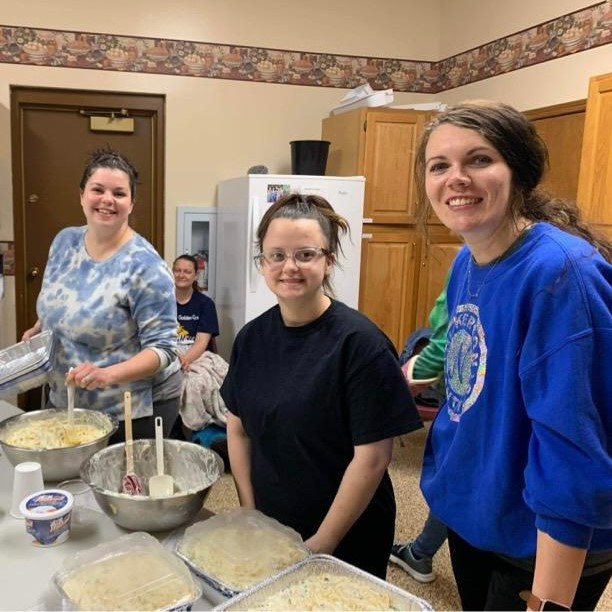
Peer counselors will reach out to women during their pregnancy and offer reliable information about preparing to breastfeed, surrounding themselves with breastfeeding advocates, how to obtain a breast pump from their insurance, and what to expect the first days after delivery. Peer counselors can be a “social event director,” connecting pregnant and breastfeeding women in their community. Peer counselors will seek activities that are free of charge, such as playing at the splash pad, attending library time, gift-wrapping parties, and moms’ movie night out. One of our most popular events was a cooking class hosted by a local church. The foods were donated and each family took home a chicken noodle casserole they learned to prepare. This social time allows pregnant women to see how normal breastfeeding happens out and about whether the breastfeeding mom chooses to be discreet or open. 

Photos from Breastfeeding Peer Counselor events.

In the near future, families will have another trusted breastfeeding resource. Soon, each WIC agency will be required to have a Designated Breastfeeding Expert. This person handles more challenging breastfeeding issues. Breastfeeding is a learned skill. For some families, this comes easily and for others, there are more bumps in the road. Many physician’s offices will refer patients to WIC because they know there is reliable breastfeeding help available. 

Sharing information about supports like WIC is something we can all do to support parents. It’s easy to determine WIC eligibility. Potential participants can find their local WIC office by visiting signupWIC.com and entering their ZIP code. To participate in the Kansas WIC program, families must reside in Kansas and meet income guidelines, which can be found at kdhe.ks.gov.

As a community, we can help families to meet their breastfeeding goals. Supporting paid maternity leave legislation, creating breastfeeding-friendly work environments, designating a private space for a woman to breastfeed if that is her preference, and learning about the amazing benefits of breastfeeding are all things we can do to create an environment that encourages breastfeeding success. 

About the series

This is the fourth post in a series on breastfeeding in Kansas. Other posts include:
Musings on the importance of breastfeeding and a review of current recommendations

This guest blog post was authored by Sonder Crane, MD, IBCLC, Pediatrician, Chapter Breastfeeding Coordinator-Kansas Chapter of the American Academy of Pediatrics.

“I think it’s time for mommy milk!” said my 5-year-old to my 2-year-old as their 1-month-old baby brother began to fuss. “Mommy milk” has always been the term for breast milk in our house, coined by our eldest when her sister was born. 

While celebrating National Breastfeeding Month, I remember my own breastfeeding experience. I was fortunate to successfully breastfeed all three of my children. I even had enough stored milk with my oldest two children that I was able to donate to a human milk bank.

My breastfeeding journey was relatively “painless” compared to others – if you don’t count the predicted engorgement, leaking, sore nipples, thrush for both me and my infant, and associated frustrations with finding appropriate times to pump while at work. (Thankfully, I had a very understanding employer.)

As a pediatrician and International Board Certified Lactation Consultant, I also have the privilege of being part of the breastfeeding/chestfeeding journey with many of my patients and their caregivers as they work to provide nutrition for their infants. Not all of their journeys were as “painless” as mine. One case in particular stands out – a mother who came to me with her 2-month-old infant. The case was referred to me due to the infant’s poor weight gain. I worked with the mother and child over the course of about 2 years. We tried different techniques to support weight gain including different ways to give expressed breast milk, different feeding routines, elimination diets for mom, creative ways to introduce solid foods, and so many other things. We involved specialists in different fields to help support the child and mother. Ultimately, the baby did well and was growing and thriving the last time that I saw her. Her mother worked tirelessly to provide the nutrition that she needed to ensure adequate growth, even though it was not the breastfeeding journey the mother would have imagined for herself.

Why breastfeed? The importance of human milk (in brief)

Physiological Benefits to the Infant

  • Human milk has been proven to be the optimal source of nutrition for infants.
  • There are multiple aspects in the dynamic properties of breast milk including antimicrobial, anti-inflammatory, and immunoregulatory agents which contribute to the developing immune system of the infant and help prevent infection.
  • Breastfeeding can reduce the risk of Sudden Infant Death Syndrome (SIDS), certain types of autoimmune disease (inflammatory bowel disease, diabetes mellitus, asthma, atopic dermatitis), leukemia, and obesity.

Physiological Benefits to the Mother

  • The act of breastfeeding can be beneficial to maternal health in helping mothers recover more quickly from childbirth, assisting with postpartum weight loss, reducing the risk of ovarian and breast cancer, reducing the risk of hypertension, and reducing risk of type 2 diabetes.

Intangible Benefits

  • Breastfeeding or chestfeeding facilitates maternal and infant bonding.
  • Breastfeeding can ultimately lead to a closer and more responsive infant/mother dyad.
  • It’s shown to reduce maternal stress and decrease cognitive and behavioral problems later in childhood.

What does the American Academy of Pediatrics say about breastfeeding and how do we promote and support breastfeeding mothers and their babies?

Here’s a summary of the most recently updated (July 2022) AAP Recommendations on Breastfeeding:

  • Exclusive breastfeeding for the first 6 months of life (consistent with guidelines provided by World Health Organization, American College of Obstetricians and Gynecologists, American Academy of Family Physicians, and Canadian Pediatric Society)
  • Continued breastfeeding along with appropriate complementary foods introduced at 6 months for as long as desired, 2+ years
  • Recognize that medical contraindications to breastfeeding are rare
  • Birth hospitals and centers should implement maternity care practices shown to improve breastfeeding initiation, duration, and exclusivity
  • National tracking of breastfeeding rates through age 2 years
  • Policies should be in place to protect breastfeeding
    • Universal paid maternity leave
    • Right to breastfeed in public
    • Insurance coverage for necessary items and care in breastfeeding
    • On-site child care in the workplace
    • Universal break time and adequate accommodations for human milk expression at work
  • Recognize that pediatricians (and all those caring for infants) play a critical role in breastfeeding success
    • Providing evidence-based information on feeding choices
    • Supporting early skin-to-skin contact and skilled lactation support while in the hospital
    • Using current resources to give guidance and minimize disruptions in breastfeeding when questions arise due to maternal medications, medical conditions, or vaccinations
    • Acquiring up-to-date information on the benefits of breastfeeding and how to provide breastfeeding care in the office and the community
    • Advocating for culturally sensitive and appropriate policies to promote breastfeeding
    • Assisting parents with preterm infants on establishing milk supply when infant is unable to feed at the breast and the use of pasteurized donor human milk

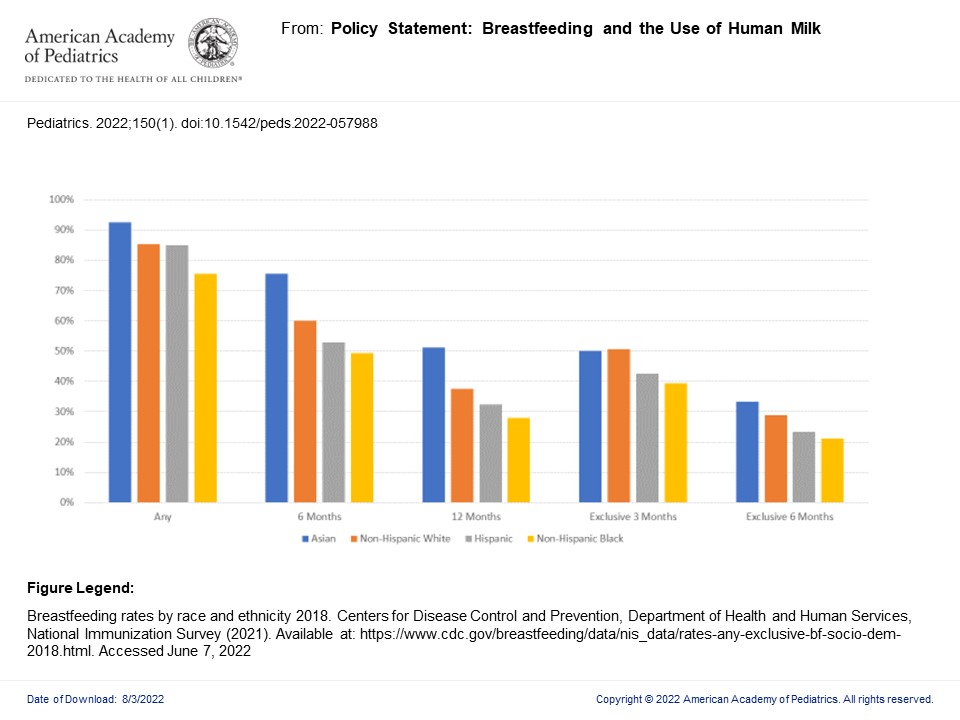
The graph above shows 2018 national breastfeeding rates for the infants in the breastfeeding dyad exclusively at 3 and 6 months of life, 6 and 12 months of life, and any breastfeeding at all throughout 0-12 months of life. Each age range is broken down into race and ethnicity at that stage. As evidenced above, we are making progress in supporting our lactating mothers and breastfeeding infants but there is always room for improvement. The education is ongoing as we strive to advocate for the breastfeeding dyad.

There are two excellent local upcoming opportunities for education as we welcome Dr. Joan Younger Meek to Grand Rounds at Wesley Medical Center in Wichita, KS, on September 15, and at the Kansas Chapter of the AAP Fall CME Meeting at Hyatt Regency Hotel in Wichita, KS, on September 16. Dr. Meek is the lead author of the new policy statement published July 2022 on “Breastfeeding and the Use of Human Milk” in the Journal of Pediatrics and a leading expert on breastfeeding and lactation. Please attend her presentations if you have the chance. In the meantime, Happy National Breastfeeding Month!

About the series

This is the third post in a series on breastfeeding in Kansas. Other posts include:
The state of breastfeeding in Kansas

This guest blog post was authored by Brenda Bandy, IBCLC, and Jennie Toland, BSN, RN, CLC, Co-Executive Directors of the Kansas Breastfeeding Coalition.

“[…] exclusive breastfeeding goes a long way toward canceling out the health difference between being born into poverty and being born into affluence…It is almost as if breastfeeding takes the infant out of poverty for those first few months in order to give the child a fairer start in life […]”

James P. Grant, former UNICEF executive director

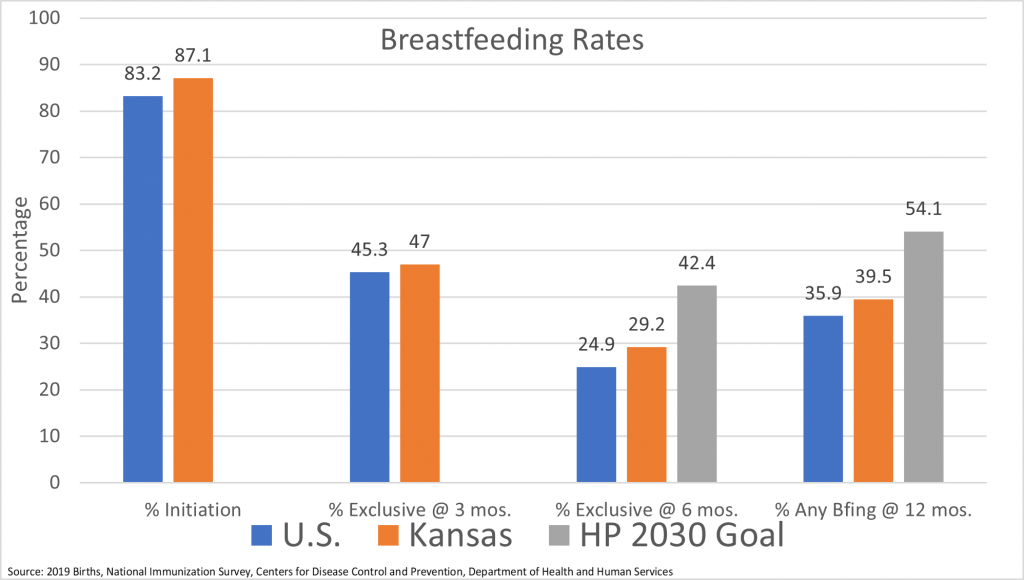
We are thrilled to report the state of breastfeeding in Kansas is strong! According to data from the Centers for Disease Control and Prevention (CDC) released on August 1, Kansas exceeds the national rates of breastfeeding in all measures. Kansas ranks 14th in the nation in the percent of infants exclusively breastfeeding at 6 months of age for babies born in 2019. This is up from 27th place only five years ago.

The data show nearly 90% of families in Kansas choose to breastfeed. However, the choice to breastfeed is negatively influenced by lack of support in the workplace, lack of access to clinical and peer lactation support, and often lack of family support. Without the right support, the choice to breastfeed isn’t a choice at all.

Consider this map above of breastfeeding initiation rates by county. The counties in pink exceed the state average in breastfeeding initiation rates. The counties in white have the lowest rates of breastfeeding initiation. Social determinants of health can greatly impact breastfeeding rates. We must carefully consider what factors are making it difficult for families to be able to choose to breastfeed.

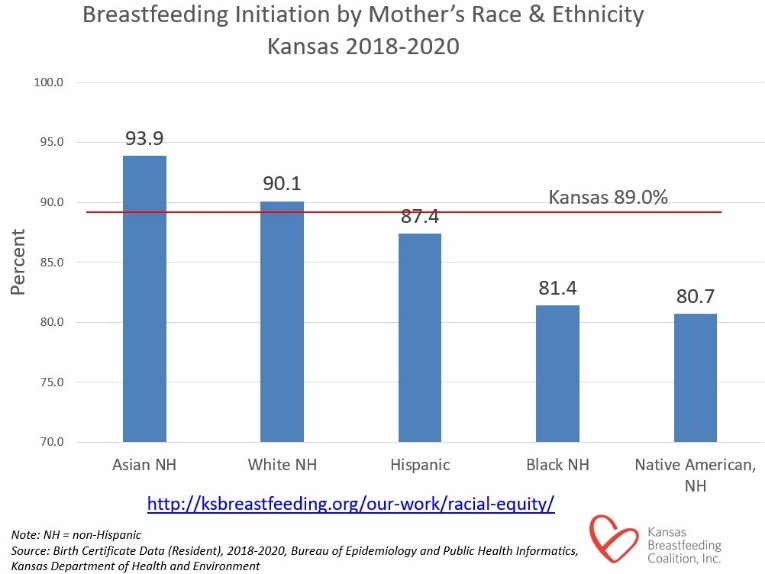
The graph above illustrates the gaps in breastfeeding rates. These disparities result from structural barriers and historical trauma that make it more difficult for Black, Indigenous and Latina mothers to engage in a traditional practice that has sustained their cultures over generations. While Black and Indigenous families do breastfeed, they do so despite bias and inequities.

The KBC has taken the following action to address racial disparities in breastfeeding rates with support from our partners at the Kansas Department of Health and Environment (KDHE) and the United Methodist Health Ministry Fund (Health Fund):

How can we make impactful and sustainable improvements to breastfeeding?  The answer lies within the community. It is our responsibility to support communities and ensure they have needed resources. While we celebrate increased breastfeeding rates in Kansas, a “rising tide” of breastfeeding support is not enough when some families in Kansas are not even in a boat.

The American Academy of Pediatrics’ (AAP) new Position Statement: Breastfeeding and the Use of Human Milk highlights the importance of supportive policies and systems. The AAP statement recommends “Policies that protect breastfeeding, including universal paid maternity leave, the right of a woman to breastfeed in public, insurance coverage for lactation support and breast pumps, on-site child care; universal workplace break time with a clean, private location for expressing milk, the right to feed expressed milk, and the right to breastfeed in child care centers and lactation rooms in schools are all essential to supporting families in sustaining breastfeeding.”

The KBC and our partners, including the Health Fund and KDHE, are working on improving policies, systems and environments to be more supportive of breastfeeding families.

A recent policy “win” for families in Kansas was the extension of Medicaid postpartum coverage for mothers from a mere 60 days to a full year. This extension of access to coverage will increase access to breastfeeding support in addition to essential physical and mental health services during the first year after giving birth.

Many hospitals across Kansas have contributed to the rising breastfeeding rates in Kansas. Thanks to the Health Fund’s investment in High 5 for Mom & Baby, Kansas ranks 13th in the nation for maternity care practices as measured by the CDC Maternity Practices in Infant Nutrition and Care survey.

If you are curious what breastfeeding support looks like in your county, visit the KBC’s Breastfeeding Support by Kansas County. This document allows you to easily see not only breastfeeding rates but also peer, clinical, and systems-level support for breastfeeding.

We invite you to join the Kansas Breastfeeding Coalition to build on this momentum and continue to improve policies, systems and environments to support Kansas families to breastfeed.

Please consider taking the following actions to support breastfeeding in your community.

ACTION IDEAS

INDIVIDUALS CAN:

HEALTHCARE PROVIDERS CAN:

BUSINESSES CAN:

HOSPITALS CAN:

STATE AND LOCAL GOVERNMENT CAN:

  • Help hospitals connect parents to community breastfeeding resources once they leave the hospital.
  • Support and participate in local breastfeeding coalitions.
  • Support paid family leave.
  • Support KanCare coverage of lactation and doula services.

About the series

This is the second post in a series on breastfeeding in Kansas. The full blog series includes:

Kansas’ breastfeeding journey: reflections and the road ahead

By Katie Schoenhoff, Director of Programs

Happy National Breastfeeding Month.

As we celebrate National Breastfeeding Month, we are reminded of the gains achieved and the work ahead in helping ensure that breastfeeding’s numerous health benefits are available to all mothers and children.

At the United Methodist Health Ministry Fund, we have worked to support breastfeeding for more than 15 years. In early years, we supported breastfeeding as a proven way to help prevent early childhood obesity. Since 2010, breastfeeding support has been a cornerstone of our strategic work, and the more we’ve gained understanding about the physical, emotional, and relational benefits that breastfeeding has for both a child’s and mother’s well-being, the more importance we’ve placed on this work.

A 2007 breastfeeding support grant to United Methodist Mexican-American Ministries (now Genesis Family Health) in western Kansas was a success in its own right, but also highlighted several challenges and opportunities that have guided our subsequent work.

One early learning was that mothers often face challenges which make it difficult to continue breastfeeding when returning to work. In 2010, we began supporting the Kansas Breastfeeding Coalition’s Business Case for Breastfeeding program, which illustrates the bottom-line benefits of supporting breastfeeding employees and simple, low-cost ways to do so.

We learned that supportive maternity facility policies and procedures, trained health care providers, and post-delivery/postpartum access to lactation support make a huge difference in initiating and maintaining successful breastfeeding. We also learned the importance and value of collaboration across the national, state, and local levels.

The Health Fund worked with the Kansas Breastfeeding Workgroup to develop the High 5 for Mom and Baby program that started in 2011. This program provides training, resources, and a framework to help Kansas hospitals and birth facilities implement five or more evidence-based practices proven to support successful breastfeeding, improving maternal and infant health outcomes while also reducing racial and ethnic health disparities.

To obtain High 5 for Mom & Baby recognition, facilities complete a voluntary, self-reported evaluation and follow five or more of the evidence-based High 5 for Mom & Baby practices.

In 2014, we co-sponsored the Kansas Health Summit on Breastfeeding with the Kansas Health Foundation (KHF). From there, we and KHF used the summit to inform a grant initiative where we co-funded 10 projects to work on physician education, lactation support services, regional coalition development, and more.

We’ve continued to work in partnership with the Kansas Breastfeeding Coalition and have long funded the organization’s leadership as well as various projects providing a continuum of care for women prenatally and throughout their breastfeeding journey.

Gaining experience through these projects, we have continued to adapt and modify our breastfeeding work as we saw more Kansas hospitals taking on maternity care best practices each year. Starting in 2016, we provided funding for five hospitals to work toward the rigorous Baby-Friendly designation, which all five have now achieved. We then partnered with Kansas Department of Health and Environment (KDHE) to co-fund another five hospitals. At this time, 10 Kansas hospitals maintain the Baby-Friendly designation, covering nearly 50% of births in our state.

While Baby-Friendly designation is the “gold standard” for supporting breastfeeding in maternity care settings, we recognized that many other hospitals are working to improve their goals and may not have the staffing or financial means to achieve the designation.

In 2020, we launched the High 5 for Mom and Baby Premier program. These facilities follow all 10 of the evidence-based High 5 for Mom & Baby practices. This spring we announced that 22 facilities had achieved premier recognition, which is the largest number of hospitals to earn the premier recognition since it was introduced.

Since we’ve entered the breastfeeding field, we have seen significant increases in breastfeeding initiation and duration rates for the state. In 2021, Kansas reached the top 15 states for all measures for the first time.

This is in part because multiple funding partners have worked together to support the field, including KDHE and KHF. So much traction has been gained and we have valuable leadership from the Kansas Breastfeeding Coalition and local coalitions across the state that have helped Kansas see significant gains in lactation support and policies within hospitals and communities. This work has led to more women receiving supports in various settings—local businesses, workplaces, places of worship, health departments, and more. All of us working together has made a significant difference for women and children across our state.

While there is much to celebrate, there is much left to do. Although the overall breastfeeding rates are improving, rates for Black and brown women–as was the case in 2007 and unfortunately remains true today–are not seeing as many improvements and these gaps need to be narrowed. In recent years, our work with the Kansas Breastfeeding Coalition has focused on working with coalitions led by women of color to support their communities. We continue to proudly support the work that the coalition is doing to amplify all voices.

During National Breastfeeding Month we should celebrate the work that has been accomplished, but we still must all come together and continue to help every Kansas family achieve their infant feeding goals to create the best outcomes for mothers and babies.  

About the series

This is the first in a multipart series on the state of breastfeeding in Kansas. Next week we’ll learn more from the Kansas Breastfeeding Coalition on how our state ranks in breastfeeding and how individuals and businesses can support breastfeeding mothers.

The full blog series includes:

High 5 for Mom & Baby Practices

The ten High 5 for Mom & Baby practices are based on the WHO/UNICEF Ten Steps to Successful Breastfeeding – evidence-based practices proven to increase breastfeeding success and reduce racial and ethnic disparities.

1. Facility will have a written maternity care and infant feeding policy that addresses all ten High 5 for Mom & Baby practices supporting breastfeeding 

2. Facility will maintain staff competency in lactation support

3. All pregnant women will receive information and instruction on breastfeeding

4. Assure immediate and sustained skin-to-skin contact between mother and baby after birth

5. All families will receive individualized infant feeding counseling

6. Give newborn infants no food or drink other than breastmilk unless medically indicated

7. Practice “rooming in” – allow mothers and infants to remain together 24 hours a day

8. Families will be encouraged to feed their babies when the baby exhibits feeding cues, regardless of feeding methods

9. Give no pacifiers or artificial nipples to breastfeeding infants

10. Provide mothers options for breastfeeding support in the community (such as a telephone number, walk-in clinic information, support groups, etc.) upon discharge 

Using Proven Early Childhood Interventions to Combat ACEs

This piece originally appeared in the Kansas Child summer 2022 issue. David Jordan is president and CEO of the United Methodist Health Ministry Fund.

It’s true what they say: children don’t come with an instruction manual. These days, many families are struggling to feel successful raising their children while also coping with the many demands and challenges of modern life.

Toxic stress and adverse childhood experiences (ACEs) are major influences on a child’s overall development — affecting school readiness, student success, physical and mental health, and other factors, including the ability to exercise self-control. ACEs include abuse, neglect, witnessing violence, mental health or substance use problems in the household, and instability in the household, such as separated parents, among other experiences.

ACEs are incredibly common. According to the CDC, approximately 61% of adults surveyed across 25 states reported that they had experienced at least one ACE, while 1 in 6 had experienced at least four. In Kansas, 39% of children have experienced an ACE, and 20% have experienced two or more ACEs.

The first step toward addressing toxic stress and supporting children’s physical health and social-emotional development is to screen early and regularly. Performing a developmental screening when a child first enrolls in early care and education can identify potential risk factors or barriers to success. In many cases, when these concerns are identified and addressed early, the interventions are less intrusive, and children reach developmental milestones more quickly.

Programs and Interventions

Caring and responsive relationships are critical for every child’s healthy development. A number of programs and interventions, including evidence-based home visiting models within the state, nurture caring relationships and positive childhood experiences.

For example, evidence-based early literacy programs promote stronger caregiver-child relationships. Programs like Reach Out and Read (ROR) engage parents, children, and health care providers. ROR’s Perry Klass notes that by reading to young children, parents and educators are teaching responsiveness and cultivating routines and structures that will help children feel safe. These relationships and routines will stimulate healthy brain development and foster a love of reading, leading to improved language skills and health outcomes.

For kids with significant needs, caring and responsive relationships mitigate the effects of toxic stress. Research shows that infants and toddlers who have experienced adversity can benefit from early intervention that focuses on building supportive adult relationships.

One strategy to counteract early adversity is the evidence-based Attachment and Biobehavioral Catch-up (ABC) program. Over the course of the 10-week program, parents increase their knowledge and skills in order to create secure attachments and help their children have better outcomes. While babies cannot verbalize their needs, parents can learn to recognize and respond to their child’s cues, which leads to strong and healthy relationships.

Through support for evidence‐based early childhood development programs, we can ensure that the youngest Kansans enjoy nurturing family environments that prepare them for healthy lives and academic success. Investing in proven early childhood interventions as a state will result in a more capable workforce, reduced health care and mortality costs, and reduced demand for public services. Kansas’ future depends on the children we invest in today.

Child Care Providers & Infant Mental Health

No one can say that caring for infants is simple work. Understanding infants and toddlers and making sure they receive appropriate behavioral health support is difficult.

According to the American Academy of Pediatrics, as many as 1 in 10 preschoolers are affected by emotional, relationship, and behavioral problems. A young child’s misbehavior may be due to mental health concerns. Ensuring that children receive age-appropriate support as early as possible is important for their future health and school readiness.

How can child care providers promote good mental health?

• Connect parents to local resources, such as early childhood development centers that specialize in home visiting and building parents’ caregiving confidence and skills.
• Provide age-appropriate screenings for children in your care. If you are not currently using screenings, you can attend ASQ trainings through the Kansas Technical Assistance System Network (TASN).
• Advocate for statewide policy changes that would benefit infant mental health, such as increased consultation services and the use of the DC: 0-5 diagnostic classification tool.

God’s Temple: Health and Holiness in the Body of Christ

Our health is strongly influenced by a combination of biological, social, and environmental factors beyond our control: the conditions in our communities, the schools in our neighborhoods, the availability of healthy food and good jobs, and how close we are to hospitals and clinics.

As we continue to explore what it means to be healthy, the United Methodist Health Ministry Fund has created a sermon guide that will go beyond the physicality of what health “looks” like and deeper into holistic wellness that includes our emotional, physical, social, and spiritual health.

By exploring health from these four perspectives, the “God’s Temple: Health and Holiness in the Body of Christ” sermon guide opens a wider conversation about health and wellness that integrates with the church’s call to live as the Body of Christ in the world.

To help guide this conversation, the sermon guide utilizes select passages from Paul’s First Letter to the Corinthians.

Week 1 explores emotional health in relation to Paul’s teaching that the Christian community is the temple of God, highlighting belonging as crucial to our emotional well-being as humans.

Week 2 addresses physical health as an individual and communal endeavor as Christians are called to use our bodies to glorify God.

Week 3 explores social health using Paul’s discussion of whether the Corinthian Christians should eat meat sacrificed to idols. Paul’s teaching emphasizes that social health means loving God and loving neighbor by glorifying God while also actively seeking not to be a stumbling block to our neighbors.

Week 4 concludes the series by exploring spiritual health as the cultivation of love as the church cooperates in using our gifts to grow and act as the Body of Christ in the world.

We’d love to hear from you! Did you use the sermon guide and/or toolkit? Would you be willing to share your feedback and experiences? Questions or suggestions? Please email us at hcnews@healthfund.org.

Week 2

Week 3

Week 4

Social Media

Below are social media tiles to help you promote the series. We would love to know if you use the guide—please tag us on Twitter or Facebook (@umhealthfund).

Facebook

Twitter

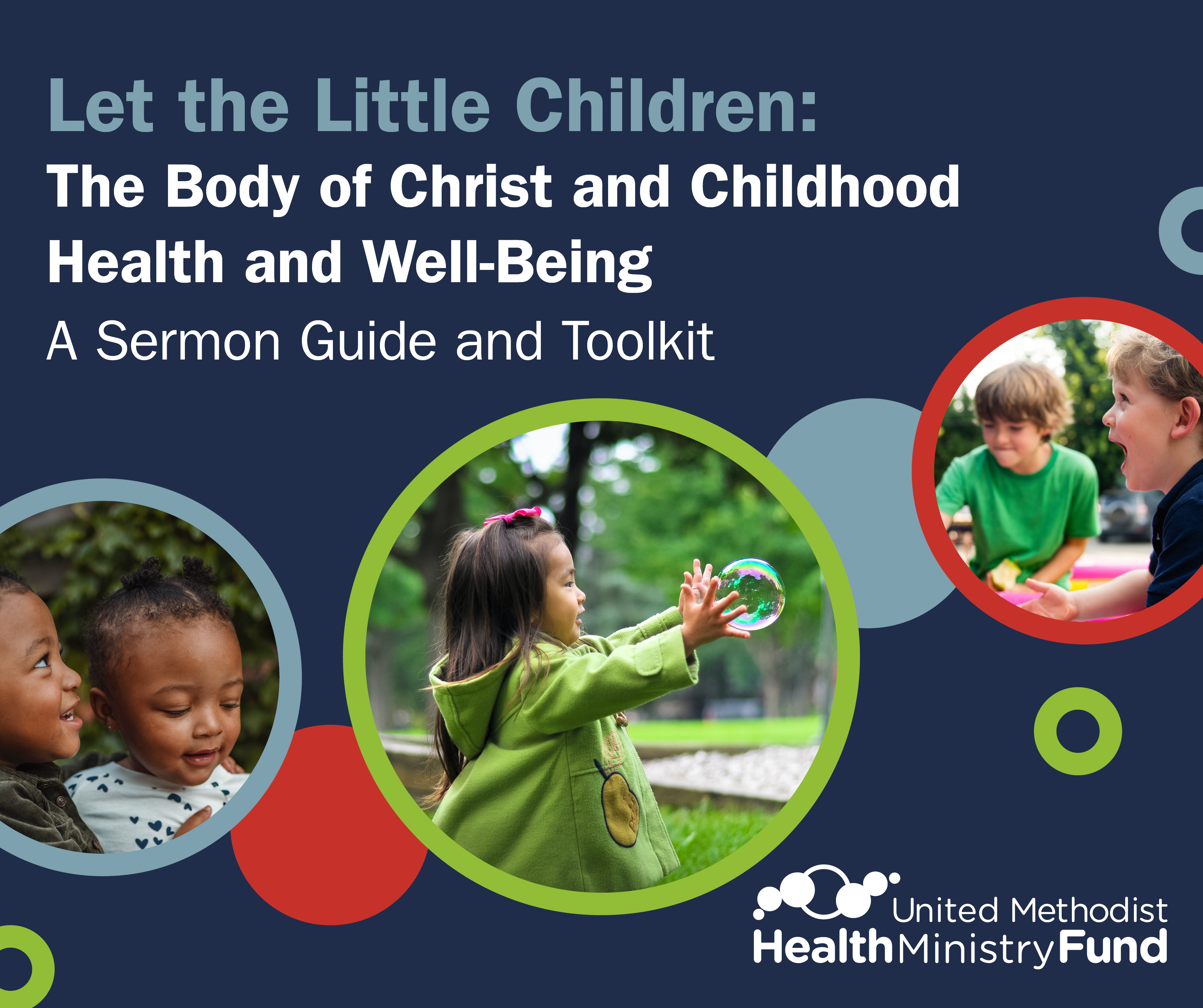
Let the Little Children: The Body of Christ and Childhood Health and Well-Being

The Health Fund believes that investing in early childhood development leads to the best health outcomes and the greatest return on investment. Research has shown that well-designed early childhood interventions can provide the support necessary to foster healthy brain growth and buffer children from the effects of adverse childhood experiences. We have learned that with adequate safe, stable, nurturing relationships during the first five years of life, children are more likely to succeed in school, become productive workers, and contribute to society.

The well-being of children in our churches and communities is an issue of great significance for the health and flourishing of children, families, and neighborhoods across the country and around the world. In an effort to connect the science of early childhood development and proven public health interventions with the life and mission of the church, this guide offers a three-week worship series that highlights three of Jesus’ interactions with children during his ministry.

Week 1 establishes the foundation for how and why Jesus welcomes and embraces children as part of God’s kingdom and invites the church to live into Jesus’ example by recognizing our Christian responsibility to nurture the well-being of children in our community.

Week 2 uses Jesus’ healing of the spirit-possessed boy in Luke’s Gospel as a model for how the church can tend to the physical health of children in our communities, paying particular attention to insurance coverage, wellness vaccines, and food security.

Week 3 then turns to Jesus’ Community Discourse in the Gospel of Matthew to explore Christ’s call to childlikeness as an invitation to promote children’s mental health by removing stumbling blocks and providing the relationships and skill-building necessary for children to build resilience in the face of adversity.

We’d love to hear from you! Did you use the sermon guide and/or toolkit? Would you be willing to share your feedback and experiences? Questions or suggestions? Please email us at hcnews@healthfund.org.

Resources

Nationwide Resources

Kansas Resources

Resources in this sermon guide

Week 1

Week 2

Week 3

Social Media

Below are social media tiles to help you promote the series. We would love to know if you use the guide—please tag us on Twitter or Facebook (@umhealthfund).

Facebook

Twitter

Sermon Workshop: Connecting Faith and Health

The Health Fund hosted a free online sermon workshop: “Connecting Faith and Health: A Sermon-Planning Workshop for Preaching with Impact.”

The Health Fund is dedicated to improving the health and wholeness of Kansans. Over the past year, the Health Fund has worked in partnership with Lisa Hancock, PhD, to develop a series of sermon guides that bring together Scripture, theology, and health to help congregations connect their faith to health.

Each sermon guide contains multiple weeks; each week includes a call to worship, hymn selections, children’s sermon, call to action, and benediction, in addition to an exegesis and sermon notes section based on the week’s scripture passage.

Lisa Hancock led the workshop. Watch the workshop recording to learn more about each guide, and leave with up to 25 weeks of your liturgical sermon calendar planned.

Workshop Recording

Workshop slides
Workshop notes sheets
0:00:00 Welcome
0:25:14 Overview of the Liturgical Year
0:44:58 Journey Toward Mental Wellness (Advent or Ordinary Time)
1:09:59 Naming Trauma and Practicing Resilient Love (Lent)
1:35:41 Tending the Civic Soil (Ordinary Time)
1:59:03 God’s Temple: Health and Holiness in the Body of Christ (Ordinary Time)
2:20:13 Wrapped in God’s Embrace: Maternal Health, Flourishing, and Building Communities of Care (Ordinary Time)
2:43:16 Let the Little Children (Ordinary Time)
2:59:17 Questions and Feedback
3:13:57 Closing Prayer and Benediction

Strengthening behavioral health access will help Kansans and address disparities

This commentary originally ran in the Kansas Reflector on June 2, 2022. About the authors: Dr. Tiffany Anderson, superintendent of Topeka USD 501, and Dr. Shannon Portillo, associate dean and professor at the University of Kansas, served as co-chairs of the Governor’s Commission on Racial Equity and Justice; David Jordan, president and CEO of the United Methodist Health Ministry Fund, chaired the subcommittee on healthcare.

The Governor’s Commission on Racial Equity and Justice repeatedly heard from community members, stakeholders, and those working in criminal justice about unmet behavioral health needs and how the lack of access to behavioral health care — both mental health services and substance use treatment — results in law enforcement encounters.

People with behavioral health conditions are three to six times more likely to be represented in the criminal justice system.

Additionally, data show racial disparities in the impacts of behavioral health systems on communities of color. For example, drug use rates are similar across racial and ethnic groups, but Black and Brown communities experience greater problems associated with substance use, such as legal issues, justice system involvement, and social consequences.

The commission examined behavioral health, seeking to understand how to address systemic issues that affect health outcomes, community vitality, crisis response and health care access. Behavioral health recommendations to address racial equity were included in the commission’s final report.

Law enforcement officers end up acting as de facto behavioral health providers. Investments should be made to increase the use of behavioral health trainings for officers to better prepare them to safely de-escalate and resolve emergency mental health situations.

Collaboration between local governments, law enforcement agencies and behavioral health providers can strengthen how law enforcement responds to behavioral health incidents. One successful model is the co-responder program, in which mental health professionals work alongside law enforcement to respond to mental health calls. Virtual models also show promise. This model contributes to positive outcomes and promoting treatment over incarceration for individuals experiencing mental health crises.

To address systemic behavioral health issues, we must invest in early interventions. Behavioral health services should be lifelong and more accessible to all.

Mental health services should target pregnant and new mothers so they can benefit from earlier diagnosis and treatment. We need to screen for and treat prenatal and perinatal depression to improve maternal and child health outcomes.

Kansas should utilize the DC: 0-5 diagnostic manual, which classifies mental health and developmental disorders for children ages 0 to 5 to enhance mental health professionals’ ability to accurately diagnose and treat mental health disorders and facilitate Medicaid reimbursement for appropriate treatments.

Children should be insured so that they can access behavioral health services. Kansas has a growing number of uninsured children. Between 2016 and 2019, the uninsurance rate for kids increased from 4.9% to 5.8%. In 2019, children who were racial and ethnic minorities were 3.6 times more likely to be uninsured than non-Hispanic white children. Implementing continuous coverage for children 0-5 would reduce the number of children who churn off Medicaid for administrative reasons.

Additionally, Medicaid should reimburse for evidence-based interventions such as home-visiting and early literacy programs that build safe, secure, nurturing relationships that improve health, educational and economic opportunities.

We need to ensure children are getting behavioral health services in early learning settings rather than being disciplined, which can have lifelong consequences. According to a Yale University study, preschool students are expelled more than three times as often as K-12 students. Expulsion rates were lower in settings where the preschool teachers had access to classroom-based behavioral consultants. The commission recommends increasing the availability of infant/early childhood mental health consultation services in the state to ensure children receive age-appropriate behavioral health support.

It’s important to improve behavioral health care access across educational settings. Possible initiatives include coordinating with local governments to ensure school-based services are available to the broader community, expanding hours of school behavioral health clinics, ensuring schools become Medicaid providers so they can directly bill and offering services in multiple languages.

Patients of all ages will benefit if behavioral health services are better integrated into our existing health care system and if the state supports the use of technology, such as telehealth or app-based providers, to make behavioral health services accessible

The current Medicaid eligibility limits are too low. Kansas should expand Medicaid, which would increase access to health care services and reduce uncompensated care — lowering costs for everyone. Hospitals and behavioral health treatment centers should automatically help eligible patients enroll in Medicaid upon discharge, increasing Kansans’ access to behavioral health services after release from treatment.

All levels of government can improve data tracking and coordination between systems within behavioral health, such as the criminal justice system. This should include maintaining race and ethnicity data on behavioral health incidents involving parents and young children to inform necessary interventions.

All Kansans would benefit from improved behavioral health services and access. To make these recommendations reality, we must urge our local and state representatives to support these changes that will improve the health of Kansans and address long-standing disparities.

About this series

In June 2020, Gov. Laura Kelly signed Executive Order 20-48, forming the Governor’s Commission on Racial Equity and Justice. The Commission studied issues of racial equity and justice across systems in Kansas, focusing first on policing and law enforcement and then on economic systems, education, and health care. The Commission developed recommendations for state agencies, the Legislature, and local governments. Through the end of 2022, commissioners will dig deeper into the recommendations in a monthly series.

Related resources

Governor’s Commission on Racial Equity and Justice reports
Governor’s Commission on Racial Equity and Justice webinar series
2022 opinion series on commission recommendations

© United Methodist Health Ministry Fund